


Is Endolift Safe?
Endolift Safety and Risk Guide
Is Endolift Safe? Risks, Side Effects and Safe Treatment Principles
Endolift is a minimally invasive procedure that delivers 1470 nm laser energy to selected tissue planes beneath the skin through a very thin optical fibre. It may have an acceptable safety profile when performed in a suitable patient with accurate anatomical planning, controlled energy and appropriate follow-up. It is not, however, completely risk-free.
Endolift safety does not depend on the device name alone. The physician’s training, the anatomy of the treatment area, fibre depth, energy settings, sterile technique, medical history and post-treatment monitoring must all be considered together.
Send Your Photos on WhatsApp Explore Endolift Request a Medical AssessmentFront, profile and 45-degree photographs may be sent for an initial assessment. Final suitability and safety planning require an individual medical consultation.
A thin optical fibre is inserted beneath the skin without a surgical incision.
Swelling, bruising, tenderness, numbness and temporary firmness may occur.
Burns, infection, asymmetry, contour irregularity and nerve irritation are possible.
Appropriate selection, anatomy, conservative energy and follow-up are all required.
The Essential Answer: Is Endolift Safe?
Endolift may have an acceptable safety profile when it is performed in an appropriate patient by a trained physician using the correct tissue plane and controlled energy. It is not a completely risk-free treatment.
Many published studies describe side effects as mild and temporary. However, parts of the available evidence are based on relatively small patient groups, case series and limited follow-up periods.
Safety should therefore not be judged only by the statement that Endolift is minimally invasive. Patient anatomy, treatment area, energy, sterile technique and physician experience must be evaluated together.
What Is Endolift and How Does It Work?
Endolift is a minimally invasive laser procedure in which a very thin optical fibre is guided through selected tissue planes beneath the skin.
The 1470 nm laser energy interacts with water in the tissue to create a controlled thermal effect. This may support connective-tissue contraction, collagen remodelling and contouring of small localised fat deposits in appropriately selected areas.
Safety depends on keeping the thermal effect within the intended tissue while protecting surrounding nerves, vessels, muscles, skin and facial fat compartments that should be preserved.
For more information, see the Endolift treatment page and the how Endolift works guide.
What Does the Available Research Say About Endolift Safety?
Published studies of Endolift and related 1470 nm intratissue laser procedures have reported outcomes for facial and neck tightening, wrinkles, nasolabial folds, marionette lines and localised fat contouring.
Across the available literature, many reported side effects have been mild and self-limiting. These may include discomfort, redness, swelling and bruising.
The study methods, patient numbers, treatment areas and energy protocols are not identical. Results from one protocol or anatomical area cannot automatically be applied to every patient.
The current evidence is encouraging, but larger independent studies with longer follow-up are still needed to define long-term safety across different areas and patient groups.
What Are the Common Side Effects of Endolift?
Swelling
Temporary swelling may occur because of the mechanical and thermal response of the treated tissue.
Bruising
Small blood vessels may be affected as the optical fibre moves through the planned tissue pathways.
Tenderness
Discomfort on touch, pulling or tightness may remain for several days or longer depending on treatment extent.
Temporary Numbness
This may relate to local anaesthesia, swelling or temporary irritation of small sensory nerves.
Firmness
Temporary firmness or a nodular sensation may be felt along the treatment pathways during healing.
Temporary Asymmetry
Uneven swelling between the two sides may create short-term asymmetry during early recovery.
For more information, see the Endolift side effects guide.
What Are the Less Common but Important Risks?
| Risk | How It May Occur | Safety Approach |
|---|---|---|
| Burn or skin injury | A superficial fibre plane, concentrated energy or excessive treatment | Correct depth, continuous movement and conservative energy |
| Contour irregularity | Uneven energy delivery or unnecessary fat targeting | Regional mapping and balanced treatment planning |
| Unwanted fat loss | Unnecessary lipolysis in thin faces or volume-deficient areas | Assessing the need for fat reduction in each individual area |
| Nerve irritation or injury | The fibre passing close to sensitive nerve pathways | Anatomical knowledge, correct depth and patient feedback |
| Vascular injury or haematoma | Contact with vascular structures | Careful movement and assessment of bleeding risk |
| Infection | Loss of sterility or inappropriate care of entry points | Aseptic technique and correct aftercare |
| Prolonged numbness | Nerve irritation, significant swelling or thermal injury | Follow-up and early medical review when required |
| Pigment change or scarring | Skin injury, infection, burns or abnormal healing | Skin assessment and early management of complications |
Which Symptoms May Be Part of Normal Recovery?
- Mild or moderate swelling
- Tenderness on touch
- Limited bruising
- Temporary numbness or tingling
- Tightness or pulling beneath the skin
- Temporary firmness along fibre pathways
- Early asymmetry caused by uneven swelling
- Mild redness at entry points
The intensity of these effects varies between patients. They should generally show a gradual tendency to improve.
Which Symptoms Require Medical Assessment?
The following should not automatically be regarded as routine recovery:
- Severe or progressively increasing pain
- Whitening, darkening, blistering or crusting of the skin
- Rapidly increasing one-sided swelling
- Spreading redness, heat, discharge or fever
- New facial-muscle weakness
- Persistent or marked smile asymmetry
- Electrical or radiating pain
- Numbness that does not improve or becomes more intense
- A growing, red and painful firm mass
- Difficulty breathing or swallowing
Patients should not wait for a routine follow-up when symptoms are severe or progressing rapidly. The clinic should be contacted, and emergency care should be obtained where necessary.
What Determines Endolift Safety?
1. Appropriate Patient Selection
Endolift should be considered for concerns that fall within the realistic capacity of a minimally invasive laser procedure.
2. Anatomical Knowledge
Nerves, vessels, muscles, fat compartments and skin thickness differ between facial and neck areas.
3. Correct Fibre Depth
A fibre placed too superficially or too deeply may create different types of risk.
4. Controlled Energy
Higher energy does not automatically create a stronger or better result.
5. Sterile Technique
Aseptic conditions should be maintained for entry points and optical-fibre materials.
6. Medical Follow-Up
Early side effects should be distinguished from signs that require medical intervention.
Why Does Physician Experience Matter?
Endolift is not a standard surface-based device treatment. Because an optical fibre moves beneath the skin, the physician must understand the three-dimensional tissue planes of the treatment area.
The jawline, double chin, neck, cheek and eye area have different nerve and vascular anatomy. The same energy and fibre direction cannot be applied to every region.
Experience is not limited to performing the procedure. It also includes recognising unsuitable patients, identifying complications and creating an appropriate follow-up plan.
Endolift planning should not be based only on social-media photographs or a standard device protocol.
Why Is Fibre Depth Important?
A fibre placed too close to the skin surface may concentrate energy superficially and increase the risk of burns, pigment changes or surface irregularity.
A fibre placed unnecessarily deep may approach nerves, vessels or muscles that are not intended treatment targets.
The ideal plane depends on the clinical objective. A pathway intended to support connective-tissue contraction may differ from one intended for limited fat contouring.
Fibre depth should therefore be adapted to regional anatomy and tissue thickness rather than following one fixed measurement for every patient.
Does Higher Energy Produce a Better Result?
No. Higher energy does not always produce greater tightening or better contouring.
Energy beyond the safe tolerance of the tissue may increase the risk of burns, excessive inflammation, unwanted fat loss and irregular healing.
Energy should be selected according to skin thickness, fat volume, fibre pathway, treatment speed and the intended tissue effect.
The goal of safe Endolift planning is not to use the highest possible energy, but the lowest effective energy required for the individual treatment objective.
Is Endolift Safe for Thin Faces?
Endolift is not automatically unsafe in a thin face, but fat-reduction planning must be highly conservative.
Unnecessary treatment of facial fat in a patient who already has limited volume may increase the risk of hollowing and an older appearance.
In selected patients, the objective may focus on connective-tissue contraction and collagen remodelling. Fat reduction is not a mandatory component of every Endolift procedure.
Patients with marked volume loss may require a different structural support plan instead of, or in addition to, Endolift.
Is Endolift Safe Around the Eyes?
The eye area requires particular caution because of its thin skin and complex anatomy.
Fibre diameter, entry point, direction and energy should be planned differently from other facial areas.
Not every under-eye concern is suitable for Endolift. Fat herniation, significant skin excess, fluid retention and eyelid anatomy must be assessed separately.
Treatment around the eyes should only be considered by physicians familiar with both regional anatomy and subdermal laser techniques.
Is Endolift Safe for the Double Chin and Neck?
Skin thickness, fat volume, muscle structures and nerve pathways differ significantly between patients in the double-chin and neck areas.
Endolift may be considered for mild or moderate localised fat and tissue laxity. Its capacity may be limited in pronounced fat accumulation or significant excess skin.
Nerves, vessels, muscular structures and the midline anatomy beneath the chin must be considered during planning.
See Endolift for a double chin, Endolift for the neck and Endolift for the jawline.
Who May Not Be Suitable for Endolift?
- People with an active infection or open wound
- Patients with uncontrolled systemic disease
- People using medication that affects bleeding or healing
- Pregnant or breastfeeding patients
- People with an active skin disorder in the treatment area
- Patients with a history of severe local anaesthetic reactions
- People with advanced excess skin or heavy tissue laxity
- Patients expecting a surgical-facelift result
- People with marked facial-volume loss and a risk of unwanted fat reduction
- Patients with an unexplained mass or lesion in the treatment area
- People with an unresolved complication from a previous procedure
- Patients with unrealistic contouring expectations
For more information, see who is suitable for Endolift? and who is not suitable for Endolift?.
What Should Be Disclosed Before Treatment?
- Regular prescription medication
- Blood-thinning medication and supplements
- Known allergies
- A history of reactions to local anaesthetics
- Bleeding or clotting disorders
- Diabetes or immune-system conditions
- Pacemakers or electronic implants
- Previous facial or neck surgery
- Previous filler or biostimulator treatment
- Previous threads, HIFU, radiofrequency or laser treatment
- Active herpes or infection
- Pregnancy or breastfeeding
Medication should not be stopped or changed without advice from the relevant physician.
Do Previous Fillers or Threads Affect Endolift Safety?
Previous fillers, biostimulators or threads may change the tissue plane and treatment strategy.
The product type, quantity, treatment date and placement depth should be identified whenever possible. If the product is unknown, planning should be more conservative.
Applying energy directly and indiscriminately through a previously treated area may not be appropriate. Fibre pathways and energy should be adapted to the known material and tissue condition.
For combination planning, see can Endolift be combined with fillers?.
Can Endolift Be Combined with HIFU, Ultherapy or Morpheus8?
Using several energy-based treatments in the same period is not necessary or appropriate for every patient.
Endolift, HIFU, Ultherapy and Morpheus8 create controlled thermal effects at different tissue depths. Excessively intensive treatment at short intervals may increase inflammation.
When combination treatment is considered, the physician should determine which tissue layer requires treatment, which procedure should come first and how much recovery time is appropriate.
See Endolift with Ultherapy and Endolift with Morpheus8.
Is Endolift Safer Than HIFU?
Endolift and HIFU have different risk profiles. HIFU delivers focused ultrasound energy from the skin surface, while Endolift guides an optical fibre beneath the skin.
Incorrect depth or excessive HIFU energy may contribute to pain, unwanted fat loss or nerve irritation. Endolift requires control of fibre depth, movement and thermal energy.
Neither procedure is automatically safer for every patient. Suitability depends on anatomy, treatment need and practitioner experience.
See the Endolift vs HIFU comparison.
Is Endolift Safer Than a Thread Lift?
Thread lifting and Endolift work in different ways. Thread lifting may involve risks such as infection, visible threads, asymmetry, pulling and tissue irregularity.
Endolift risks include burns, thermal injury, nerve irritation, unwanted fat reduction and contour irregularity.
Safety depends on correct indication, appropriate technique and physician experience rather than the treatment name alone.
See the Endolift vs thread lift comparison.
Is Endolift Safer Than a Facelift?
Endolift is minimally invasive, while a facelift is surgery. Surgical facelift risks include anaesthesia, incisions, bleeding, infection, scarring and a longer recovery period.
Endolift may involve a more limited recovery, but it does not have the same capacity to correct advanced laxity or significant excess skin.
Repeated minimally invasive treatment in a patient who requires surgery is not necessarily the safest or most effective strategy.
See the Endolift vs facelift guide.
How Can Patients Support Safe Recovery?
- Follow the aftercare instructions provided by the physician.
- Do not touch entry points with unclean hands.
- Do not use unapproved creams or medication.
- Avoid forceful massage of the treatment area.
- Avoid sauna, steam rooms and intense heat during early recovery.
- Restrict strenuous exercise for the advised period.
- Limit factors that may worsen swelling when advised.
- Avoid prolonged pressure on the treatment area.
- Follow sun-protection recommendations.
- Contact the clinic if unexpected symptoms develop.
For further information, see the Endolift recovery guide and Endolift aftercare guide.
What Does Pain After Endolift Mean?
Mild or moderate tenderness may occur following treatment. It may feel like discomfort on touch, tightness or pulling during movement.
Tenderness that gradually improves may be consistent with recovery. Increasing, radiating or electrical pain, particularly with skin-colour changes or weakness, requires medical assessment.
For more information, see is Endolift painful?.
The Efem Method: Safety Comes from Better Planning, Not Higher Energy
Within the Efem Method, Endolift planning considers tissue thickness, fat distribution, nerve pathways, skin quality, previous procedures and overall facial balance.
Fat reduction is not performed in every lax area. The same number of fibre pathways and the same energy settings are not used for every patient.
When Endolift has limited capacity, this is explained. Patients who require surgery are not told that Endolift can produce the same result as a facelift.
Safe treatment does not mean performing the most intensive procedure possible. It means meeting the patient’s needs with the least intervention genuinely required.
Safety Planning for International Patients
International patients travelling to Istanbul may request an initial assessment by sending front, profile and 45-degree photographs.
Photographs may help assess the general treatment area, but skin thickness, fibrosis, previous filler and safe fibre planes are more accurately evaluated during an in-person examination.
Patients should disclose medication, medical conditions and previous procedures before travelling.
Potential swelling, bruising and follow-up requirements should be considered when booking flights. Immediate long-distance travel may not be appropriate after every treatment plan.
A photo assessment is not final approval for treatment. Endolift should not be performed if the in-person examination identifies a safety concern.

Personalised Endolift Safety Planning with Dr. Abdurrahman Efem
Dr. Abdurrahman Efem is a medical aesthetic physician and a Ministry-appointed trainer in medical aesthetics. He provides personalised planning for Endolift, Ultherapy, Morpheus8, advanced filler procedures and facial contouring.
The consultation assesses skin thickness, fat distribution, tissue laxity, nerve and vascular pathways, previous procedures, medication and the realistic treatment capacity for the individual patient.
Endolift is not recommended when it is not anatomically or medically appropriate. Its capacity, expected side effects, important risks and alternatives are discussed before treatment.
Meet Dr. Efem Our Treatment Philosophy Efem in MediaA Privacy-Focused Villa Clinic in Levent
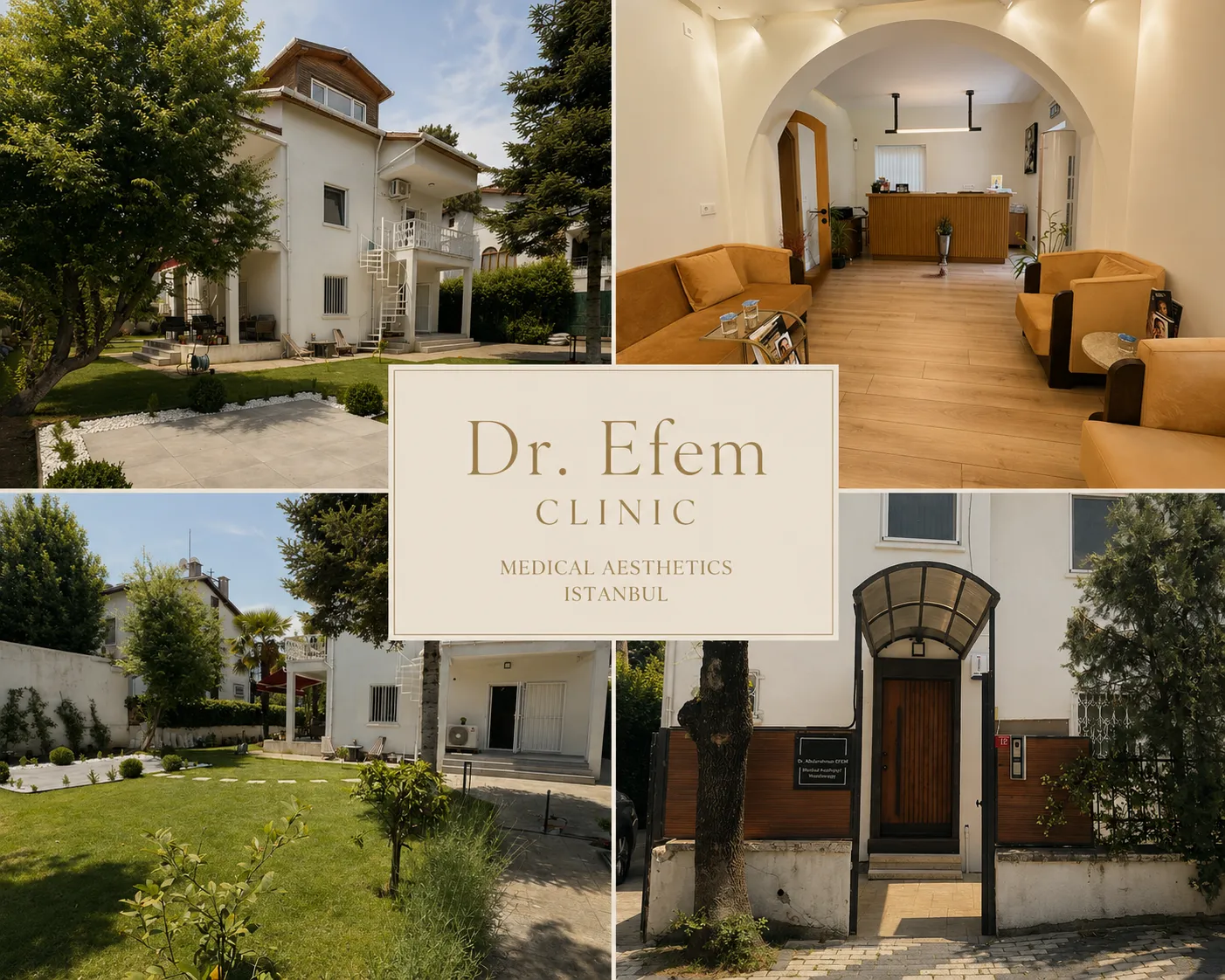
Efem Clinic welcomes patients in a premium villa clinic with a garden and parking in Levent, Istanbul. Consultations are conducted with privacy, personal communication and an unhurried medical assessment.
Medical history, medication, previous aesthetic procedures and treatment expectations are reviewed before Endolift.
The objective is not to present Endolift as risk-free, but to explain its possible benefits, limitations, side effects and alternatives so that patients can make an informed decision.
When Can Endolift Results Be Assessed Safely?
Early swelling and firmness may temporarily change the appearance of the treated area. The first few days should not be treated as the final result.
Some early contraction may be visible, while collagen remodelling develops over the following weeks and months.
The tissue should be allowed to recover before additional intensive treatment is considered.
See when Endolift results appear and how long Endolift results last.
Efem Note
Statements such as “Endolift is completely risk-free because it is non-surgical” or “complications cannot occur because the fibre is thin” are inaccurate.
Endolift is minimally invasive, but the optical fibre still passes through living tissue and the laser creates a thermal effect.
Safe Endolift combines appropriate patient selection, correct tissue depth, controlled energy, sterile technique and accessible medical follow-up.
Related Endolift Guides
Frequently Asked Questions
Is Endolift safe?
Endolift may have an acceptable safety profile when performed in an appropriate patient by a trained physician using correct fibre depth and controlled energy. It is not completely risk-free.
Is Endolift dangerous?
Many side effects are temporary when treatment is performed correctly. Incorrect fibre depth or uncontrolled energy may increase the risk of burns, nerve irritation and contour irregularity.
Is Endolift completely risk-free?
No. Being minimally invasive does not remove the possibility of complications.
What are the most common Endolift side effects?
Swelling, bruising, tenderness, tightness, temporary numbness, firmness and short-term asymmetry may occur.
Can Endolift cause burns?
A superficial fibre plane, concentrated energy or excessive energy may increase the risk of a burn.
Can Endolift damage nerves?
Nerve irritation or injury is an uncommon but important risk. Anatomical knowledge and correct fibre depth help reduce this risk.
Can Endolift cause facial paralysis?
Permanent facial paralysis is not an expected routine effect. New muscle weakness or marked smile asymmetry requires prompt medical assessment.
Can Endolift cause infection?
Because an entry point is created beneath the skin, infection risk is not zero. Sterile technique and appropriate aftercare are important.
Is numbness normal after Endolift?
Temporary numbness may occur. Numbness that worsens, does not improve or is accompanied by muscle weakness should be assessed.
Is firmness normal after Endolift?
Temporary firmness may occur. A growing, red or increasingly painful firm area requires medical review.
Can Endolift cause asymmetry?
Uneven swelling may create temporary asymmetry. Uneven energy or fat loss may contribute to more persistent contour differences.
Can Endolift make the face look hollow?
Unnecessary fat targeting in a thin or volume-deficient face may contribute to unwanted hollowing.
Can Endolift leave a scar?
Entry points are small and a visible scar is not normally intended. Burns, infection or abnormal healing may increase scarring risk.
Is Endolift safe around the eyes?
The eye area requires specialist anatomical knowledge and conservative planning. Not every under-eye concern is suitable for Endolift.
Is Endolift safe for the neck?
It may be considered in suitable patients. Thin skin, mobile structures and nerve pathways require conservative planning.
Is Endolift safe for a double chin?
It may be considered for appropriate localised fat and laxity. Nerves, vessels, muscles and fat distribution must be assessed.
Is Endolift safe for thin faces?
It may be used conservatively in selected patients. Unnecessary fat reduction may increase the risk of hollowing.
When should I contact the clinic after Endolift?
Contact the clinic for increasing pain, skin-colour changes, blistering, fever, discharge, muscle weakness or rapidly increasing swelling.
Can Endolift be performed during pregnancy?
Elective aesthetic Endolift treatment is generally postponed during pregnancy and usually during breastfeeding.
Can patients using blood thinners have Endolift?
Bleeding and bruising risk may be increased. Medication should not be stopped without medical advice.
Do previous fillers increase Endolift risk?
The filler type, volume and placement plane may affect treatment planning. All previous procedures should be disclosed.
Is it safe to combine Endolift with HIFU?
Selected patients may have the treatments at different times. Intensive thermal procedures should not be combined unnecessarily at short intervals.
Is it safe to combine Endolift with Morpheus8?
Both create thermal effects. The order and treatment interval should be determined according to the patient’s tissue needs.
What is the safest Endolift energy level?
There is no single setting suitable for every patient. Treatment area, skin thickness, fat volume, fibre diameter and objective must be considered together.
Is Endolift FDA-approved?
The regulatory status of devices and fibres may vary by country and specific product model. The clinic should be able to explain the registration status of the equipment it uses.
Is Endolift safer than surgery?
Endolift is less invasive and has a different risk profile. It does not replace surgery for advanced laxity, and treatment should be selected according to clinical need.
Find Out Whether Endolift Is Appropriate and Safe for You
You may send front, profile and 45-degree photographs for an initial assessment or arrange an in-person consultation with Dr. Abdurrahman Efem at Efem Clinic in Levent, Istanbul.
Request a Free Initial Assessment Contact Efem Clinic Learn About Dr. EfemThis content is provided for general educational purposes and does not replace an individual medical consultation. Suitability, fibre and energy planning, anaesthesia, side effects, risks, recovery and results vary between patients.
About Dr. Abdurrahman Efem

Dr. Abdurrahman Efem
Dr. Abdurrahman Efem is a medical aesthetic physician specializing in facial rejuvenation, non-surgical aesthetic treatments, and regenerative medicine. His approach focuses on enhancing natural beauty through personalized treatment plans designed around each patient's unique features and goals. Dr. Efem works with both local and international patients, emphasizing balanced, natural-looking results and long-term aesthetic wellbeing. This content has been prepared or medically reviewed by Dr. Abdurrahman Efem to ensure accuracy and relevance.