


Endolift Side Effects
Endolift Safety, Risk and Recovery Guide
Endolift Side Effects: Normal Recovery, Possible Complications and Warning Signs
Endolift side effects may include swelling, tenderness, bruising, temporary numbness, firmness beneath the skin and short-term asymmetry. These effects may gradually improve during recovery. However, burns, infection, nerve irritation, fat necrosis, unwanted fat loss, pigmentation changes and contour irregularities are also possible.
Endolift is minimally invasive, but it is not risk-free. Safety is closely related to patient selection, facial anatomy, treatment depth, laser settings, sterile technique, practitioner experience and appropriate follow-up.
Report Your Symptoms on WhatsApp Explore Endolift Treatment Is Endolift Safe?Severe pain, rapidly increasing swelling, spreading redness, marked warmth, discharge, fever, skin whitening or darkening, new muscle weakness, difficulty breathing or swallowing, or any visual change requires prompt medical assessment.
Swelling, bruising, tenderness, numbness and temporary firmness may occur.
Burns, infection, nerve injury, fat necrosis and contour changes are possible.
The treatment area, medical history, previous procedures and technique all matter.
Unexpected or worsening symptoms should be reported promptly.
Quick Answer: What Are the Side Effects of Endolift?
The most common Endolift side effects may include swelling, tenderness, bruising, redness, temporary numbness, firmness beneath the skin and short-term differences between the two sides.
These effects may gradually improve. More serious complications can include thermal burns, infection, prolonged nerve symptoms, muscle weakness, fat necrosis, unwanted fat loss, persistent pigmentation and contour irregularities.
Whether a symptom is part of normal healing depends on its severity, when it started, whether it is improving and whether other warning signs are present.
Is Endolift Risk-Free?
No. Endolift may not involve a conventional surgical incision, but it is a minimally invasive medical procedure in which a fine optical fibre is advanced beneath the skin and controlled laser energy is delivered to selected tissue planes.
The term minimally invasive does not mean completely risk-free. Safety can be affected by treatment depth, energy delivery, fibre movement, local nerve and blood-vessel anatomy, sterility and individual healing characteristics.
Some published reports describe mainly mild and self-limiting effects, while other reports document more serious complications. The available evidence is still developing.
Safety should therefore not be assessed only from claims such as “non-surgical” or “minimal downtime.”
Common Temporary Effects After Endolift
Swelling and Oedema
Mild or more noticeable swelling may develop. Swelling beneath the chin or around the jawline can temporarily make the area appear fuller.
Bruising
Bruising may occur around fibre-entry points or where small blood vessels beneath the skin are affected.
Tenderness and Pain
Tenderness, aching or mild discomfort may occur. Severe or progressively increasing pain should not be assumed to be normal.
Temporary Numbness
Changes in sensation may be related to local anaesthesia, swelling or irritation of small sensory nerves.
Firmness Beneath the Skin
Firm or tight areas may be felt because of swelling, tissue coagulation and the healing response.
Temporary Asymmetry
The two sides may appear different if swelling resolves at different speeds.
The duration of these effects varies according to the patient and treatment area. Symptoms that are worsening rather than improving should be reviewed.
Is Swelling Normal After Endolift?
A degree of swelling may occur after the fibre has passed beneath the skin and controlled thermal energy has been delivered.
The degree of swelling may be influenced by:
- The size of the treatment area
- The density of fibre passes
- The energy delivered
- The face, neck or double-chin area treated
- The patient’s tendency to retain fluid
- The amount of local anaesthetic solution used
- Fibrosis from previous treatments
- Individual healing speed
Normal recovery swelling should generally reduce over time. Rapidly expanding, very hard, markedly one-sided swelling or swelling associated with difficulty breathing or swallowing requires urgent assessment.
For more detail, read our Endolift recovery-time guide.
How Long Can Bruising Last?
Bruising may occur when the fibre contacts small blood vessels beneath the skin or because of tissue trauma at the entry points.
During recovery, a bruise may change from purple or blue to green or yellow. Its duration depends on vessel sensitivity, treatment area, medication and individual healing.
Prescription blood thinners, some painkillers and certain supplements may affect bruising risk. Prescription medication should never be stopped without medical advice.
A rapidly expanding bruise accompanied by hard swelling, increasing pain or pressure may require assessment for a haematoma.
Is Pain Normal After Endolift?
Mild tenderness, aching or pressure may occur. Pain intensity varies according to the treatment area and individual pain sensitivity.
The following features require closer assessment:
- Pain that becomes progressively worse
- Severe burning or electric-shock sensations
- Pain with spreading redness and warmth
- Pain with discharge or an unpleasant smell
- Pain spreading along a possible nerve pathway
- Severe pain not controlled by the recommended medication
For information about discomfort during treatment, read Is Endolift painful?
Numbness and Changes in Sensation
Temporary numbness may result from local anaesthesia, swelling or irritation of small sensory nerves.
Sensation may return gradually. Numbness that spreads, remains unchanged for a prolonged period or is associated with burning, electric sensations or severe pain may require neurological assessment.
If a motor nerve in the lower face is affected, changes in the movement of the mouth corner, lower lip or smile may occur.
New muscle weakness, a clear change in the smile or altered movement of the mouth corner should be reported promptly.
Can Endolift Cause Firmness or Nodules?
Firmness, tightness or uneven areas may be felt beneath the skin during recovery. These changes may be related to swelling, tissue coagulation, healing or fibrosis.
Not every firm area is dangerous, but the cause cannot always be determined without examination.
Clinical review may be needed if the area:
- Continues to enlarge
- Becomes increasingly painful
- Feels hot or looks red
- Develops discharge or an open wound
- Does not improve over time
- Creates a visible depression or skin tethering
Aggressive massage should not be performed unless specifically recommended by the treating doctor.
Less Common but More Serious Endolift Complications
| Possible Complication | Possible Appearance | Why It Matters |
|---|---|---|
| Thermal burn | Severe burning, skin whitening, blistering, darkening or an open wound | May cause scarring or pigmentation |
| Infection | Increasing redness, heat, pain, discharge, odour or fever | May require prompt medical treatment |
| Nerve irritation or injury | Prolonged numbness, neuropathic pain or altered facial movement | May affect sensation or facial expression |
| Fat necrosis | A painful lump, firmness, inflammation or persistent irregularity | May require imaging, monitoring or treatment |
| Unwanted fat loss | Hollowing, volume loss or unwanted facial slimming | May alter natural facial proportions |
| Contour irregularity | Rippling, depressions, hard bands or persistent asymmetry | May require follow-up or corrective treatment |
| Pigmentation change | Darkening or lightening of the skin | May be prolonged and require dermatological care |
| Fibre-related problem | A device or fibre integrity issue during treatment | Requires appropriate equipment control and medical management |
How Can an Endolift Burn Be Recognised?
Controlled thermal energy is part of the treatment mechanism. However, excessive energy or treatment in an unsuitable tissue plane may cause thermal injury.
Possible warning signs include:
- Severe or increasing burning pain
- Marked whitening of the skin
- Blistering
- Dark-brown or black colour change
- Crusting, an open wound or tissue loss
- Marked tenderness
- An area that does not heal
Do not apply acids, peeling products, oils, herbal remedies or random creams to a suspected burn.
Early medical assessment is important for wound care, infection prevention and management of scarring or pigmentation risk.
Signs of Infection After Endolift
Because Endolift involves entry beneath the skin, sterile technique and appropriate care of the entry points are important.
Possible signs of infection include:
- Increasing or spreading redness
- Marked warmth
- Pain that worsens instead of improving
- Yellow, green or unpleasant-smelling discharge
- Pus-like material
- Fever or chills
- A rapidly enlarging tender swelling
- Feeling generally unwell
Antibiotics should not be selected without medical assessment. Examination, imaging or a culture may be required.
Delayed treatment may allow infection to spread into deeper tissue and increase the risk of scarring.
Can Endolift Damage Nerves?
The face and neck contain many sensory and motor nerve branches. Mechanical contact, an unsuitable treatment plane or excessive thermal effect may irritate or injure a nerve.
Possible nerve-related symptoms include:
- Prolonged numbness
- Burning or electric sensations
- Marked sensitivity to touch
- Altered movement of the mouth corner
- A noticeable difference when smiling
- Changed lower-lip movement
- Weakness in a specific area
Some nerve irritation may be temporary, but the duration and degree of recovery cannot always be predicted in advance.
New movement changes or significant neuropathic pain should be assessed promptly.
What Is Fat Necrosis After Endolift?
Fat necrosis is an inflammatory reaction that can develop when fat cells are damaged.
It may present as a painful or painless lump, tenderness, firmness, inflammation or a persistent irregularity beneath the skin.
Not every firm area is fat necrosis. Swelling, fibrosis and normal healing can feel similar.
Examination and, in some cases, ultrasound imaging may be needed to clarify the cause.
Can Endolift Cause Facial Hollowing?
Endolift can affect fat in selected treatment areas. Excessive treatment in regions that provide natural facial volume may create unwanted fat loss.
Aggressive fat reduction may cause:
- Cheek hollowing
- A more tired appearance
- Uneven lower-face volume
- Differences between the two sides
- More visible signs of ageing
Not every area of facial fat should be considered excess. Natural fat compartments support healthy and youthful facial proportions.
The Efem Method considers fat reduction only in selected areas where true localised excess is present.
Can Endolift Cause Contour Irregularities?
Uneven energy distribution, pre-existing asymmetry, dense fibrosis or differences in healing may contribute to contour irregularity.
Temporary unevenness may occur because of early swelling. A persistent contour problem remains after swelling has substantially reduced.
Possible appearances include:
- Rippling beneath the skin
- Depressed or raised areas
- Firm bands
- An interrupted jawline
- Persistent volume differences
- Skin tethering or pulling
Corrective treatment should not necessarily be planned during early swelling. Appropriate healing time and clinical follow-up may be required.
Can Skin Colour Change After Endolift?
In addition to bruising, inflammation or thermal injury may lead to darkening or, less commonly, lightening of the skin.
Pigmentation risk may be influenced by skin type, sun exposure, inflammation, burns and aftercare.
Sun protection is important during recovery. Products applied to the treated area should be selected according to medical advice.
Persistent or progressive colour change may require dermatological assessment.
Temporary Asymmetry vs a Possible Complication
| Feature | Temporary Recovery Difference | May Need Prompt Assessment |
|---|---|---|
| Development | Appears early with swelling | Develops suddenly or becomes increasingly obvious |
| Pain | Mild tenderness may be present | Severe, worsening or electric pain may occur |
| Movement | Facial movement remains normal | Movement of the mouth corner or lower lip is altered |
| Progress | Gradually improves | Remains unchanged or worsens |
| Associated signs | Mild swelling or bruising | Heat, discharge, skin injury, weakness or severe pain |
Photographs or video may support an initial review, but assessment of motor function, circulation and deep firmness may require an in-person examination.
Regional Risks in Facial Endolift
Facial treatment requires careful planning because of superficial nerve branches, blood vessels and natural fat compartments.
- Irritation of facial nerve branches
- Unwanted reduction of natural cheek fat
- Altered movement of the lower lip or mouth corner
- Jawline contour irregularity
- Persistent volume differences between the two sides
- Thermal effects approaching the surface in thin skin
For facial planning, read Endolift for the face.
Double-Chin Endolift Side Effects
Swelling, bruising, tenderness and temporary firmness may occur beneath the chin. The confined anatomy of this region and its nerve and vascular relationships require careful planning.
Uneven or excessive fat effects may contribute to:
- Rippling beneath the chin
- An uneven chin-to-neck transition
- Differences between the two sides
- Persistent firmness
- Irritation affecting lower-lip movement
When double-chin fat volume is substantial, liposuction may provide a more predictable reduction.
Read our Endolift vs double-chin liposuction comparison.
Neck Endolift Side Effects
Neck treatment should consider the skin, fat, muscle bands, blood vessels and nerve structures together.
- Swelling that affects swallowing or breathing comfort
- A significant haematoma
- Persistent muscle bands
- Limited improvement in advanced excess skin
- Surface thermal injury in thin skin
- Irregularity of the neck contour
Difficulty breathing or swallowing should not be considered a normal recovery symptom and requires urgent medical care.
Risks Around the Eyes
The eye area requires particular caution because of thin skin, limited space and proximity to the eye and delicate neurovascular structures.
Possible risks include swelling, bruising, asymmetry, thermal injury, contour irregularity and laser-safety concerns involving the eye.
Reduced vision, blurred vision, double vision, eye pain, flashes of light or any sudden visual change requires urgent ophthalmic assessment.
Treatment around the eyes should only be considered with appropriate indication, eye-protection protocols and area-specific experience.
Body Endolift Side Effects
In larger areas such as the abdomen, upper arms, back, thighs or knees, swelling, bruising, tenderness and firmness may affect a wider area.
- More extensive bruising or haematoma
- Prolonged swelling
- Rippling or contour irregularity
- Fat necrosis or nodules
- Uneven or insufficient fat reduction
- Burns or pigmentation changes
- Infection at fibre-entry points
The limitations of Endolift should be discussed clearly in patients with substantial fat volume or excess skin.
Who May Have a Higher Risk of Side Effects?
Risk assessment is individual. The following situations may require postponement, modification or avoidance of treatment:
- Active skin infection or an open wound
- Active cold sores or inflammation in the treatment area
- Poorly controlled systemic illness
- A bleeding or clotting disorder
- Medication affecting bleeding risk
- A serious allergy to local anaesthetic
- A history of abnormal scarring or keloids
- Permanent filler, biopolymer or an unknown substance in the area
- Dense fibrosis after previous surgery or energy treatment
- Pregnancy or breastfeeding requiring individual assessment
- Immune or healing-related medical conditions
- Active or uncontrolled autoimmune disease
- Unrealistic expectations
This is not an automatic diagnosis or absolute exclusion list. The complete medical history should be reviewed by a doctor.
Read our guide: Who is not suitable for Endolift?
Do Previous Fillers and Treatments Affect Risk?
Yes. Previous fillers, thread lifts, liposuction, surgery and energy-based treatments may alter tissue planes and healing.
The following information should be disclosed:
- The location and date of previous filler
- The product type, when known
- Permanent filler or biopolymer history
- Thread-lift procedures
- Previous facial or neck surgery
- Previous liposuction
- HIFU, radiofrequency or laser treatments
- Previous aesthetic complications
Ultrasound assessment or postponement may be considered when the contents of a treated area are unknown.
How Can the Risk of Side Effects Be Reduced?
Appropriate Patient Selection
Skin, fat, skeletal support, muscle structure, medical history and expectations should be assessed together.
Anatomical Mapping
Nerves, blood vessels and natural volume compartments should be considered alongside the target area.
Individual Energy Planning
Energy and fibre passes should be adjusted to tissue thickness and the intended treatment layer.
Sterile Technique
Appropriate skin preparation, sterile equipment and entry-point care help reduce infection risk.
Complete Medical Disclosure
Medication, allergies, previous treatments and complications should be shared honestly.
Accessible Follow-Up
Patients should know which symptoms to report and how to contact the clinic.
These measures may reduce risk, but no medical procedure can guarantee that complications will never occur.
What Should Be Disclosed Before Treatment?
- All prescription and non-prescription medication
- Vitamins, herbal products and supplements
- A history of bleeding or easy bruising
- Allergies and previous reactions to local anaesthetic
- Previous infections and cold sores
- Autoimmune, metabolic or neurological conditions
- Pregnancy or breastfeeding
- Previous fillers, botulinum toxin, threads, lasers or surgery
- Abnormal wound healing or keloids
- Smoking or nicotine use
- Travel plans close to treatment
- Previous aesthetic-treatment complications
Incomplete health information can make safe planning and interpretation of symptoms more difficult.
Normal Recovery vs Warning Signs
| Symptom | May Occur During Recovery | Feature That Should Be Reported |
|---|---|---|
| Swelling | Mild or moderate and gradually improving | Rapidly increasing, very hard, one-sided or affecting breathing or swallowing |
| Pain | Mild tenderness or aching | Severe, worsening, burning or electric pain |
| Bruising | Limited and gradually changing colour | Rapidly expanding or associated with a tense swelling |
| Numbness | Localised and gradually improving | Spreading, unchanged or associated with muscle weakness |
| Firmness | Temporary tightness with decreasing tenderness | Growing, very painful, hot, red or causing skin tethering |
| Redness | Mild and short-lived | Spreading, warm, painful or associated with discharge |
| Asymmetry | Related to swelling and gradually improving | Worsening or accompanied by altered facial movement |
When Should You Contact the Clinic?
Contact the treating clinic promptly if any of the following occurs:
- Severe or progressively increasing pain
- Rapidly enlarging swelling
- Marked one-sided firmness or tension
- Spreading redness and warmth
- Discharge, unpleasant smell, fever or chills
- Blistering, an open wound or skin darkening
- Changed movement of the lower lip or mouth corner
- Spreading numbness or intense electric sensations
- Noticeable and worsening asymmetry
- Difficulty breathing or swallowing
- Any sudden visual change
- An entry-point wound that does not close
Difficulty breathing, loss of vision, a severe allergic reaction, altered consciousness or rapidly worsening general health requires emergency medical care.
How Long Do Endolift Side Effects Last?
There is no single fixed recovery period. The symptom, treatment area, treatment intensity and individual healing response affect duration.
| Stage | Possible Symptoms | Assessment |
|---|---|---|
| First 24–72 hours | Swelling, tenderness, firmness and temporary asymmetry | Direction and severity of symptoms are monitored |
| First week | Bruising, swelling and tenderness may continue | A general trend towards improvement is expected |
| Following weeks | Firmness, numbness or unevenness may still be felt | Clinical follow-up may be used |
| Longer term | Persistent numbness, pigmentation or contour change may remain | Detailed assessment for a complication is required |
A symptom not disappearing on a particular day does not automatically mean a complication. Worsening, new symptoms or loss of function are more important warning features.
Can Aftercare Reduce Side-Effect Risk?
Appropriate aftercare may support entry-point protection and safe recovery. It cannot completely eliminate risks related to treatment technique or patient selection.
- Follow your personal aftercare instructions.
- Keep entry points clean and dry as advised.
- Do not perform aggressive massage unless recommended.
- Avoid strong pressure on the treated area during early recovery.
- Follow guidance on exercise, sauna, steam rooms and heat.
- Use appropriate sun protection.
- Use medication and creams only as instructed.
- Avoid smoking and nicotine products.
- Attend scheduled follow-up appointments.
- Send clear, unfiltered photographs when reporting symptoms.
Read the Endolift aftercare guide.
Should You Massage a Side Effect?
Massage is not suitable for every firm or swollen area. A doctor may recommend a controlled technique in selected healing situations. Massage may be inappropriate when a burn, haematoma, infection, fat necrosis or nerve irritation is suspected.
Do not apply hard pressure based on social-media videos or general internet advice.
The timing, direction, pressure and need for massage should be determined by the treating doctor.
Can Endolift Side Effects Be Permanent?
Swelling, bruising and tenderness may be temporary. However, serious thermal injury, significant nerve damage, unwanted fat loss, pigmentation or contour irregularity may be prolonged or permanent.
The outcome of a complication depends on:
- The type and severity of injury
- The anatomical structure involved
- How quickly the problem is recognised
- How quickly treatment begins
- Individual healing
- Associated medical conditions
Early assessment cannot always prevent lasting effects, but it improves the opportunity for appropriate management.
Are Endolift and HIFU Side Effects the Same?
No. Endolift uses an optical fibre beneath the skin. HIFU delivers focused ultrasound energy from the skin surface.
Both treatments may cause tenderness, swelling, numbness or nerve irritation. Endolift additionally involves entry-point, bleeding, infection, fat-necrosis and fibre-related risks.
Read our Endolift vs HIFU comparison.
Are Endolift and Radiofrequency Side Effects the Same?
Radiofrequency treatments may be surface-based, deep or microneedle-assisted. Endolift uses an optical fibre in selected subdermal planes.
Both may involve thermal injury and pigmentation risk. Endolift additionally involves fibre-entry bruising, infection, nerve irritation and effects on fat tissue.
Read Endolift vs radiofrequency.
Are Endolift and Liposuction Risks the Same?
Endolift and liposuction differ in invasiveness, anaesthesia, fat-removal capacity and recovery.
Liposuction can remove a greater volume of fat but carries surgical risks related to bleeding, fluid balance, anaesthesia and wider tissue trauma.
Endolift may provide more limited fat contouring, but the risks of thermal injury, fat necrosis, nerve effects and contour irregularity remain.
Read Endolift vs liposuction.
Endolift vs Facelift Risks
| Feature | Endolift | Surgical Facelift |
|---|---|---|
| Method | Subdermal optical fibre and laser energy | Surgical incision and tissue repositioning |
| Common early effects | Swelling, bruising, tenderness and firmness | Swelling, bruising, incision tenderness and numbness |
| Specific risks | Thermal injury, fat necrosis, fibre and contour problems | Scarring, bleeding, surgical infection and anaesthetic risk |
| Nerve risk | Thermal or mechanical irritation is possible | Surgical nerve injury is possible |
| Result capacity | Measured improvement in mild to moderate laxity | Stronger change in more advanced sagging |
Being less invasive does not automatically make a procedure more suitable for every patient. Read Endolift vs facelift.
The Efem Method: Safety Starts With the Right Anatomical Decision
The Efem Method does not plan Endolift only around the area that appears loose. Nerves, blood vessels, natural fat compartments, skeletal support, skin thickness and previous procedures are assessed together.
Not every loose-looking area should receive fat reduction. Natural facial-volume compartments are identified and protected from unnecessary thermal effects.
The aim is not to use the highest possible energy, but to use a controlled plan that is appropriate for the target tissue.
If Endolift cannot safely provide the expected improvement, alternative treatments or surgical consultation may be recommended.
Safe planning does not begin by assuming complications will never occur. It begins by understanding the risks and explaining them honestly.

Endolift Safety Planning With Dr Abdurrahman Efem
Dr Abdurrahman Efem is a medical aesthetic physician and a Ministry-appointed trainer in medical aesthetics.
He provides physician education in Endolift, Ultherapy, Morpheus8, advanced fillers and facial contouring.
During consultation, skin laxity, fat thickness, nerve and vascular anatomy, skeletal support, previous procedures, medical history and healing risks are assessed together.
Unnecessary treatment is not recommended when the expected benefit is limited in relation to the possible risk. Alternative energy treatments, fillers or surgical consultation may be discussed when appropriate.
About Dr Efem Ask on WhatsAppA Follow-Up and Privacy-Focused Villa Clinic in Levent, Istanbul
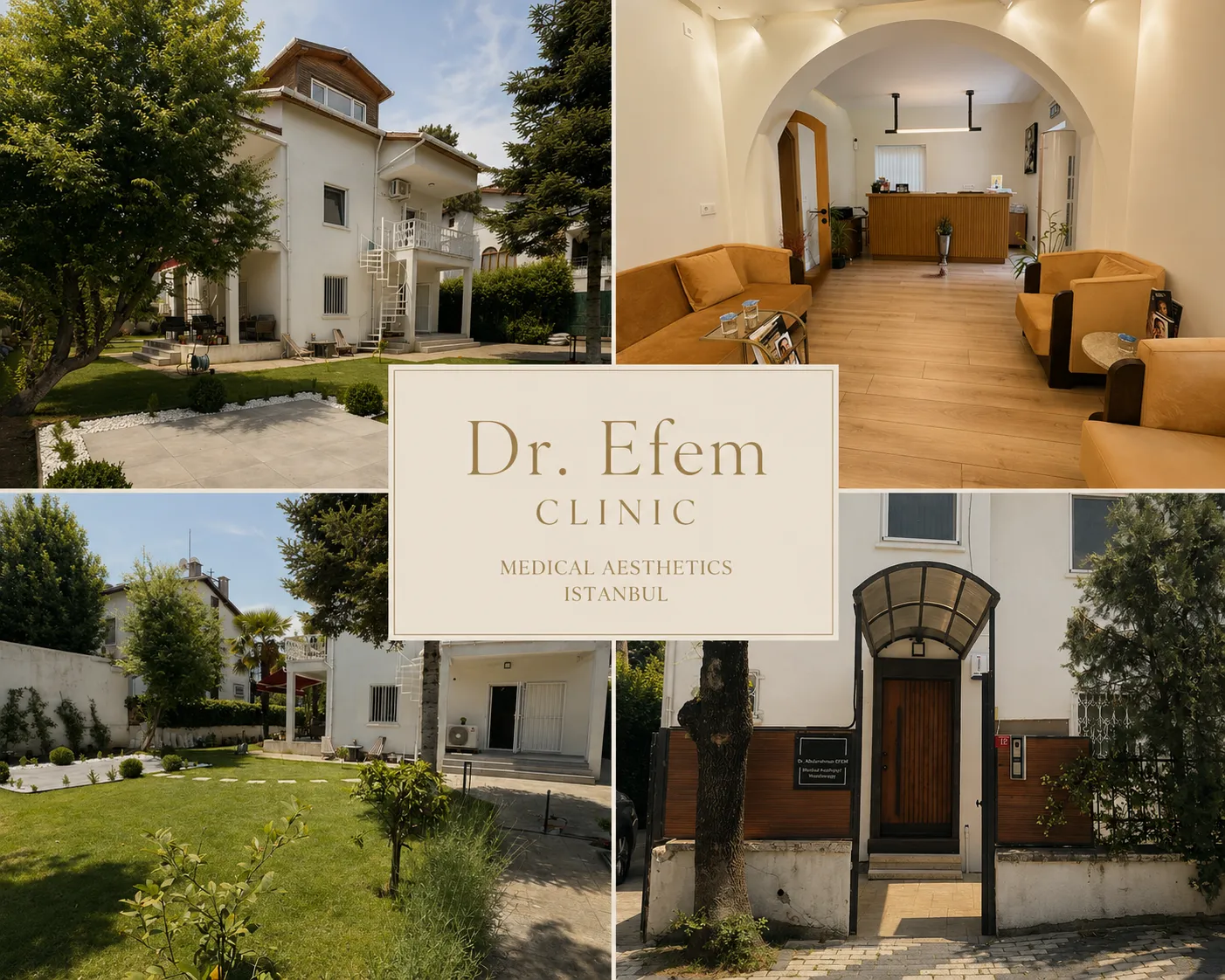
Efem Clinic provides treatment in a private villa clinic with a garden and parking in Levent, Istanbul.
Expected benefits, common effects, less common risks, recovery and alternative options are discussed without rushing before treatment.
Patients are informed about which symptoms to monitor and how to contact the clinic during recovery.
English and Turkish communication, international-patient planning and appropriate online early follow-up support are available.
Efem Note
Not every swelling after Endolift is a complication. However, it is also incorrect to assume that every symptom is normal and will disappear without assessment.
Normal recovery symptoms generally tend to become milder. Symptoms that become more severe, affect function or occur with new warning signs should be assessed earlier.
A good follow-up system does not only record the result. It also checks whether recovery is progressing safely.
Related Endolift Guides
Frequently Asked Questions
What are the most common Endolift side effects?
Swelling, bruising, tenderness, temporary numbness, firmness beneath the skin and temporary early asymmetry may occur.
Is Endolift dangerous?
Appropriate patient selection and technique may reduce risk, but Endolift is not risk-free. Burns, infection, nerve effects and contour irregularities are possible.
Is swelling normal after Endolift?
Mild or moderate swelling may occur. Rapidly increasing, one-sided or very painful swelling, or swelling affecting breathing or swallowing, requires urgent assessment.
How long does bruising last?
Duration varies by patient and treatment area. Bruising should generally improve rather than expand.
When is pain after Endolift concerning?
Severe, worsening, burning or electric pain, particularly with redness, heat, discharge or weakness, should be assessed.
Can Endolift cause nerve damage?
Nerve irritation or more significant nerve injury is possible. Prolonged numbness, neuropathic pain or altered facial movement should be reported.
Can Endolift cause mouth asymmetry?
Irritation of lower-face motor nerves may alter movement of the mouth corner or lower lip. New movement changes require prompt assessment.
Can Endolift cause burns?
Excessive thermal effect or an unsuitable treatment plane may cause a burn. Blistering, whitening, darkening or an open wound should be assessed promptly.
Can Endolift cause infection?
Infection is possible with any procedure that enters beneath the skin. Increasing redness, heat, pain, discharge or fever requires assessment.
Is firmness normal after Endolift?
Temporary firmness may occur. A growing, very painful, hot or tethered lump should be reviewed.
Can Endolift cause fat necrosis?
Fat necrosis is possible after fat-tissue injury. A painful lump or persistent irregularity may require examination or imaging.
Can Endolift make the face look hollow?
Excessive treatment of natural facial-fat compartments may cause unwanted volume loss. Conservative planning is particularly important in thin faces.
Is asymmetry normal after Endolift?
Temporary asymmetry may occur when swelling resolves at different speeds. Worsening asymmetry or altered movement should be reported.
When does numbness improve?
Timing varies by patient and area. Sensation may return gradually, but prolonged numbness or numbness with muscle weakness requires review.
Should the area be massaged?
Massage should only be performed when recommended by the treating doctor. It may be inappropriate if a burn, infection, haematoma or fat necrosis is suspected.
Can skin colour change after Endolift?
Inflammation or thermal injury may cause darkening or lightening. Persistent or progressive changes should be assessed.
Can Endolift side effects be permanent?
Many early effects are temporary, but serious burns, nerve injury, pigmentation, unwanted fat loss or contour irregularity may be prolonged or permanent.
When should I see a doctor?
Seek assessment for increasing pain, rapidly enlarging swelling, discharge, fever, skin damage, muscle weakness, worsening asymmetry or visual changes.
How can side-effect risk be reduced?
Appropriate patient selection, anatomical planning, controlled energy, sterile technique, complete medical disclosure and accessible follow-up may reduce risk.
Can Endolift be performed over filler?
The filler type, location and date should be assessed. Permanent or unknown materials may require imaging or make treatment unsuitable.
Is Endolift risky around the eyes?
The eye area requires area-specific experience and appropriate protection. Any sudden visual change requires urgent ophthalmic assessment.
Can a complication be diagnosed from a photo?
Photos can support an initial review, but nerve function, circulation and deep-tissue problems may require examination or imaging.
Request a Personal Endolift Risk Assessment
Share your medical history, previous aesthetic treatments and clear front, profile and 45-degree photographs for a preliminary review, or arrange an in-person consultation with Dr Abdurrahman Efem in Levent, Istanbul.
Request a WhatsApp Assessment Contact Efem Clinic Meet Dr EfemThis content is intended for general information and does not replace a personal medical consultation. Endolift side effects, complication risk, recovery and suitability vary between patients.
About Dr. Abdurrahman Efem

Dr. Abdurrahman Efem
Dr. Abdurrahman Efem is a medical aesthetic physician specializing in facial rejuvenation, non-surgical aesthetic treatments, and regenerative medicine. His approach focuses on enhancing natural beauty through personalized treatment plans designed around each patient's unique features and goals. Dr. Efem works with both local and international patients, emphasizing balanced, natural-looking results and long-term aesthetic wellbeing. This content has been prepared or medically reviewed by Dr. Abdurrahman Efem to ensure accuracy and relevance.