


Harmful Effects of Sun Exposure on Skin
Sun Damage and Skin Health Guide
Harmful Effects of Sun Exposure on Skin
Sunlight is a natural part of daily life, but repeated and unprotected ultraviolet exposure can damage skin cells. This damage does not appear only as sunburn. Over time, it may contribute to pigmentation, uneven tone, dryness, wrinkles, reduced elasticity and an increased risk of several types of skin cancer.
At Efem Clinic in Levent, Istanbul, sun-damaged skin is not assessed simply by trying to remove visible brown spots. Pigmentation, barrier condition, vascular redness, skin texture, wrinkles and laxity are evaluated as separate layers. We do not assume that the same device or an aggressive resurfacing treatment is appropriate for every sign of sun damage.
Request a Complimentary Consultation Read the Sun-Spot Prevention GuideYou may send clear, unfiltered photographs taken in natural light through WhatsApp. A remote preliminary review does not replace an in-person medical examination or dermatological assessment.

Quick Answer
It Can Damage Skin Cells
Ultraviolet radiation can damage DNA within skin cells. The body may not always repair all of this damage completely.
It Can Accelerate Skin Ageing
Cumulative exposure may affect collagen, elastin and skin quality, contributing to wrinkles, laxity and rough texture.
It Can Increase Pigmentation
Sun spots, darker freckles, melasma and post-acne marks may become more noticeable after UV exposure.
Damage Accumulates Over Time
Some sun damage is not immediately visible. Repeated exposure may build over many years before becoming noticeable.
Important: tanning does not mean the skin is healthy. Increased melanin production is one of the skin’s protective responses to ultraviolet exposure.
How Does Ultraviolet Radiation Damage the Skin?
The most relevant forms of ultraviolet radiation reaching the skin from sunlight are UVA and UVB. Both can damage the skin, although they penetrate to different depths and are associated with different visible effects.
UVB mainly affects the more superficial layers of the skin and is strongly associated with sunburn. UVA can penetrate more deeply and may contribute to photoageing, loss of elasticity and wrinkle formation.
The effects of UVA and UVB should not be treated as completely separate. Both types of radiation may contribute to cellular damage and the development of skin cancer.
UVA vs UVB vs UVC
| Radiation Type | Depth of Effect | Main Skin Effects | Protection Note |
|---|---|---|---|
| UVA | Can penetrate into deeper layers of the skin. | Photoageing, wrinkles, reduced elasticity, pigmentation and cellular damage | Broad-spectrum sunscreen is required. Some UVA may pass through ordinary glass. |
| UVB | Mainly affects the more superficial layers of the skin. | Sunburn, delayed tanning, DNA damage and skin cancer risk | Exposure may increase during summer and when the sun is higher in the sky. |
| UVC | Solar UVC is filtered by the atmosphere before reaching the ground. | Artificial UVC sources can damage the skin and eyes when used without appropriate protection. | Disinfection devices and other artificial sources should be used according to safety instructions. |
8 Harmful Effects of Sun Exposure on Skin
1. Sunburn
Sunburn is an acute inflammatory response to excessive ultraviolet exposure. Redness, warmth, tenderness, pain, swelling and, in more severe cases, blistering may occur.
The disappearance of visible sunburn does not mean that all cellular damage has disappeared. Repeated sunburn, particularly during childhood and adolescence, may increase future skin cancer risk.
2. Sun Spots and Uneven Skin Tone
Ultraviolet exposure may stimulate melanocytes, the cells responsible for pigment production. Brown spots, darker freckles and uneven tone may gradually develop on exposed areas such as the face, hands, neck and décolletage.
Melasma and post-acne marks may also darken after sunlight exposure. For this reason, sun protection is as important as the treatment itself when managing pigmentation.
3. Photoageing
Premature ageing caused by long-term sun exposure is known as photoageing. Fine and deeper wrinkles, rough texture, dullness, laxity, uneven pigmentation and visible superficial vessels may all form part of this process.
Not all facial ageing is caused by the sun. Genetics, facial movement, volume loss, connective tissues and bone structure also contribute. However, sun damage is one of the most important external factors that may accelerate visible ageing.
4. Breakdown of Collagen and Elastin Support
Long-term UVA exposure may contribute to the breakdown of collagen and elastin structures that support skin firmness and elasticity. The skin may gradually appear thinner, more wrinkled, lax or uneven.
5. Skin-Barrier Disruption
Intense sunlight and heat may increase water loss, sensitivity and redness. Peeling, dryness and stinging after sunburn are clear examples of barrier disruption.
For a more detailed explanation, read why the skin barrier may break down during summer.
6. Increased Redness and Visible Vessels
Sun exposure and heat may temporarily increase facial redness. Cumulative damage may also contribute to visible superficial vessels and an uneven red tone.
7. Actinic Keratosis
Actinic keratosis is a rough, dry or scaly area associated with long-term sun damage. It commonly appears on the face, ears, exposed scalp, backs of the hands and forearms.
Actinic keratoses are considered potentially precancerous. Persistent rough patches, repeatedly crusting areas or changing lesions should be examined by a dermatologist rather than covered or treated as purely cosmetic concerns.
8. Increased Skin Cancer Risk
Ultraviolet exposure is an important risk factor for basal cell carcinoma, squamous cell carcinoma and melanoma. Protection cannot remove all risk, but reducing cumulative UV exposure is a central preventive measure.
Have You Noticed a New or Changing Skin Mark?
A lesion that grows rapidly, develops irregular borders, changes colour, bleeds, repeatedly crusts or does not heal should not automatically be treated as a cosmetic sun spot. Dermatological assessment should come first.
Contact Us for General GuidanceVisible and Hidden Sun Damage
Not all sun damage is immediately visible in the mirror. Cellular changes and pigment accumulation may begin before obvious spots and wrinkles appear.
| Damage Stage | Possible Findings | What Should Be Done? |
|---|---|---|
| Damage not yet visible | DNA damage, early pigment irregularity and oxidative stress | Build consistent sun-protection habits. |
| Early visible changes | More freckles, uneven tone, dullness, dryness and fine lines | Skin assessment, barrier support and prevention planning may be considered. |
| Cumulative photoageing | Visible spots, wrinkles, rough texture, reduced elasticity and vascular redness | A personalised treatment plan may be developed according to the affected layers. |
| Suspicious skin lesions | Persistent crusting, bleeding, irregular pigmentation, wounds or rapid change | Dermatological assessment should be prioritised. |
How to Reduce Sun Damage
Use Broad-Spectrum Sunscreen
Choose a broad-spectrum, water-resistant sunscreen with at least SPF 30. Remember the face, ears, neck, décolletage, backs of the hands and any other exposed areas.
Reapply Regularly
Reapply approximately every two hours while outdoors and sooner after swimming, heavy perspiration or towel drying.
Add Shade and Protective Clothing
A wide-brimmed hat, sunglasses, protective clothing and shade should be used alongside sunscreen rather than as alternatives.
Check the UV Index
Reduce time in direct sunlight when the UV index is high. Remember that water, sand and pale surfaces can reflect ultraviolet radiation.
Avoid Tanning Beds
Tanning beds expose the skin to UVA and other ultraviolet radiation. A tanned appearance does not make them safer and their use may contribute to premature ageing and skin cancer risk.
Protect Children Carefully
Intense sun exposure and sunburn during childhood and adolescence are particularly important for future risk. Protective habits should begin early.
For practical prevention steps, read our guide to preventing sun spots in summer and our sun-protection guide after medical aesthetic treatments.
Which Treatments May Be Considered for Sun-Damaged Skin?
Years of accumulated sun damage cannot be completely reversed with one procedure. However, suitable patients may consider different treatment layers to support the appearance of pigmentation, uneven tone, texture, dullness and early signs of ageing.
| Treatment | Main Target | When It May Be Considered | What It Cannot Solve Alone |
|---|---|---|---|
| Lumecca IPL | Superficial sun spots, uneven tone and selected areas of redness | Widespread sun damage and irregular skin tone | Deep wrinkles, significant laxity or advanced structural ageing |
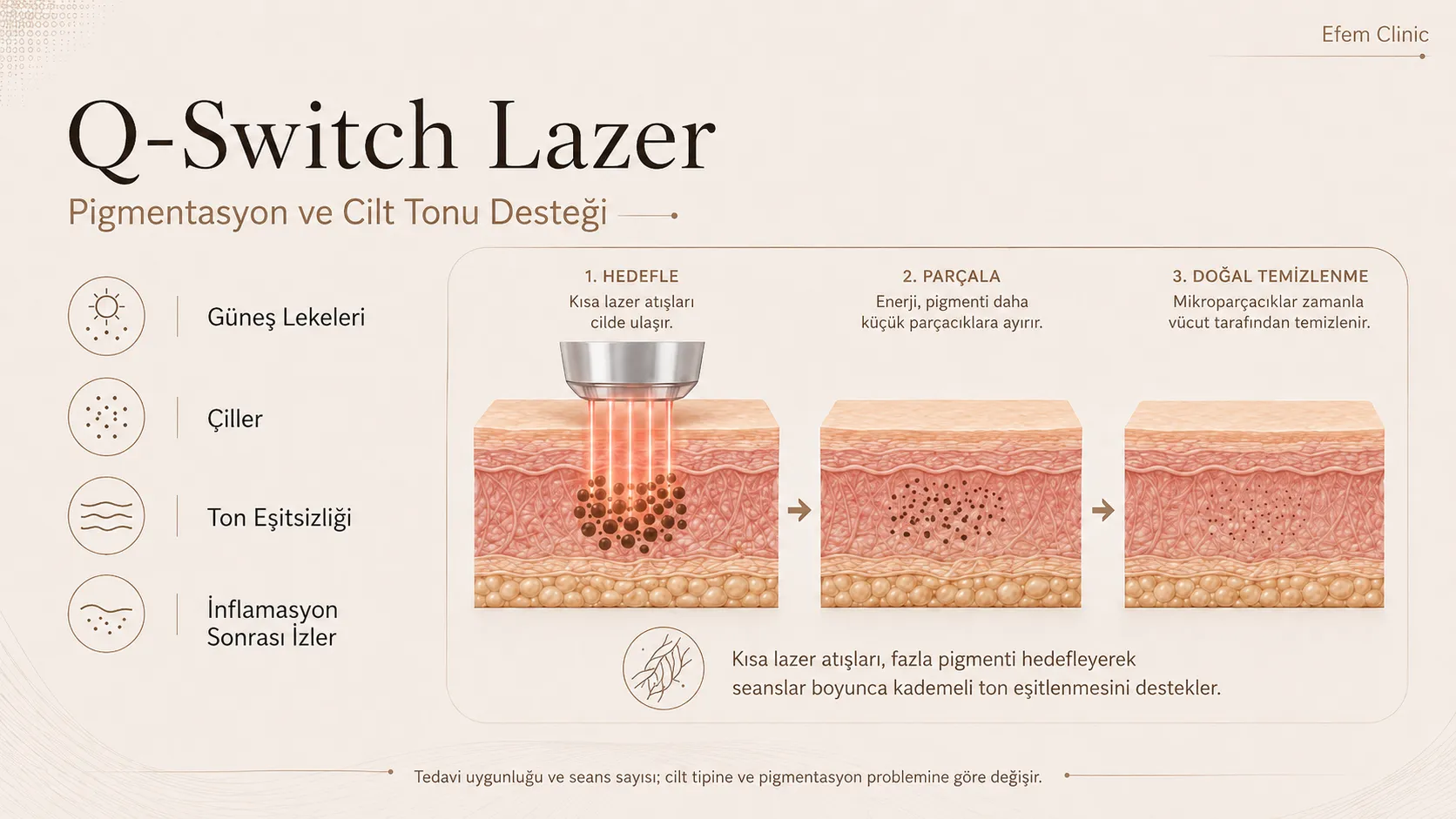
| Q-Switch Laser | Selected pigment areas and certain colour irregularities | Defined pigment concerns in suitable skin types | Skin laxity, volume loss or deeper structural concerns |
| Morpheus8 | Texture, pores, fine lines and skin-quality support | Selected patients with texture changes alongside pigmentation | Removing active sun spots or all pigmentation by itself |
| Medical Skincare | Barrier support, hydration, dullness and routine improvement | Sensitive, dry or poorly balanced skincare routines | Significant pigment accumulation or structural ageing |
| Healite II LED Therapy | Skin comfort, sensitivity and post-procedure recovery support | Selected plans requiring gentle barrier and recovery support | Removing sun spots or wrinkles by itself |
Where pigmentation is the main concern, read our pigmentation and uneven skin tone treatment guide. Where ageing changes are more prominent, review why the face ages.
The Efem Method™: We Do Not Treat Sun Damage as One Spot
For one patient, sun damage may appear mainly as pigmentation. For another, the more important problem may be barrier disruption, redness, texture, wrinkles or reduced elasticity. It is unrealistic to expect one device to correct all of these concerns.
The Efem Method™ evaluates the skin surface, barrier, pigmentation, vascular redness, texture, collagen support, facial volume and deeper facial structures as separate layers. Treatment is directed only toward the layers that genuinely need intervention.
Sometimes the correct first step is not laser or device treatment, but improving sun-protection habits and calming the skin barrier. In other cases, pigmentation and texture may need to be addressed with different treatments at different times.
Our approach prioritises the correct sequence, limited intervention and honest discussion of what treatment can and cannot achieve.
Explore The Efem Method™ Growing Older Is Not the Enemy Why Personalised Treatment Matters
Personalised Skin Planning with Dr. Abdurrahman Efem
Dr. Abdurrahman Efem is a medical aesthetic physician and a trainer appointed by the Turkish Ministry of Health in the field of medical aesthetics. He provides physician education in Endolift, Ultherapy, Morpheus8, advanced fillers and device-based aesthetic treatment planning.
He has completed advanced training and certification programmes in Paris and the United Kingdom. His approach focuses on understanding the natural structure of the skin and face, intervening only where necessary and avoiding exaggerated changes.
When assessing sun-damaged skin, pigment type, skin tone, barrier condition, vascular redness, texture, wrinkle depth, sensitivity and sun-protection habits are considered together.
Meet Dr. Efem Read About His Philosophy and Expertise Request a Complimentary Consultation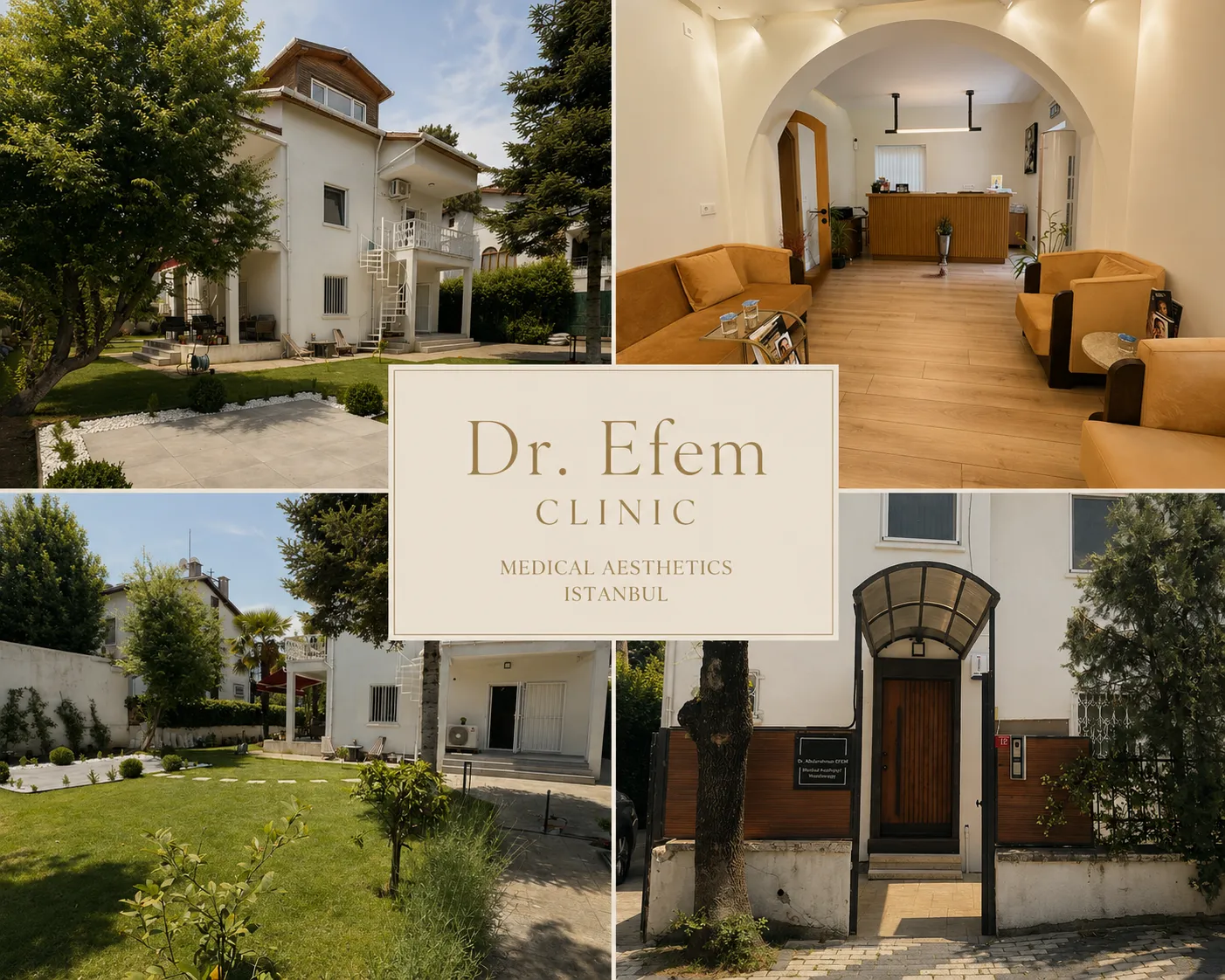
A Premium and Discreet Villa Clinic in Levent
Efem Clinic is located in a private villa in Levent, Istanbul, within easy reach of Etiler, Beşiktaş, Bebek, Maslak and central Istanbul.
The garden, private parking and planned appointment system support a calm, private clinical experience away from the atmosphere of a crowded hospital.
Turkish and international patients can receive general guidance about treatment timing, sun avoidance, travel planning and post-treatment follow-up.
Our goal is not to recommend the largest possible number of procedures. It is to explain clearly which treatment may be necessary, which may be unnecessary and when it may be more appropriate to wait.
Clinic Location and Contact Efem in the Media View the Results GalleryRelated Treatments and Skin Health Guides
Frequently Asked Questions
How exactly does the sun damage the skin?
UVA and UVB radiation may contribute to DNA damage, oxidative stress, inflammation, increased pigment production and collagen breakdown. Damage may be immediate or accumulate gradually over many years.
Is UVA or UVB more harmful?
Both are harmful. UVB is more closely associated with sunburn and superficial injury, while UVA is associated with deeper effects and photoageing. Both may contribute to cellular damage and skin cancer risk.
Does the sun really age the skin?
Yes. Cumulative ultraviolet exposure may contribute to wrinkles, reduced elasticity, pigmentation, rough texture and visible superficial vessels. This process is known as photoageing.
Does tanning mean the skin has been damaged?
Tanning occurs when the skin increases melanin production in response to ultraviolet exposure. A tan does not mean that the skin is healthy or undamaged.
Can sun damage be reversed?
Not all cellular damage can be reversed. Consistent protection may reduce further damage, while appropriate treatments may support the appearance of pigmentation, uneven tone, wrinkles and texture changes.
Why do sun spots appear years later?
Pigment and cellular damage may accumulate for years. As the skin ages and pigment distribution changes, previously hidden damage may become visible as sun spots and uneven tone.
Can the sun damage the skin barrier?
Intense UV and heat exposure may increase water loss, redness, sensitivity and inflammation. Peeling and dryness may become more noticeable after sunburn.
Does sun exposure reduce collagen?
Long-term UVA exposure may contribute to the breakdown of collagen and elastin. This may increase the visible appearance of wrinkles, laxity and reduced elasticity.
Can sunlight damage the skin through a window?
Ordinary glass may block much of UVB radiation, but some UVA can pass through. People who spend long periods beside bright windows or driving may still benefit from daytime protection.
Can sun damage occur on cloudy days?
Yes. Clouds do not block all ultraviolet radiation. Protection remains important on cloudy days, particularly when the UV index is high.
Are tanning beds safer than sunlight?
No. Tanning beds may expose the skin to intense ultraviolet radiation and contribute to premature ageing and skin cancer risk.
Can Lumecca completely remove sun damage?
Lumecca may support the appearance of superficial sun spots, selected redness and uneven tone in suitable patients. It should not be expected to remove all accumulated sun damage or advanced signs of ageing.
Is Lumecca or Q-Switch laser better for sun spots?
Lumecca may be considered for widespread sun damage and uneven tone, while Q-Switch laser may be considered for selected pigment areas. The correct choice depends on skin tone, pigment type, melasma tendency and the ability to follow sun-protection guidance.
Can Morpheus8 help sun-damaged skin?
Morpheus8 may be considered to support texture, pores, fine lines and skin quality in suitable patients. It is not primarily a pigmentation treatment, and timing should be planned carefully in recently tanned or actively irritated skin.
When should sun-damaged skin be examined by a dermatologist?
Dermatological assessment is recommended for lesions that change rapidly, have irregular borders, contain several colours, bleed, crust repeatedly, fail to heal or appear suspicious.
Dr. Efem’s Note
Sun damage is often not one spot or one wrinkle. Pigmentation, barrier function, vascular redness, texture and collagen support may all be affected at the same time. The correct approach is therefore not to choose the strongest device, but to understand which layer genuinely needs treatment. Aggressive procedures performed before establishing consistent sun protection may create new sensitivity and pigmentation instead of meaningful improvement.
Do You Think Your Skin Has Sun Damage?
Send clear, unfiltered photographs through WhatsApp to request a complimentary preliminary consultation. Our team can provide general guidance about whether the main concern appears related to pigmentation, barrier disruption, texture or ageing and which assessment route may be appropriate.
Request a Complimentary Consultation Contact Efem ClinicDoctor-led assessment • Layered planning • Honest recommendations • Premium and discreet villa clinic
About Dr. Abdurrahman Efem

Dr. Abdurrahman Efem
Dr. Abdurrahman Efem is a medical aesthetic physician specializing in facial rejuvenation, non-surgical aesthetic treatments, and regenerative medicine. His approach focuses on enhancing natural beauty through personalized treatment plans designed around each patient's unique features and goals. Dr. Efem works with both local and international patients, emphasizing balanced, natural-looking results and long-term aesthetic wellbeing. This content has been prepared or medically reviewed by Dr. Abdurrahman Efem to ensure accuracy and relevance.