


How to Prevent Sun Spots in Summer
Summer Skin Health Guide
How to Prevent Sun Spots in Summer
Preventing sun spots in summer requires more than applying a high-SPF product once in the morning. Effective protection combines the correct sunscreen amount, regular reapplication, shade, protective clothing, skin-barrier care and a sensible approach to pigmentation treatments.
At Efem Clinic in Levent, Istanbul, our approach begins by understanding why pigmentation has developed, how the skin reacts to sunlight and whether irritation, melasma, inflammation or an unsuitable skincare routine may be contributing to the problem.
Request a Complimentary Assessment Read the Post-Treatment Sun GuideYou may send clear, unfiltered photographs taken in natural light through WhatsApp. A remote preliminary review does not replace an in-person medical examination or diagnosis.

Quick Answer
Use Broad-Spectrum Protection
Choose a broad-spectrum, water-resistant sunscreen with at least SPF 30 whenever you will be exposed to daylight outdoors.
One Application Is Not Enough
Reapply approximately every two hours while outdoors and sooner after swimming, heavy sweating or towel drying.
Add Physical Protection
Shade, a wide-brimmed hat, sunglasses and protective clothing should be used alongside sunscreen rather than treated as alternatives.
Melasma Needs Extra Care
People with melasma or pigmentation that darkens easily may benefit from considering a tinted sunscreen containing iron oxides.
The most important point: sunscreen should not be used as permission to remain in direct sunlight for longer. Its purpose is to reduce unavoidable exposure, not to make uncontrolled exposure safe.
Why Do Sun Spots Become More Noticeable in Summer?
Ultraviolet radiation stimulates the skin to produce melanin as part of its natural defence response. When this pigment is produced or distributed unevenly, darker areas can become visible on the face, hands, neck and décolletage.
The problem is not only that sunlight may be more intense during summer. Longer periods outdoors, swimming, perspiration, towel drying and failure to reapply sunscreen can all increase cumulative exposure.
Skin-barrier irritation, active acne, excessive exfoliation, unsuitable ingredient combinations and uncontrolled procedures may also increase the risk of post-inflammatory darkening. Understanding why the skin barrier may become disrupted in summer is therefore an important part of preventing pigmentation.
Sun Spots, Melasma and Post-Acne Marks Are Not the Same
Not every brown patch has the same cause. Treating all pigmentation in the same way can lead to unnecessary irritation, excessive product use or a treatment that is poorly matched to the actual problem.
| Pigmentation Type | Typical Appearance | Common Triggers | Protection Priority |
|---|---|---|---|
| Sun spots | Defined brown areas that may vary in size | Cumulative UV exposure | Consistent SPF, shade, hats and monitoring |
| Melasma | Often symmetrical and more diffuse pigmentation | UV, visible light, heat and hormonal influences | Strict protection, gentle skincare and personalised planning |
| Post-inflammatory pigmentation | Dark marks remaining after acne, irritation or injury | Inflammation, picking, friction and irritating products | Reducing irritation, barrier support and sun protection |
Widespread, symmetrical or repeatedly recurring pigmentation may require a more careful distinction between melasma and ordinary sun spots.
A 7-Step Plan to Prevent Sun Spots in Summer
1. Choose the Right Sunscreen
Select a broad-spectrum, water-resistant product with at least SPF 30. Product texture and formulation should also suit your skin type, sensitivity and tendency toward acne or melasma.
2. Apply It Before Exposure
Do not wait until you are already outside. Apply an adequate, even layer before exposure and remember commonly missed areas such as the ears, neck, décolletage and hands.
3. Reapply Approximately Every Two Hours
A single morning application is not designed to protect the skin throughout an entire day outdoors. Reapplication is especially important after swimming, sweating or towel drying.
4. Use Shade and Protective Clothing
A wide-brimmed hat, sunglasses, tightly woven clothing and shaded areas help reduce total UV exposure. These measures should support sunscreen rather than replace it.
5. Check the UV Index
Reduce time in direct sunlight when the UV index is high. Water, pale surfaces, sand and outdoor terraces may reflect radiation and increase total exposure.
6. Avoid Unnecessary Skin-Barrier Damage
Over-exfoliation, harsh acids and using several active products at the same time can create irritation. Continuing a product that causes persistent burning or inflammation is not a sensible route to clearer skin.
7. Have New or Changing Marks Assessed
A rapidly changing, irregular, bleeding, crusting or unusual lesion should not automatically be treated as a cosmetic sun spot. Dermatological assessment may be required.
Not Sure What Type of Pigmentation You Have?
You may send clear, unfiltered photographs taken in natural light through WhatsApp and request a complimentary preliminary review. Our team can explain whether skincare adjustment, clinical assessment or dermatological referral may be the more appropriate next step.
Send Your Photos on WhatsAppWhat Should You Look for in a Sunscreen?
| Label Feature | Why It Matters | Who Should Pay Particular Attention? |
|---|---|---|
| Broad spectrum | Indicates protection against both UVA and UVB radiation. | Everyone |
| SPF 30 or higher | Provides a practical baseline for routine outdoor exposure. | Everyone |
| Water resistant | Helps maintain protection for a stated period during perspiration or swimming. | People exercising, swimming or spending time at the beach |
| Tinted formula with iron oxides | May provide additional protection against visible light. | People with melasma or pigmentation that darkens easily |
Common Sun-Protection Mistakes
Applying It Only in the Morning
Protection may become less reliable when sunscreen is not reapplied during prolonged outdoor exposure.
Using Too Little Product
The labelled level of protection depends on applying a sufficient, even amount to all exposed areas.
Ignoring Cloudy Days
Clouds do not block all ultraviolet radiation. A consistent daily routine is still relevant.
Continuing Irritating Products
Products that cause persistent inflammation, burning or peeling may increase the risk of post-inflammatory darkening.
Treating a Tan as a Sign of Health
Tanning is a defensive response to UV exposure and does not mean that the skin has avoided damage.
Using Sunscreen to Extend Sun Exposure
Sunscreen does not make prolonged, uncontrolled exposure harmless.
Can Pigmentation Treatments Be Performed in Summer?
Not every pigmentation treatment is automatically unsuitable during summer. However, treatment type, skin tone, recent tanning, travel plans and the patient’s ability to avoid sunlight all affect timing.
Laser and light-based procedures that target pigmentation may require particularly strict post-treatment protection. A patient planning beach holidays, swimming or prolonged outdoor activities may be advised to delay treatment until a more suitable period.
Before scheduling treatment, you may also review our sun-protection guide after medical aesthetic procedures.
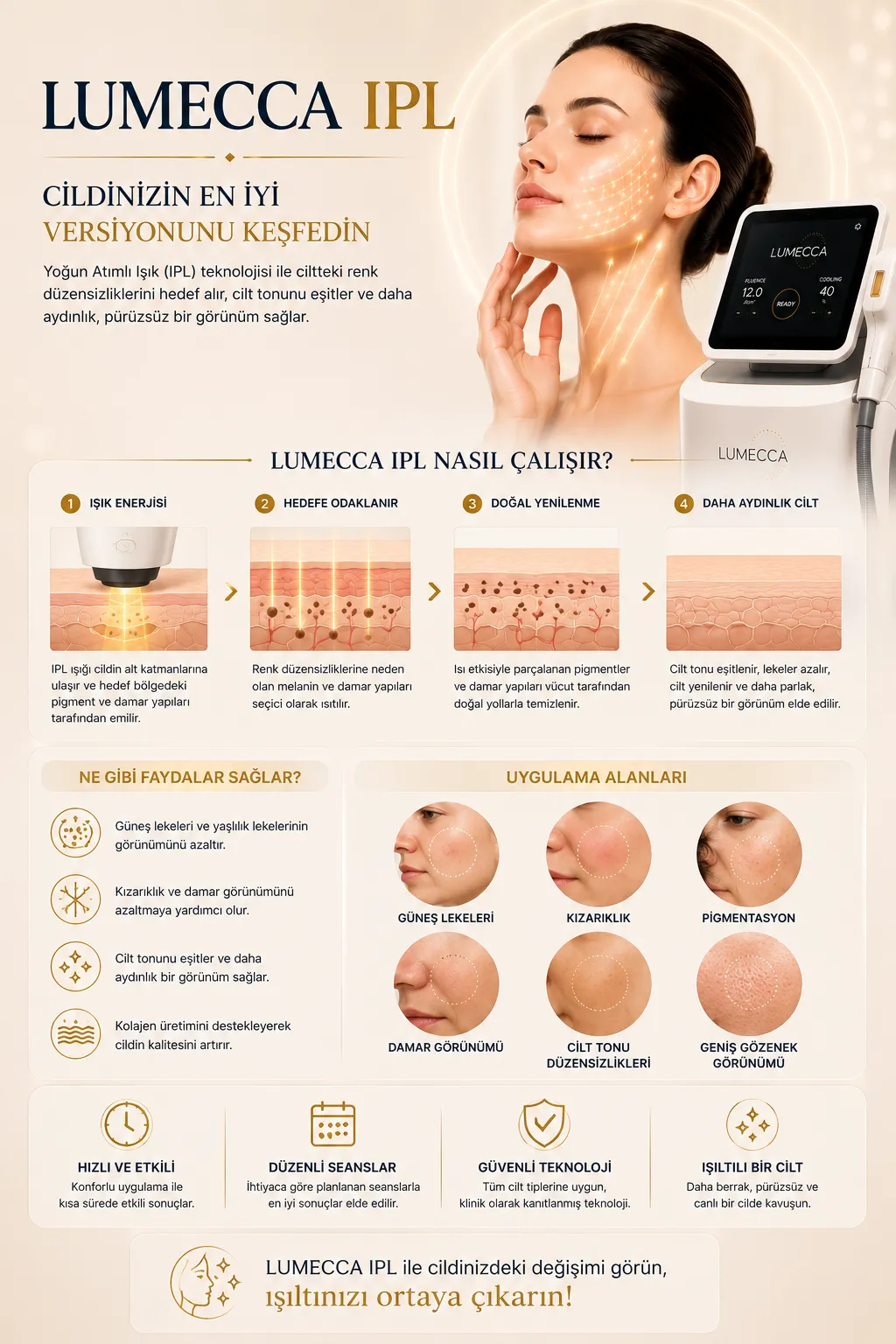
Which Treatments May Be Considered for Existing Sun Spots?
Pigmentation treatment should not begin with the assumption that every patient needs the same device or a fixed package of sessions. The type, depth and distribution of pigment, the condition of the skin barrier and the possibility of melasma should be assessed first.
| Approach | Main Target | Summer Consideration | When It May Not Be Enough |
|---|---|---|---|
| Lumecca IPL | Sun damage, selected superficial pigmentation and general uneven tone | Sun avoidance and aftercare compliance need careful planning. | It may not be sufficient alone where melasma, deeper pigment or significant texture concerns are present. |
| Q-Switch Laser | Selected pigment areas and certain colour irregularities | Treatment may be postponed in recently tanned skin or before intensive sun exposure. | Active melasma or a disrupted skin barrier may require a more conservative plan. |
| Medical Skincare | Barrier support, hydration, dullness and improvement of the skincare routine | Gentler protocols can be adjusted according to the season. | It should not be expected to remove significant accumulated pigmentation by itself. |
For a more complete review of treatment options, read our guide to pigmentation and uneven skin tone treatment in Istanbul.
The Efem Method™: We Assess the Cause Before Treating the Spot
At Efem Clinic, pigmentation planning does not begin with the question, “Which device should we use?” It begins by asking whether the pigmentation is related to cumulative sun damage, melasma, inflammation, an unsuitable skincare routine, skin-barrier disruption or a combination of several factors.
Our layered approach may begin with improving sun habits and restoring a calmer skin barrier. Only when appropriate do we move toward pigment-focused, vascular, texture or skin-quality treatments.
Our philosophy is based on less intervention where possible, appropriate intervention where necessary and honesty when a procedure is unlikely to provide meaningful benefit.
Explore The Efem Method™ Why Personalised Treatment Matters
Personalised Planning by Dr. Abdurrahman Efem
Dr. Abdurrahman Efem is a medical aesthetic physician with experience in advanced device-based and injectable aesthetic treatments. His approach is based on detailed assessment, ethical decision-making, limited but appropriate intervention and natural-looking results.
During a pigmentation assessment, the visible brown areas are not considered in isolation. Skin tone, sensitivity, barrier condition, hormonal history, sun habits, previous treatments and the patient’s ability to follow aftercare are considered together.
Dr. Efem has participated in professional training programmes in Paris and the United Kingdom. He considers honest discussion of treatment limitations, timing and cases where no procedure is required to be an essential part of responsible medical aesthetic care.
Meet Dr. Efem Read About His Philosophy and Expertise Ask on WhatsApp
A Premium and Discreet Villa Clinic in Levent
Efem Clinic is located in a private villa in Levent, Istanbul, within easy reach of Etiler, Beşiktaş and central Istanbul. The clinic offers a garden, private parking and a calm environment away from the atmosphere of a crowded hospital.
The patient journey is organised around privacy, planned appointment timing and a discreet clinical experience. International patients can receive guidance about appointment timing, travel planning and the expected duration of their stay.
Patients travelling to Istanbul during summer should plan laser or light-based pigmentation treatments around holidays, beach visits, swimming and prolonged outdoor exposure.
Clinic Location and Contact View the Results GalleryRelated Treatments and Guides
Frequently Asked Questions
Why do sun spots become darker during summer?
Increased UV exposure, longer periods outdoors, swimming, perspiration and sunscreen being removed can stimulate pigment production. Existing marks may darken and new areas of uneven tone may appear.
Is SPF 30 or SPF 50 better for preventing sun spots?
Broad-spectrum SPF 30 is a practical minimum for routine protection. SPF 50 may be preferred during intense exposure, after certain treatments or for skin that develops pigmentation easily. Correct quantity and regular reapplication remain essential.
How often should sunscreen be reapplied to prevent pigmentation?
When outdoors, sunscreen should generally be reapplied approximately every two hours and sooner after swimming, sweating or towel drying.
Do I need sunscreen on cloudy summer days?
Yes. Clouds do not block all ultraviolet radiation. People prone to pigmentation should maintain their daily protection routine even when the weather appears overcast.
Can sun spots develop while sitting near a window?
Some UVA radiation may pass through ordinary glass. People who spend long periods beside a bright window or driving may still benefit from consistent daytime protection.
Is tinted sunscreen better for melasma?
Tinted sunscreens containing iron oxides may provide additional protection against visible light. This may be helpful for people with melasma or pigmentation that darkens easily.
Can sunscreen remove existing sun spots?
Sunscreen does not remove every existing spot by itself. It may help prevent further darkening, reduce the development of new pigmentation and support the results of an appropriate treatment plan.
Is vitamin C enough to prevent sun spots?
Vitamin C may provide antioxidant support in some skincare routines, but it does not replace sunscreen, shade or protective clothing. Irritating formulations may not be suitable for every skin type.
Can retinol and exfoliating acids be used during summer?
Some patients may continue them under suitable guidance, but irritation, dryness or burning should not be ignored. Using several strong active ingredients together may weaken the skin barrier and increase post-inflammatory pigmentation risk.
Can Q-Switch laser treatment be performed in summer?
Suitability depends on skin type, pigmentation type, recent tanning, travel plans and the ability to avoid sunlight. Treatment may be postponed when intensive sun exposure is expected.
Is Lumecca or Q-Switch laser better for sun spots?
Lumecca may be considered for more widespread sun damage and uneven tone, while Q-Switch laser may be considered for selected pigment areas. Neither treatment is universally better; the choice depends on the pigment type, skin tone and medical assessment.
Can pigmentation treatment be performed on recently tanned skin?
Some laser and light treatments may not be suitable for recently tanned skin. Waiting until the skin has returned closer to its natural tone may reduce unnecessary pigmentation risk.
Can sun spots be treated in one session?
The number of sessions depends on the type and depth of pigmentation, the selected treatment, skin tone and aftercare. Some superficial marks may respond earlier, while more complex pigmentation may require a staged plan.
How can international patients request a sun-spot assessment in Istanbul?
International patients may send clear, unfiltered photographs through WhatsApp and request a complimentary preliminary review. The clinic can provide guidance about assessment timing, treatment suitability and travel planning before an appointment in Istanbul.
Dr. Efem’s Note
The most useful first step in pigmentation treatment is sometimes not another procedure, but identifying the habit or irritation that is repeatedly stimulating the skin. Aggressive treatment performed before improving sun protection, calming the skin barrier and understanding the pigmentation type may create the opposite of the intended result. The goal should be the right intervention, for the right reason, at the right time.
Would You Like Your Pigmentation Assessed?
Send clear photographs through WhatsApp to request a complimentary preliminary review. Our team can guide you about sun protection, skincare planning and whether an in-clinic medical assessment may be appropriate.
Request a Complimentary Assessment Contact Efem ClinicDoctor-led assessment • Personalised planning • Honest recommendations • Premium and discreet villa clinic
About Dr. Abdurrahman Efem

Dr. Abdurrahman Efem
Dr. Abdurrahman Efem is a medical aesthetic physician specializing in facial rejuvenation, non-surgical aesthetic treatments, and regenerative medicine. His approach focuses on enhancing natural beauty through personalized treatment plans designed around each patient's unique features and goals. Dr. Efem works with both local and international patients, emphasizing balanced, natural-looking results and long-term aesthetic wellbeing. This content has been prepared or medically reviewed by Dr. Abdurrahman Efem to ensure accuracy and relevance.