


Pigmentation and Uneven Skin Tone Treatment Istanbul | Q-Switch, Lumecca and Skin Tone Correction
Pigmentation and Uneven Skin Tone Treatment Istanbul
Q-Switch, Lumecca and Personalized Skin Tone Correction Planning
If you have sun spots, brown post-acne marks, uneven skin tone, dullness or patchy pigmentation, the problem should not simply be treated as “a spot.”
Skin tone problems can develop for different reasons, including sun damage, post-acne pigmentation, melasma tendency, age-related spots, hormonal changes, weak skin barrier, incorrect product use, previous aggressive treatments, genetic tendency, irregular skincare and insufficient sun protection.
This is why pigmentation and uneven skin tone treatment should not be planned by using the same laser or skincare protocol for every patient.
At Efem Clinic, pigmentation concerns are planned by evaluating the type of pigmentation, skin structure, pigmentation risk, skin barrier, sun exposure habits and natural-result goals together.
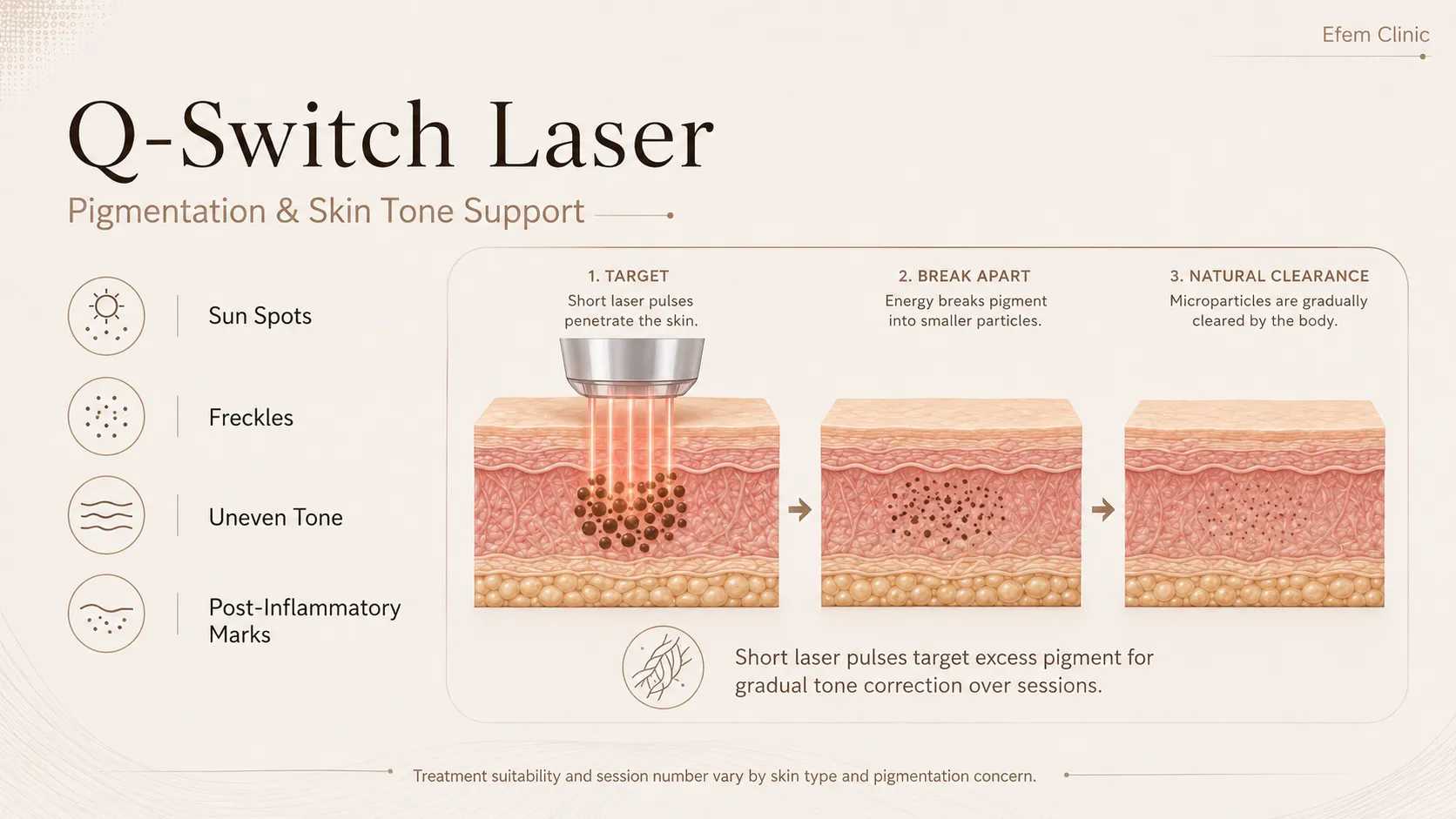
Q-Switch laser may be considered for selected pigment concerns.
Lumecca may be included in suitable patients for sun damage, uneven tone and skin radiance.
Medical skincare and supportive skin treatments may support the skin barrier, brightness and treatment process.
Morpheus8 or other skin remodeling treatments may be carefully considered if texture problems are also present.
The aim is not to aggressively peel or thin the skin. The aim is a complexion that looks:
- More even
- Brighter
- Clearer
- Healthier
- More balanced
- Natural-looking
What Is Pigmentation and Uneven Skin Tone Treatment?
Pigmentation and uneven skin tone treatment is a personalized medical aesthetic plan designed to improve brown spots, sun damage, post-acne marks, dullness and tone irregularities.
It is not one single treatment. Depending on the patient, lasers, light-based treatments, medical skincare, skin barrier support, pigment-control skincare protocols and sun protection routines may be planned together.
The aim is to improve concerns such as:
- Sun spots
- Brown post-acne marks
- Uneven skin tone
- Tone irregularity
- Dull and tired-looking skin
- Superficial pigmentation
- Loss of skin clarity
- Age-related spots
- Risk of pigmentation recurrence
- Skin looking older or more tired
The correct plan depends on the type of pigmentation and skin sensitivity.
- Sun spots are different.
- Post-acne pigmentation is different.
- Melasma tendency is different.
- A damaged skin barrier is different.
- Deep pigmentation is different.
This is why pigmentation treatment should be planned after proper skin evaluation, not as a fixed package.
Why Do Pigmentation and Uneven Skin Tone Develop?
Skin spots and uneven tone do not happen for one single reason.
One of the most common causes is sun exposure. UV exposure stimulates pigment cells and can gradually create brown spots and tone differences.
Other factors may also contribute:
- Post-acne inflammation
- Hormonal changes
- Pregnancy or birth control medication
- Genetic tendency
- Incorrect pigmentation treatments
- Irritating skincare products
- Weak skin barrier
- Aggressive peeling or incorrect laser treatments
- Insufficient sun protection
- Aging
In some patients, the real issue is not a defined spot but general dullness. In some patients, there is post-acne pigmentation. In some patients, superficial sun-related spots are present. In some patients, there is melasma tendency, where aggressive treatments can worsen pigmentation. In some patients, pigmentation exists together with pores, texture problems or acne scars.
The correct question is: “What caused this pigmentation, and what type of pigment problem is present?”
- If the answer is sun damage, Lumecca may be considered.
- If the answer is selected pigment areas, Q-Switch may be considered.
- If the answer is post-acne pigmentation, a tone-focused protocol may be needed.
- If there is melasma tendency, a more careful and protective plan is required.
- If the skin barrier is weak, strengthening the skin first may be the better decision.
Sun Spots, Acne Marks, Melasma or Uneven Tone?
Send your photo on WhatsApp. We can evaluate whether your concern is related to sun spots, post-acne pigmentation, melasma tendency, uneven skin tone or a combination of these factors.
Who Is a Good Candidate?
You may be a good candidate for pigmentation and uneven tone treatment if you have:
- Sun spots
- Brown post-acne marks
- Uneven facial tone
- Dull and tired-looking skin
- Patchy darkening
- Age-related spots
- Loss of skin clarity
- Pigmentation and pore concerns together
- A desire for a brighter and more balanced complexion
- Realistic expectations
This approach is especially suitable for patients who want their skin to look clearer, more balanced and healthier without looking aggressively peeled or over-treated.
Who May Not Be a Good Candidate?
Pigmentation treatment may need to be delayed or modified if you have active skin infection, severe skin sensitivity, damaged skin barrier, active inflammation, unwillingness to use sun protection, unrealistic expectations, expectations of all pigmentation disappearing in one session, recent aggressive skin treatments, melasma tendency with expectations of aggressive treatment or certain medical conditions that may affect treatment suitability.
Pigmentation treatment can work.
But success is not only about the device.
Sun protection, skin barrier health, correct product use and patience are essential parts of the process.
Types of Pigmentation and Uneven Skin Tone Problems
Not every spot is the same. The type of pigmentation must be understood before choosing the treatment.
Sun Spots
Sun spots usually develop because of long-term UV exposure. They are more common on sun-exposed areas such as the face, hands, neck and décolletage. In suitable patients, Q-Switch, Lumecca or tone-focused skin protocols may be considered.
Brown Post-Acne Marks
Brown marks may remain after acne improves. These are not true acne scars. They are pigmentation problems. For this reason, they should be planned differently from depressed acne scar treatments.
Melasma Tendency
Melasma is a more sensitive pigmentation condition with a high tendency to recur. Aggressive treatments may worsen pigmentation in some patients. This is why melasma-prone skin requires a more careful, protective and long-term approach.
Age-Related Spots
With age, accumulated sun damage and pigment irregularity may become more visible. These spots can make the skin look older and duller.
General Uneven Tone
Some patients do not have one obvious spot, but the skin looks uneven, dull and tired overall. In this case, the aim is not only to target one spot but to improve overall skin clarity and tone balance.
Layered Approach: Which Treatment Fits Which Problem?
Pigmentation and uneven skin tone treatment should be planned according to pigment type and skin condition.
Q-Switch Laser: Selected Pigment Concerns
Q-Switch laser is a laser technology that may be considered for selected pigment concerns.
It may be included for selected brown spots, superficial pigmentation, uneven skin tone, some types of post-acne pigmentation, skin tone irregularity and dull appearance.
The role of Q-Switch is pigment and tone-focused improvement. It is not the main standalone method for deep acne scars or skin laxity.
Lumecca: Sun Damage, Uneven Tone and Skin Radiance
Lumecca may be considered in suitable patients for sun damage, uneven tone and a brighter skin appearance.
It may help with sun-related tone irregularity, superficial spots, dull skin appearance, general loss of radiance, tone irregularity and selected redness and color concerns.
The role of Lumecca is to improve skin tone and light quality. It may not be suitable for every pigmentation problem. This is why skin type and pigmentation type must be evaluated first.
Medical Skincare and Pigmentation-Control Skincare Plan
Medical skincare and the correct home-care plan are important parts of pigmentation treatment.
They may help support the skin barrier, prepare the skin for treatment, support tone correction, improve post-treatment recovery, build a sun protection routine, reduce the risk of pigmentation recurrence and maintain skin quality.
In pigmentation treatment, clinical procedures are not the only factor. Daily skincare habits also matter. Especially if sun protection is not used properly, spots may return or treatment results may be weaker.
Morpheus8 and Skin Texture Treatments
Some patients have uneven skin tone together with texture problems, pores or acne scars. In this case, pigment treatment alone may not be enough.
Morpheus8 may be carefully considered when there are visible pores, acne scars, texture irregularity, reduced skin firmness or poor skin quality.
However, in patients with pigmentation risk, treatment planning should be done carefully. The aim is to improve the skin, not to trigger pigmentation.
Our Approach: Balancing the Skin, Not Forcing the Skin
One of the biggest mistakes in pigmentation treatment is trying to get fast results by aggressively peeling or stressing the skin.
This is not always the right approach.
In some skin types, overly aggressive treatment can:
- Increase sensitivity
- Damage the skin barrier
- Increase pigmentation risk
- Prolong redness
- Worsen the final result
At Efem Clinic, our pigmentation and uneven tone approach is based on:
- Understanding the pigmentation type correctly
- Planning according to skin type
- Making sun protection central to the plan
- Protecting the skin barrier
- Avoiding unnecessary aggressive treatments
- Aiming for gradual and safe improvement
- Creating a natural and healthy-looking skin tone
Less is more.
More aggressive treatment does not always mean a better result.
The right treatment, correct timing and proper skincare matter.
About Dr. Abdurrahman Efem
Dr. Abdurrahman Efem is a highly experienced medical aesthetic doctor known for his natural-result focused approach.
He is also a trainer in advanced aesthetic procedures, including Endolift and Ultherapy, in addition to his education programs in botulinum toxin and filler applications.
- Natural facial expression
- Balanced rejuvenation
- Careful patient selection
- Medical safety
- Premium device quality
- Avoiding exaggerated or artificial results
At Efem Clinic, every treatment is planned with the aim of creating refined, elegant and believable improvement.

How Is Pigmentation and Uneven Skin Tone Treatment Planned?
1. Consultation and Skin Analysis
The first step is detailed skin and pigmentation evaluation. We assess pigmentation type, depth, skin tone, skin type, pigmentation tendency, sun damage, post-acne marks, skin barrier, skin sensitivity, previous treatments, products being used, sun protection habits, medical history and expected result.
2. Identifying the Main Problem
If sun damage is the main issue, Lumecca may be considered. If selected pigment areas are present, Q-Switch may be included. If brown post-acne marks are present, a tone-focused approach may be needed. If the skin barrier is weak, skin strengthening may come first. If there is melasma tendency, a more careful and long-term plan is required. If texture and pore problems are also present, treatments such as Morpheus8 may be considered carefully.
3. Creating the Treatment Sequence
Sequence is very important in pigmentation treatment. The treatment order depends on pigmentation type, skin type, season, pigmentation risk, skin barrier condition, sun exposure, recovery tolerance, social schedule and doctor’s evaluation. This is not a standard package. It is a treatment plan created for the patient.
4. Follow-Up and Result Evaluation
Pigmentation treatment requires follow-up. During follow-up, we evaluate pigmentation color change, skin tone balance, skin sensitivity, new pigmentation formation, skin barrier condition, home-care compliance, sun protection routine, need for additional sessions and whether the result is already enough. Sometimes the right decision is not to do something more aggressive, but to balance and protect the skin.
What Do the Treatments Feel Like?
The sensation depends on the treatment performed.
Q-Switch Laser Sensation
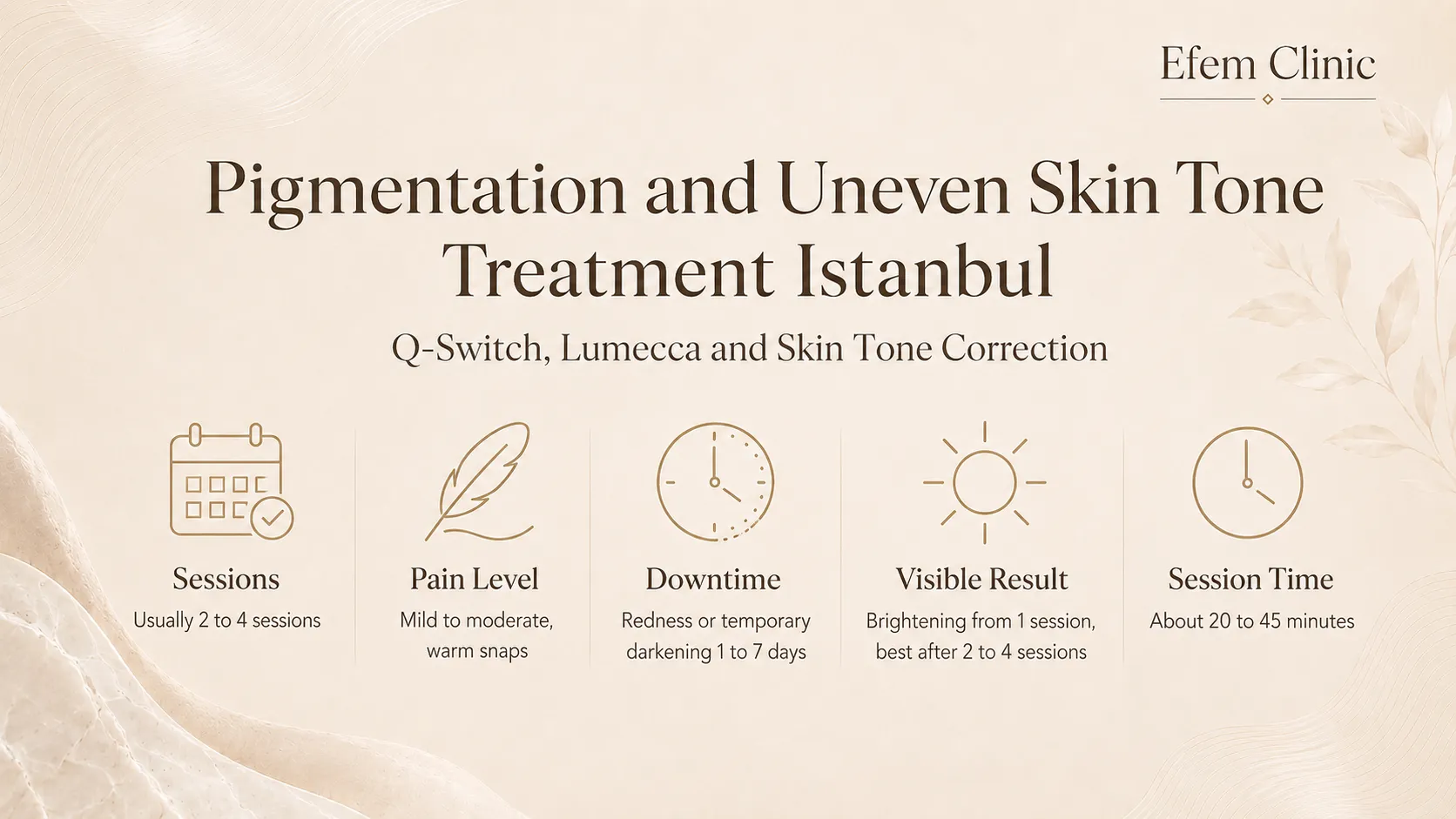
Q-Switch may feel like mild stinging, a snapping sensation, short heat pulses, temporary sensitivity and warmth in the treatment area.
Lumecca Sensation
Lumecca may feel like heat, mild burning, short light pulses, a snapping sensation and temporary warmth.
Medical Skincare Sensation
Depending on the protocol used, medical skincare may create mild burning, tingling, warmth or sensitivity.
Supportive Skin Treatments
Mesotherapy, skin boosters or similar treatments may involve needle sensation, mild pressure, small injection marks or tenderness.
We do not describe medical aesthetic treatments as completely sensation-free. Honest expectations are part of a safe treatment experience.
Recovery and Return to Social Life
Recovery depends on the treatment performed and skin type.
After Q-Switch
Temporary effects may include redness, sensitivity, mild crusting, temporary darkening of pigmented areas, dryness and warmth.
After Lumecca
Temporary effects may include redness, warmth, pigmented areas becoming darker before fading, sensitivity and mild dryness.
After Medical Skincare
Temporary redness, sensitivity, mild peeling or dryness may occur.
Sun protection is extremely important after pigmentation treatments. Without sun protection, pigmentation may return or treatment results may be weaker.
When Will I See Results?
The result timeline depends on pigmentation type, skin structure and treatment used.
Early phase: after treatment, redness, sensitivity or temporary darkening of the spot may occur. This can be part of the recovery process in some pigment treatments.
First weeks: skin tone may begin to look more balanced and brighter. Some spots may start to fade.
After several sessions: more visible tone balance and reduction in pigmentation appearance may develop.
Long-term process: in skin prone to pigmentation, skincare and sun protection should continue.
Pigmentation treatment is usually not a one-session “erasing” process. The goal is gradual, controlled and safe improvement.
How Many Sessions Are Needed?
There is no single answer. The number of sessions depends on pigmentation type, pigment depth, skin tone, pigmentation tendency, skin barrier, level of sun damage, presence of post-acne marks, melasma tendency, expected result and doctor’s evaluation.
In general:
Q-Switch may require multiple sessions.
Lumecca may be planned in sessions depending on skin type and treatment goal.
Medical skincare and care protocols may need to be repeated.
Home care and sun protection remain continuously important.
But this is not a package rule. The correct plan is created after consultation.
Which Treatment Is Better for Pigmentation?
The right treatment depends on the type of pigmentation.
If Sun Spots Are the Main Concern
Lumecca or Q-Switch may be considered.
If Brown Post-Acne Marks Are Present
Tone-focused treatments and a medical skincare plan may be needed.
If There Is Melasma Tendency
A more careful, protective and gradual approach is required.
If the Skin Barrier Is Weak
Strengthening the skin first may be the better decision.
If Pigmentation Exists Together with Pores or Texture Problems
Morpheus8 or other skin remodeling treatments may be considered carefully.
The important point is this: “Pigmentation treatment” is not one single treatment. First, the type of pigmentation and skin condition must be understood.
Can Pigmentation Completely Disappear?
Some spots may fade significantly. Some spots may disappear. Some may have a tendency to recur.
Especially in melasma-prone skin, the idea that pigmentation is “completely finished forever” may not be realistic.
The realistic goal is:
- Reduction in pigmentation appearance
- More even skin tone
- A brighter and clearer appearance
- Better skin quality
- Less dullness
- More controlled pigmentation
- A skincare routine that reduces new pigmentation risk
Success in pigmentation treatment is not only related to the clinical procedure. It also depends on skincare and sun protection.
Safety: Why Medical Planning Matters
Pigmentation treatments must be planned carefully. Incorrect treatment planning may lead to darkening of pigmentation, new pigmentation formation, prolonged redness, damage to the skin barrier, increased sensitivity, weak results, patient dissatisfaction and unnecessary aggressive treatment.
At Efem Clinic, we focus on:
- Planning according to skin type
- Correct evaluation of pigmentation type
- Medical-grade treatment standards
- Respect for the skin barrier
- Sun protection guidance
- Natural-looking skin tone improvement
- Avoiding unnecessary aggressive treatment
- Realistic expectation management
The device matters. But correct pigmentation diagnosis and treatment planning matter more.
Before and After Photos
Results vary from person to person.
A consultation is necessary to understand what kind of improvement is realistic for your skin.
Why Choose Efem Clinic for Pigmentation and Uneven Skin Tone Treatment in Istanbul?
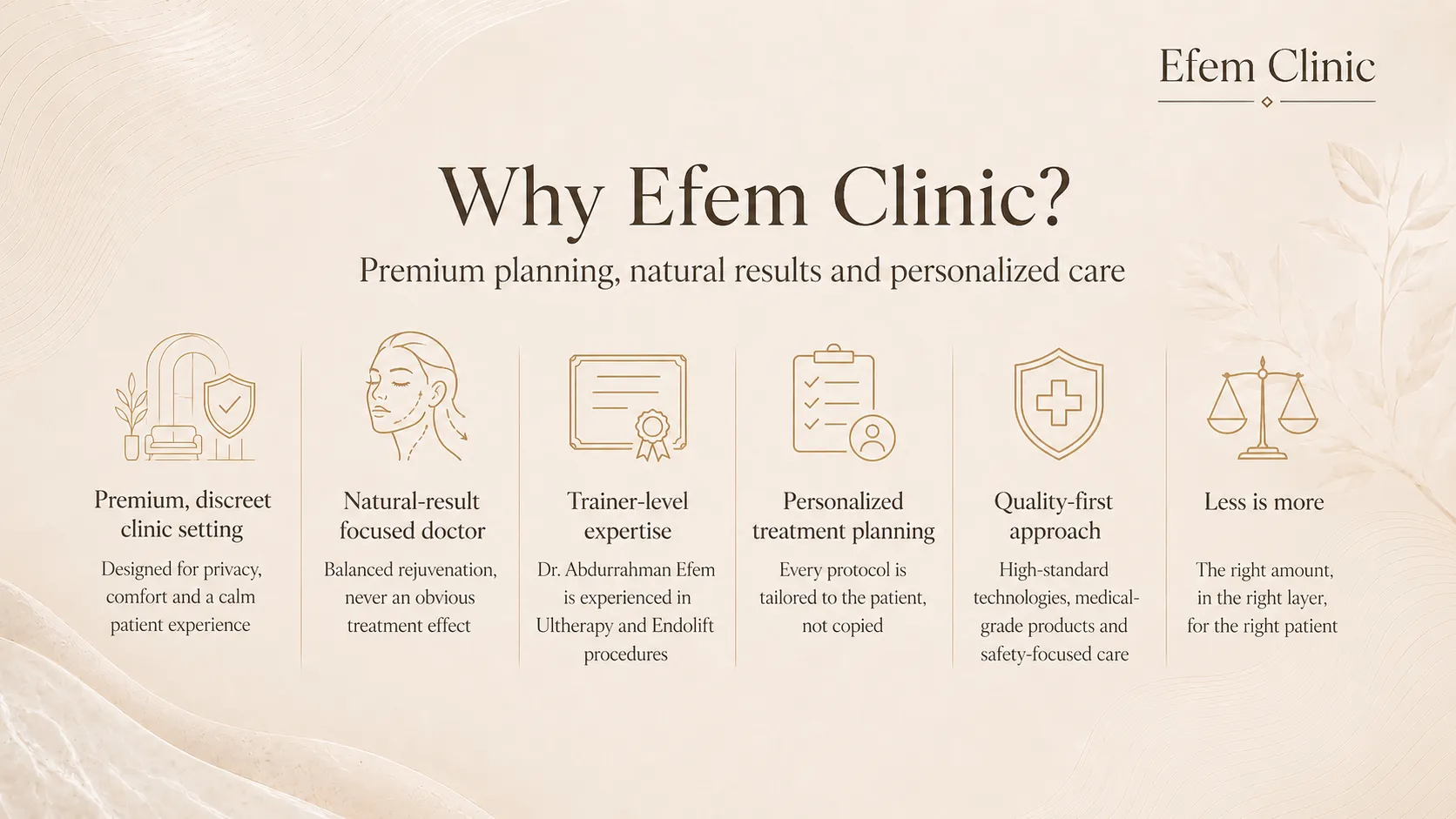
Efem Clinic is positioned as a premium medical aesthetic clinic in Istanbul. Our difference is not only the technologies we use. It is the way we plan treatments.
Premium, discreet clinic setting: our clinic environment is designed for privacy, comfort and a calm patient experience.
Natural-result focused doctor: the goal is not to aggressively peel the skin or create an artificial shine. The goal is a more balanced, healthy and natural-looking skin tone.
Detailed skin and pigmentation analysis: before recommending treatment, we evaluate pigmentation type, skin tone, pigmentation risk, skin barrier and skincare habits together.
Personalized treatment planning: we do not believe every patient needs the same protocol.
Quality-first approach: we use high-standard technologies and medical-grade products, focusing on safety and natural appearance.
Less is more: we do not aim to over-treat or use unnecessary aggressive procedures. The right intensity, the right timing, the right skin.
Frequently Asked Questions
What is pigmentation treatment?
Pigmentation treatment is personalized medical aesthetic planning designed to improve sun spots, brown post-acne marks, uneven skin tone and tone irregularities.
Is pigmentation treatment suitable for everyone?
No. Skin type, pigmentation type, pigmentation risk and skin barrier condition must be evaluated. Some patients may need skin strengthening before treatment.
Does Q-Switch laser help pigmentation?
Q-Switch laser may be considered for selected pigment concerns. However, it may not be suitable for every type of pigmentation, so proper evaluation is necessary.
Is Lumecca used for pigmentation and uneven tone?
In suitable patients, Lumecca may be considered for sun damage, uneven tone and skin brightness. Skin type and pigmentation type are important.
Are brown post-acne marks scars?
No. Brown marks after acne are usually pigmentation. Acne depressions are structural scars. Their treatment strategies are different.
Is pigmentation treatment painful?
The sensation depends on the treatment. Q-Switch and Lumecca may create short heat pulses, mild stinging or a snapping sensation.
How long is recovery after pigmentation treatment?
Recovery depends on the treatment. Redness, sensitivity, temporary darkening, mild dryness or crusting may occur.
Can pigmentation completely disappear?
Some spots may fade significantly or disappear. However, some pigmentation types have a tendency to recur. Sun protection and skincare are very important.
Is sunscreen necessary after pigmentation treatment?
Yes. Sun protection is one of the most important parts of pigmentation treatment. Without it, spots may return or darken.
Is aggressive laser treatment right for melasma?
Not always. In melasma-prone skin, aggressive procedures may worsen pigmentation. A more careful and controlled plan is required.
Will my skin look natural?
The aim at Efem Clinic is natural skin tone improvement. The goal is not to make the skin look over-peeled or artificially shiny, but clearer, more balanced and healthier.

Doctor’s Note
The most important part of pigmentation treatment is correct diagnosis.
Not every brown area is the same. Sun spots, post-acne pigmentation and melasma tendency should not be treated in the same way.
In some patients, Q-Switch is suitable. In others, Lumecca may be a better choice. Some patients need skin barrier strengthening first. In others, a gradual and protective approach is safer than aggressive treatment.
The goal is not to force the skin, but to balance it.
At Efem Clinic, our focus is natural, refined and medically planned skin tone improvement.
Dr. Abdurrahman Efem
Book a Pigmentation and Uneven Skin Tone Consultation in Istanbul
The first step is not choosing a treatment. The first step is understanding the type of pigmentation and your skin.
Send us your photo on WhatsApp or book a consultation. We will evaluate whether your concern is related to sun spots, post-acne pigmentation, melasma tendency, uneven skin tone or a combination of these factors.
If your skin is not ready for treatment, we will tell you. If one treatment is enough, we will not recommend unnecessary combinations. If a staged plan would create a better result, we will explain why.
Related Treatments and Guides
About Dr. Abdurrahman Efem

Dr. Abdurrahman Efem
Dr. Abdurrahman Efem is a medical aesthetic physician specializing in facial rejuvenation, non-surgical aesthetic treatments, and regenerative medicine. His approach focuses on enhancing natural beauty through personalized treatment plans designed around each patient's unique features and goals. Dr. Efem works with both local and international patients, emphasizing balanced, natural-looking results and long-term aesthetic wellbeing. This content has been prepared or medically reviewed by Dr. Abdurrahman Efem to ensure accuracy and relevance.