


Which Body Treatment Technology? Ultherapy Body, Endolift, Morpheus8, Onda Plus and Forma Body
BODY TREATMENTS • TECHNOLOGY COMPARISON • ISTANBUL
Which Body Treatment? Ultherapy Body vs Endolift vs Morpheus8 vs Onda Plus vs Forma Body
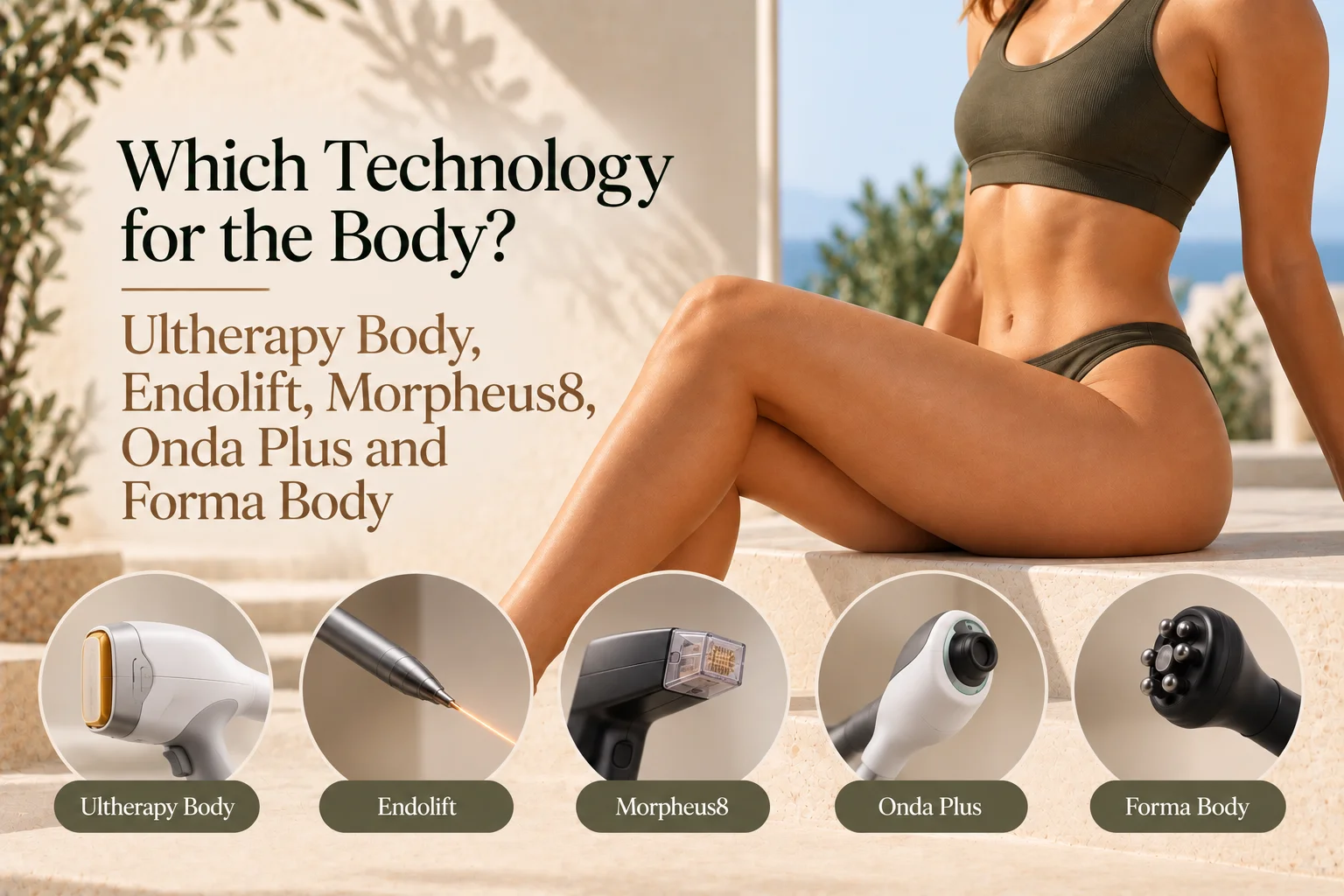
Ultherapy Body, Endolift, Morpheus8, Onda Plus and Forma Body are not interchangeable treatments. They use different mechanisms and may enter a treatment plan for different tissue concerns.
The useful question is therefore not which technology is simply “best”, but which tissue is creating the concern, what change is being sought and which treatment mechanism is relevant to that target. At Efem Clinic, body-treatment planning starts with that distinction rather than with a device name.
QUICK ANSWER
Which Body Treatment May Be More Appropriate?
There is no single body technology that is automatically the right choice for loose skin, localised fat or changes in tissue quality. The treatments compared here work differently and address different treatment goals.
Ultherapy Body may enter the discussion when non-invasive tightening is the main objective; Morpheus8 when tissue quality, texture and firmness are important; Endolift for selected laxity and contour concerns where a minimally invasive approach is appropriate; Onda Plus when localised adipose tissue contributes meaningfully to body contour; and Forma Body when a non-invasive radiofrequency tightening approach fits the tissue target.
The correct starting point is therefore tissue assessment first, technology second.
Why Is Comparing Body Technologies by Device Name Misleading?
Body concerns are often described using broad terms such as “sagging”, “loose skin”, “stubborn fat” or “I want to tighten this area”. These phrases describe what a patient notices, but they do not necessarily identify the tissue responsible for the appearance.
A softer abdominal contour, for example, may reflect skin laxity, localised subcutaneous fat, a combination of both or deeper structural factors. A useful comparison therefore begins by separating the concern into its anatomical components and only then comparing treatment mechanisms.
Ultherapy Body vs Endolift vs Morpheus8 vs Onda Plus vs Forma Body
The table below is a decision framework rather than a personal treatment prescription. Suitability depends on anatomy, tissue characteristics, medical assessment and realistic treatment goals.
| Treatment | General Treatment Focus | When It May Be Considered | Important Limitation |
|---|---|---|---|
| Ultherapy Body | Non-invasive ultrasound-based tightening | When selected degrees of laxity make tissue tightening the main objective | It is not a substitute for surgical removal of substantial excess skin and should not be treated as a general fat-loss procedure. |
| Endolift | Minimally invasive treatment of selected tissue and contour concerns | When the treatment area, tissue pattern and degree of laxity or contour change fit a minimally invasive approach | It should not be assumed to be suitable for every area described as loose or for substantial redundant skin. |
| Morpheus8 | Radiofrequency microneedling with emphasis on tissue remodelling and skin quality | When texture, tissue quality and firmness are meaningful components of the concern | Improving tissue quality is different from removing substantial excess skin or treating every cause of contour change. |
| Onda Plus | Body contouring where localised adipose tissue is an important component | When localised subcutaneous fat contributes meaningfully to the shape or fullness of the area | A primarily fat-related contour concern should not be confused with a primarily skin-laxity problem. |
| Forma Body | Non-invasive radiofrequency-based tissue heating and tightening | When a non-invasive RF approach is relevant to the skin and tissue-tightening objective | It should not be expected to correct substantial excess skin or deeper structural causes of contour change. |
Important: The fact that these technologies are different does not mean one is universally stronger or better. The useful question is which mechanism makes sense for a particular tissue target.
When Might Ultherapy Body Be Considered?
Ultherapy Body may be relevant when the main objective is non-invasive tightening in an anatomically suitable body area and the degree of laxity is appropriate for this type of approach.
Its role should be distinguished from treatments selected mainly because of localised fat. If volume is the main reason an area appears heavy or poorly defined, tightening alone may not address the full concern.
Likewise, non-invasive tightening should not be presented as equivalent to surgical removal of substantial excess skin. Appropriate patient selection and realistic expectations remain central.
When Might Endolift Be Considered for the Body?
Endolift is a minimally invasive approach and may enter treatment planning when selected laxity or contour concerns match its mechanism and the anatomy of the treatment area.
It should not be reduced to a generic answer for every body area described as “sagging”. The relative contribution of skin, subcutaneous tissue and the degree of tissue redundancy still needs to be assessed.
Its minimally invasive nature also places it in a different treatment category from fully non-invasive options such as Ultherapy Body or Forma Body.
When Might Morpheus8 Be Considered?
Morpheus8 combines microneedling with radiofrequency energy and may be relevant when tissue quality, texture and firmness are meaningful parts of the concern.
This creates a different clinical question from simply asking whether an area needs “lifting”. Someone with relatively limited laxity but meaningful tissue-quality concerns may require a different strategy from someone with pronounced redundant skin.
Morpheus8 should therefore be assessed according to the actual tissue target rather than ranked as universally stronger or weaker than another technology.
When Might Onda Plus Be More Relevant?
Onda Plus becomes particularly relevant when localised adipose tissue is a meaningful contributor to body contour.
A patient may describe an area as loose when localised fullness is actually a significant part of what they see. The reverse is also true: reducing volume does not automatically solve a skin-laxity concern.
Tightening and contouring are not the same objective. Onda Plus should not be viewed as a general weight-loss treatment; it should be considered in relation to local anatomy and a defined contour concern.
When Might Forma Body Be Considered?
Forma Body uses a non-invasive radiofrequency-based approach and may be considered when controlled tissue heating and skin-tightening support fit the treatment objective.
Its role differs from a fat-focused contouring strategy and from minimally invasive treatment. The useful question is not whether Forma Body is “better” than Ultherapy, Endolift or Morpheus8, but whether a non-invasive RF approach matches the patient's tissue pattern and goals.
As with other energy-based treatments, substantial excess skin or contour changes driven mainly by deeper structural factors can limit what this type of treatment can reasonably achieve.
Start with the Concern, Not the Technology
| What You Notice | What Needs to Be Assessed | Possible Treatment Direction |
|---|---|---|
| “My skin looks loose.” | Degree of laxity, tissue thickness, treatment area and amount of true excess skin | Ultherapy Body, Forma Body or another appropriate tightening-focused approach may be assessed. |
| “The skin texture or quality has changed.” | Texture, firmness, tissue quality and degree of laxity | Morpheus8 or another tissue-quality-focused strategy may enter the discussion. |
| “There is a stubborn pocket of fullness.” | Whether localised subcutaneous fat is actually the dominant contributor | Onda Plus or another appropriate contouring strategy may be considered. |
| “The area looks both loose and poorly defined.” | Relative contribution of skin, subcutaneous tissue and overall anatomy | Endolift or a carefully selected layered approach may be assessed when anatomy supports it. |
| “There is a significant amount of excess skin.” | Amount of redundant skin and whether non-surgical treatment can realistically create meaningful change | The limitations of non-surgical treatment become particularly important and another type of assessment may be more appropriate. |
Not Sure Which Tissue Is Driving the Concern?
You do not need to decide whether an abdomen, upper arm, inner thigh or area above the knee is mainly affected by skin laxity, localised fat or tissue quality before contacting the clinic. Clear photographs may help with preliminary guidance.
Ask About Your OptionsDoes Treatment Choice Change by Body Area?
Yes. The same technology should not automatically be applied to every area simply because the visible complaint sounds similar. Tissue thickness, laxity, localised fat distribution and anatomy vary across body regions.
Abdomen
The abdomen requires separation of skin laxity, localised fat and deeper structural contributors. A softer abdominal contour should not automatically be treated as loose skin.
Upper Arms
Upper-arm appearance may reflect different proportions of skin laxity and subcutaneous fullness. The amount of true redundant skin is particularly important when setting expectations.
Thighs, Inner Thighs & Above the Knees
Inner-thigh laxity, general thigh contour and finer laxity above the knees are related but anatomically different concerns. Each area should be assessed separately.
Is Combining Several Body Treatments Better?
Not automatically. A combination becomes reasonable when assessment identifies more than one meaningful tissue target and each treatment has a defined role.
For example, the same area may contain both localised fullness and skin laxity. That does not mean every available contouring and tightening technology should be combined.
Using more technologies is not a treatment goal in itself. The goal is to use only the intervention required for the anatomy and realistic objective.
When Might None of These Treatments Be the Right Answer?
Technology comparisons can create the impression that one of the listed procedures must always be selected. That is not necessarily the case.
Substantial redundant skin, contour changes driven mainly by deeper structural anatomy, an unsuitable medical context or expectations beyond what non-surgical and minimally invasive treatments can reasonably provide may change the decision entirely.
Being able to say that a particular technology is unnecessary or unlikely to address the main concern is also part of appropriate patient selection.
THE EFEM METHOD™
A Tissue-First Framework for Choosing Body Treatments
Within The Efem Method™, treatment planning begins with anatomy rather than with a preferred technology.
The first step is to determine whether the concern is mainly related to skin laxity, localised fat, tissue quality, deeper structural anatomy or a combination. Only after that distinction does the mechanism of Ultherapy Body, Endolift, Morpheus8, Onda Plus or Forma Body become clinically meaningful.
The aim is not to use the greatest number of technologies. It is to identify the least intervention necessary for the relevant tissue target and a realistic aesthetic goal.
Explore The Efem Method™ →How Should Cost Be Compared Between These Treatments?
Price should not be the first comparison because these technologies do not necessarily treat the same tissue problem or require the same treatment plan.
Cost may be influenced by the body area, size of the treatment zone, dominant tissue concern, selected technology and whether the plan involves one defined target or more than one clinically relevant component.
A lower-priced procedure is not better value if its mechanism does not match the concern. Meaningful cost comparison should therefore follow treatment selection, not precede it.
INTERNATIONAL PATIENTS
Choosing a Body Treatment Before Travelling to Istanbul
International patients do not need to choose between Ultherapy Body, Endolift, Morpheus8, Onda Plus or Forma Body before contacting the clinic. An initial remote discussion can instead focus on the treatment area, visible concern, previous procedures and treatment goals.
Clear photographs may help with preliminary guidance, but they cannot establish every tissue characteristic or replace medical assessment. This matters particularly when the distinction between skin laxity, localised fat and deeper anatomy influences treatment choice.
Travel plans should therefore not be based on an assumption that a particular device will definitely be used. Final suitability and treatment planning should follow physician assessment.
Ask About Your Options Before You Travel →
DR. ABDURRAHMAN EFEM
Technology Selection Should Follow Anatomy
Body-treatment comparisons are useful when they explain differences in treatment mechanisms rather than turning technologies into a ranking.
Dr Abdurrahman Efem's role in physician education and professional knowledge sharing around advanced medical-aesthetic technologies supports an approach in which anatomy, tissue layers, appropriate indication and patient selection come before the device itself.
The objective is to identify the tissue responsible for the concern, decide whether treatment is appropriate and then select a mechanism that matches the defined target.
Before-and-After Images, Privacy and Realistic Expectations
Patient privacy matters at Efem Clinic, and before-and-after photographs are not routinely used as a marketing tool.
Treatment choice should also not be based solely on another patient's photographs. Body position, lighting, camera angle, tissue distribution and baseline anatomy can all materially change how an outcome appears.
Results vary between individuals. A meaningful expectation should be based on your own tissue characteristics and treatment target rather than another person's result.
Body Treatment Assessment at Efem Clinic in Istanbul
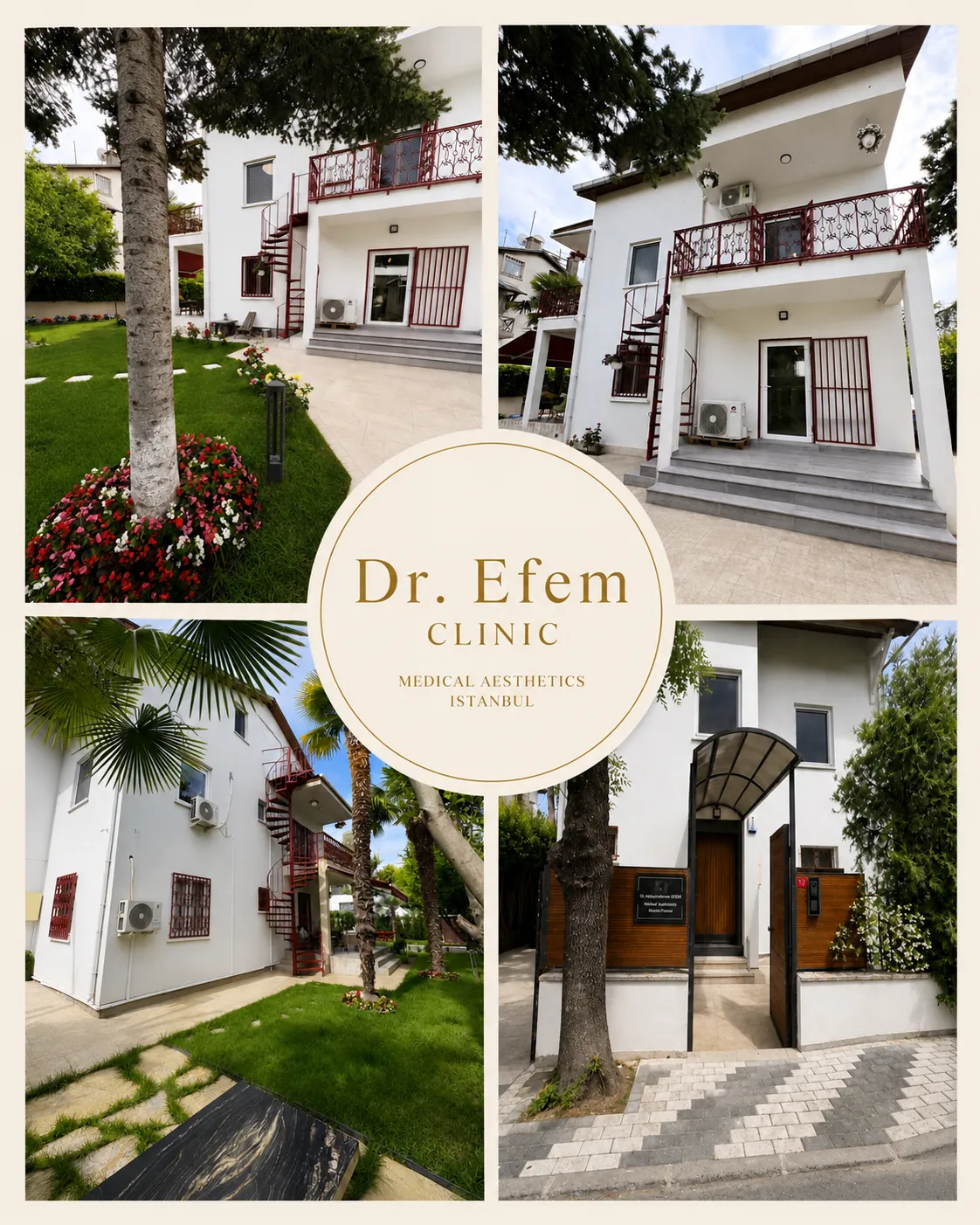
Efem Clinic provides physician-led medical-aesthetic treatment planning in a private villa clinic setting in Levent, Istanbul. Body-treatment selection is based on the treatment area, tissue characteristics and realistic objectives rather than a standard device package.
Learn more about Dr Abdurrahman Efem, the clinic and the treatment philosophy on the About Efem Clinic page.
Related Body Treatments & Guides
FREQUENTLY ASKED QUESTIONS
Choosing Between Body Treatment Technologies
Which is better for body tightening: Ultherapy Body or Morpheus8?
Neither is universally better. Ultherapy Body and Morpheus8 use different treatment approaches. The choice depends on whether the main concern is tightening, tissue quality or texture, as well as the degree of laxity and anatomy of the treatment area.
What is the difference between Endolift and Ultherapy Body?
Endolift is a minimally invasive approach, while Ultherapy Body is non-invasive. Their mechanisms and suitability differ, so treatment choice should be based on the tissue target, treatment area, degree of laxity and individual assessment.
Is Onda Plus for loose skin or fat?
Onda Plus becomes particularly relevant when localised adipose tissue contributes to body contour. Whether it is appropriate depends on the individual tissue pattern, and it should not be confused with a general weight-loss treatment.
What is the difference between Forma Body and Morpheus8?
Both involve radiofrequency-based approaches, but Forma Body is non-invasive, while Morpheus8 combines radiofrequency with microneedling. The more relevant option depends on tissue characteristics and the specific treatment objective.
Which body treatment is best for the abdomen?
There is no universal best abdominal treatment. The abdomen may involve skin laxity, localised fat, tissue-quality changes, deeper structural factors or a combination. Treatment selection should follow that distinction.
Can these treatments remove a large amount of excess skin?
They should not be presented as substitutes for surgical removal of substantial redundant skin. The amount of true excess skin is an important factor in deciding whether a non-surgical or minimally invasive treatment can create meaningful change.
Can Ultherapy, Endolift, Morpheus8, Onda Plus and Forma Body be combined?
A combination may be considered when separate tissue targets provide a clear rationale, but using more technologies is not automatically better. Each treatment should have a defined purpose within the plan.
Which body treatment has the least downtime?
Recovery expectations vary according to the procedure, treatment area and individual response. Because these technologies range from non-invasive to minimally invasive approaches, downtime should be compared only after the appropriate treatment has been identified.
Does body tightening help with weight loss?
No. Body tightening and local contour treatments should not be presented as general weight-loss methods. If the main objective is overall weight management, that requires a separate approach from local aesthetic treatment.
Can I choose my body treatment before travelling to Istanbul?
An initial remote discussion can help narrow the relevant options, but photographs cannot establish every tissue characteristic. Final suitability and technology selection should follow medical assessment rather than being guaranteed before examination.
Not Sure Which Body Treatment You Need?
You do not need to choose between Ultherapy Body, Endolift, Morpheus8, Onda Plus and Forma Body before assessment. The first step is to understand whether the concern is mainly related to skin laxity, localised fat, tissue quality, deeper anatomy or a combination.
Treatment suitability, treatment planning, recovery and expected change depend on individual anatomy, tissue characteristics, current health, selected procedure and treatment goals. Online information and preliminary photograph review do not replace personal medical assessment.
About Dr. Abdurrahman Efem
Dr. Abdurrahman Efem
Dr. Abdurrahman Efem is a medical aesthetic physician specializing in facial rejuvenation, non-surgical aesthetic treatments, and regenerative medicine. His approach focuses on enhancing natural beauty through personalized treatment plans designed around each patient's unique features and goals. Dr. Efem works with both local and international patients, emphasizing balanced, natural-looking results and long-term aesthetic wellbeing. This content has been prepared or medically reviewed by Dr. Abdurrahman Efem to ensure accuracy and relevance.