

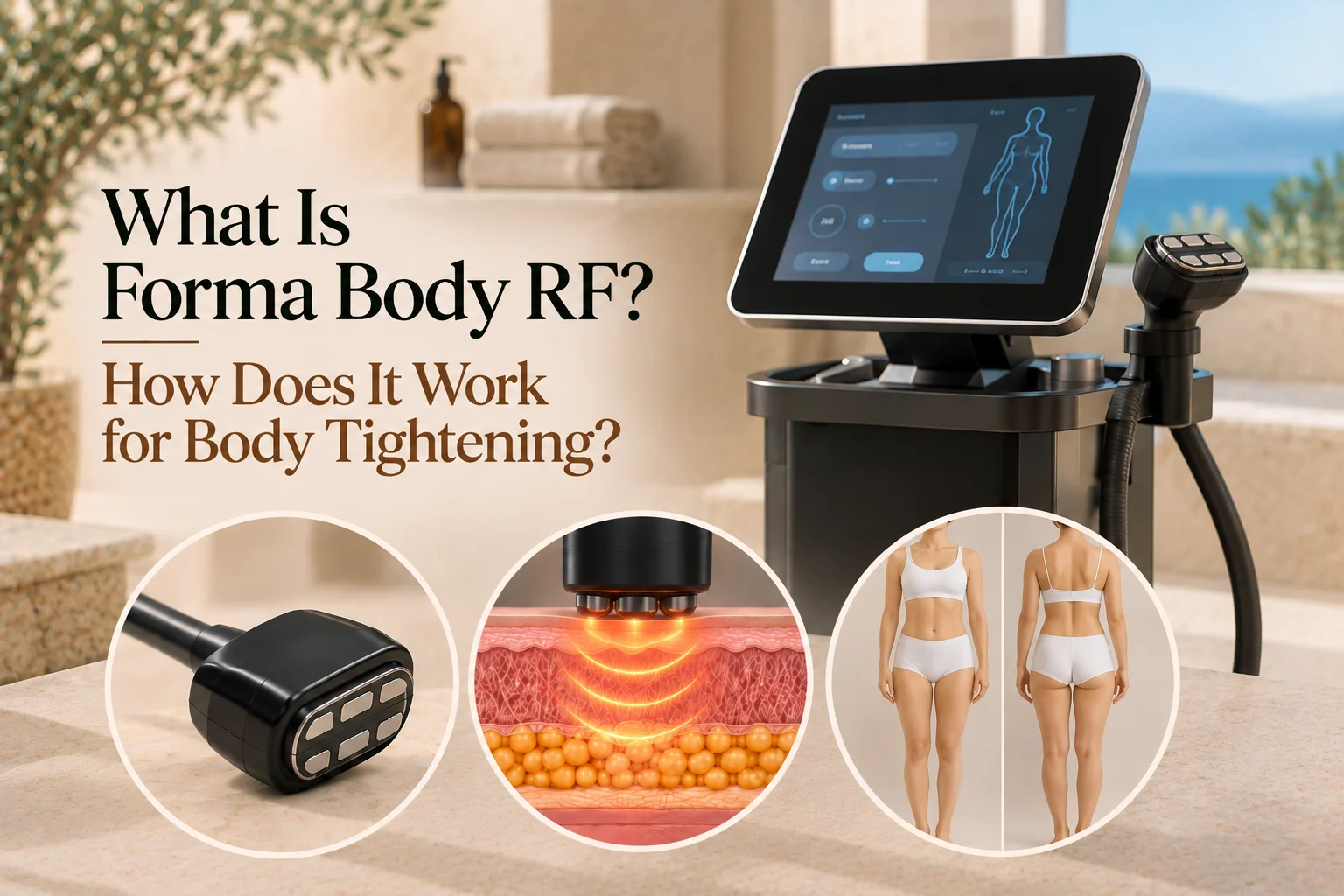
What Is Forma Body RF and How Does It Work?
FORMA BODY RF • BODY SKIN TIGHTENING • ISTANBUL
What Is Forma Body RF and How Does It Work?
Forma Body is a non-invasive radiofrequency (RF) treatment used when improving skin firmness and tissue quality is the primary goal. Rather than removing skin or functioning as a weight-loss treatment, it uses controlled tissue heating as part of a body skin-tightening approach.
Its role depends on what is actually creating the visible concern. Mild skin laxity, localised fat, substantial excess skin and deeper structural changes are different problems—and Forma Body is not intended to solve all of them.
QUICK ANSWER
What Does Forma Body Do?
Forma Body uses radiofrequency energy to create controlled heating within the treated tissue. The aim is to support a firmer, tighter-looking skin and tissue appearance in appropriately selected body areas.
Because the treatment is non-invasive, it does not involve surgical skin removal. It should also not be confused with a treatment designed primarily for substantial localised fat reduction.
The most useful question is therefore not simply whether Forma Body “works”, but whether RF-based tightening matches the tissue responsible for the individual concern.
How Does Forma Body RF Work?
Forma Body is based on radiofrequency energy. During treatment, RF energy is used to heat tissue in a controlled manner. This thermal approach is used with the aim of supporting tissue contraction and remodelling processes associated with a firmer skin appearance.
That mechanism is important because Forma Body should not be described simply as a generic “body contouring machine”. Its main relevance is when the treatment goal and tissue characteristics are compatible with a non-invasive RF tightening approach.
The amount of visible change that may be realistic depends on the treatment area, degree of laxity, tissue characteristics and the contribution of other factors such as localised fat or genuine excess skin.
What Forma Body Can Target—and What It Does Not Replace
| Concern | How Forma Body Fits |
|---|---|
| Mild or selected skin laxity | May be considered when non-invasive RF tightening is appropriate for the tissue and treatment area. |
| Skin and tissue firmness | Controlled heating may be used as part of a plan focused on improving the appearance of firmness and tissue quality. |
| Localised fat | If localised fat is the main cause of the contour concern, a treatment whose primary role is tightening may not address the full problem. |
| Substantial excess skin | Forma Body does not remove excess skin and should not be presented as an alternative equivalent to surgical skin removal. |
| Weight loss | Forma Body is not a weight-loss treatment. Body weight and a local skin-tightening objective are separate clinical questions. |
Who May Be Suitable for Forma Body?
Forma Body may enter the treatment discussion when a person has a body area where skin or tissue firmness is a meaningful concern and a non-invasive radiofrequency approach is considered appropriate.
Suitability cannot be determined from the name of the body area alone. Two people may both describe “loose skin”, while one has limited laxity and the other has substantial excess skin, residual subcutaneous volume or a different structural reason for the contour.
Assessment therefore considers the degree of laxity, tissue thickness and quality, local anatomy, the presence of localised fat and the scale of change the person expects.
Does the Treatment Area Change the Decision?
Yes. Body areas differ in skin characteristics, tissue thickness, fat distribution and underlying anatomy. For this reason, treatment selection should be area-specific rather than based on the assumption that the same RF plan is suitable everywhere.
Abdomen
A softer abdominal contour may involve skin laxity, localised fat or deeper structural factors. RF tightening is relevant only when the tissue target matches the mechanism.
Upper Arms
The amount of true excess skin is particularly important when assessing an upper-arm concern, because non-invasive tightening cannot physically remove substantial redundant skin.
Thighs and Other Body Areas
Tissue distribution and laxity can vary considerably across the thighs and other body regions. Each area should therefore be assessed on its own anatomy and treatment objective.
How Is Forma Body Different From Other Body Treatments?
Forma Body is one option within a broader body-treatment toolkit. Technologies should not be ranked as though they all treat the same tissue in the same way.
| Treatment | General Treatment Approach |
|---|---|
| Forma Body | Non-invasive radiofrequency-based controlled tissue heating and tightening. |
| Ultherapy Body | Ultrasound-based non-invasive tightening considered for selected laxity concerns. |
| Morpheus8 | Radiofrequency microneedling approach when tissue quality, surface characteristics and firmness are relevant targets. |
| Endolift | Minimal-invasive approach considered for selected laxity and contour concerns when anatomy is appropriate. |
| Onda Plus | A different body-contouring consideration when localised subcutaneous fat makes an important contribution to the visible concern. |
The distinction matters because a person who primarily needs skin tightening and a person whose contour is mainly influenced by localised fat do not necessarily need the same treatment strategy.
When May Forma Body Not Be Enough?
The limitations of treatment become especially important when the visible concern is described broadly as “sagging”. Mild laxity and substantial redundant skin are not the same problem.
If there is significant excess skin, a deeper structural issue or a contour concern driven mainly by another tissue layer, non-invasive RF tightening may not produce the type or scale of change the person wants.
Recognising that limitation is part of appropriate treatment selection. A consultation should establish not only whether Forma Body can be performed, but whether its mechanism is likely to be meaningful for the specific concern.
THE EFEM METHOD™
Where Forma Body Fits Into a Tissue-First Treatment Plan
Within The Efem Method™, the starting point is the anatomy and tissue responsible for the concern rather than a preferred device.
For Forma Body, this means establishing whether non-invasive RF tightening addresses a meaningful part of the problem. If localised fat, substantial excess skin or another structural factor dominates the appearance, that finding changes the treatment discussion.
The objective is a measured treatment plan in which the intervention matches a defined tissue target and realistic aesthetic goal.
Sessions, Recovery and Results: Why There Is No Universal Plan
Treatment planning varies according to the body area, tissue characteristics, degree of laxity and the change being targeted. For that reason, a fixed number of sessions should not be assumed for every patient before assessment.
The same applies to visible results. RF-based treatment relies on a tissue response rather than surgical removal of loose skin, so the expected degree and timing of change should be discussed in relation to the starting anatomy.
Recovery expectations and aftercare should also be explained individually after the treatment plan has been established.
How Much Does Forma Body Cost in Istanbul?
Forma Body pricing depends on the treatment area, the extent of the area being treated and the individual treatment plan. A universal price cannot meaningfully describe every case.
For international patients, preliminary communication can help clarify the area of concern and appointment planning before travelling, while final suitability and treatment planning require an appropriate clinical assessment.
Planning Forma Body in Istanbul as an International Patient
If you are travelling to Istanbul, it is useful to discuss the body area and main concern with the clinic before arranging treatment around your trip. This preliminary communication can help establish whether Forma Body appears relevant or whether another type of assessment may be more appropriate.
Exact treatment planning, suitability and individual recovery advice should be confirmed after clinical assessment rather than assumed from photographs or online information alone.
Contact the International Team
DR ABDURRAHMAN EFEM
Treatment Selection Should Follow Anatomy
Dr Abdurrahman Efem's role in physician education and professional knowledge sharing around advanced medical aesthetic technologies supports an approach in which anatomy, tissue layers and appropriate patient selection come before the device itself.
For Forma Body, that means assessing whether controlled RF-based heating is appropriate for the actual tissue concern and being equally clear when another approach—or no treatment—is more appropriate.
Before-and-After Expectations and Individual Variation
Patient privacy is important at Efem Clinic, and patient before-and-after photographs are not used as a routine marketing tool.
Body-treatment outcomes can also look very different between individuals because skin laxity, tissue thickness, fat distribution and baseline anatomy vary. Another patient's photographs therefore cannot predict your suitability or expected change.
Results vary between individuals, and expectations should be based on your own anatomy and the realistic capacity of the selected treatment.
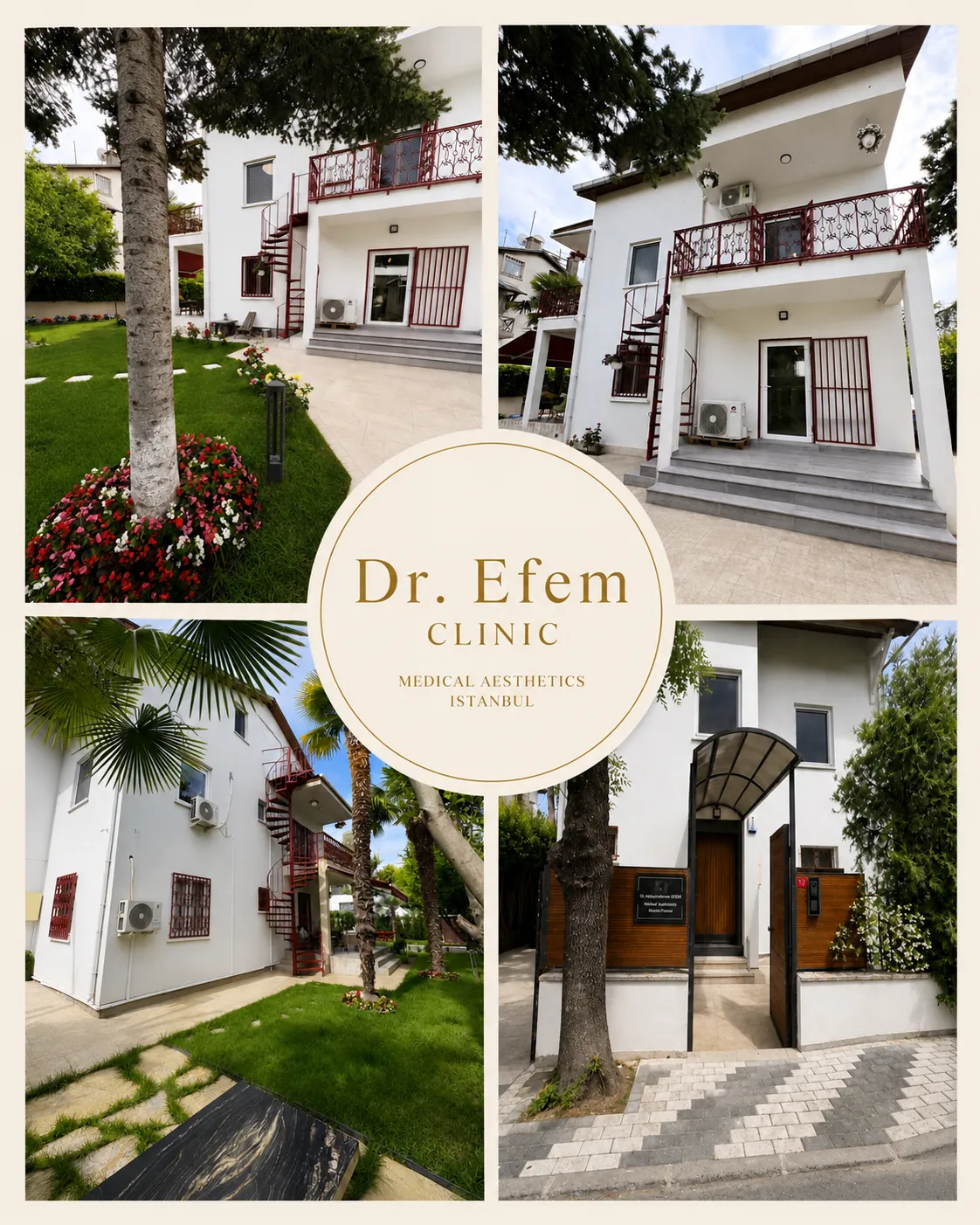
Forma Body Assessment at Efem Clinic
Efem Clinic provides physician-led medical aesthetic treatment planning in Istanbul. Forma Body is considered within the wider context of the treatment area, tissue characteristics, degree of laxity and the patient's realistic objective rather than as a standard package for every body concern.
You can learn more about Dr Abdurrahman Efem and the clinic's treatment philosophy on the About Efem Clinic page.
Related Body Treatments
FREQUENTLY ASKED QUESTIONS
Forma Body RF FAQ
What is Forma Body RF?
Forma Body is a non-invasive radiofrequency treatment used as a body skin-tightening approach. It uses controlled tissue heating and may be considered when improving firmness and tissue quality is an appropriate treatment goal.
How does Forma Body work?
Forma Body uses radiofrequency energy to produce controlled heating in the treated tissue. The treatment is used with the aim of supporting tissue contraction and remodelling associated with a firmer skin appearance.
Is Forma Body a weight-loss treatment?
No. Forma Body should not be considered a weight-loss treatment. Its role is assessed according to a local tissue and skin-tightening objective rather than overall body-weight reduction.
Can Forma Body remove loose excess skin?
Forma Body does not surgically remove skin. When substantial redundant skin is the dominant problem, the limitations of non-invasive tightening become particularly important and a different type of assessment may be required.
Is Forma Body the same as Morpheus8?
No. Both involve radiofrequency-based approaches, but Forma Body is non-invasive, while Morpheus8 combines radiofrequency with microneedling. The appropriate option depends on the tissue characteristics and treatment objective.
Is Forma Body better than Ultherapy Body?
Neither treatment is universally better. Forma Body uses a radiofrequency-based approach, while Ultherapy Body uses ultrasound-based technology. The relevant comparison is which mechanism better matches the specific tissue concern and treatment area.
How many Forma Body sessions will I need?
There is no single session number that should be assumed for every patient. The plan depends on the treatment area, tissue characteristics, degree of laxity and individual treatment objective.
How do I know whether Forma Body is suitable for me?
Suitability requires assessment of the body area, degree of laxity, tissue quality, localised fat and the amount of true excess skin. The aim is to establish whether non-invasive RF tightening meaningfully matches the problem before selecting the treatment.
Is Forma Body the Right RF Treatment for Your Concern?
You do not need to choose a device before assessment. The first step is to establish whether the visible concern is primarily related to skin laxity and tissue quality, localised fat, substantial excess skin or a combination of factors—and whether Forma Body's non-invasive RF approach matches that target.
Treatment suitability, planning, recovery and expected change vary according to anatomy, tissue characteristics, health status, treatment area and individual response. Online information does not replace an individual medical assessment.
About Dr. Abdurrahman Efem
Dr. Abdurrahman Efem
Dr. Abdurrahman Efem is a medical aesthetic physician specializing in facial rejuvenation, non-surgical aesthetic treatments, and regenerative medicine. His approach focuses on enhancing natural beauty through personalized treatment plans designed around each patient's unique features and goals. Dr. Efem works with both local and international patients, emphasizing balanced, natural-looking results and long-term aesthetic wellbeing. This content has been prepared or medically reviewed by Dr. Abdurrahman Efem to ensure accuracy and relevance.