


Which Skin Layers Does Ultherapy Target?
Ultherapy Science Guide
Which Skin Layers Does Ultherapy Target?
Ultherapy targets specific tissue depths beneath the skin using focused ultrasound energy. The goal is not to damage the skin surface, but to stimulate deeper support layers involved in firmness, collagen remodeling and non-surgical lifting.
This short guide explains the main layers Ultherapy may target, why the SMAS layer matters, and how treatment planning changes depending on the face, jawline, neck, under-chin area and brow.
Ask About Ultherapy View Ultherapy Treatment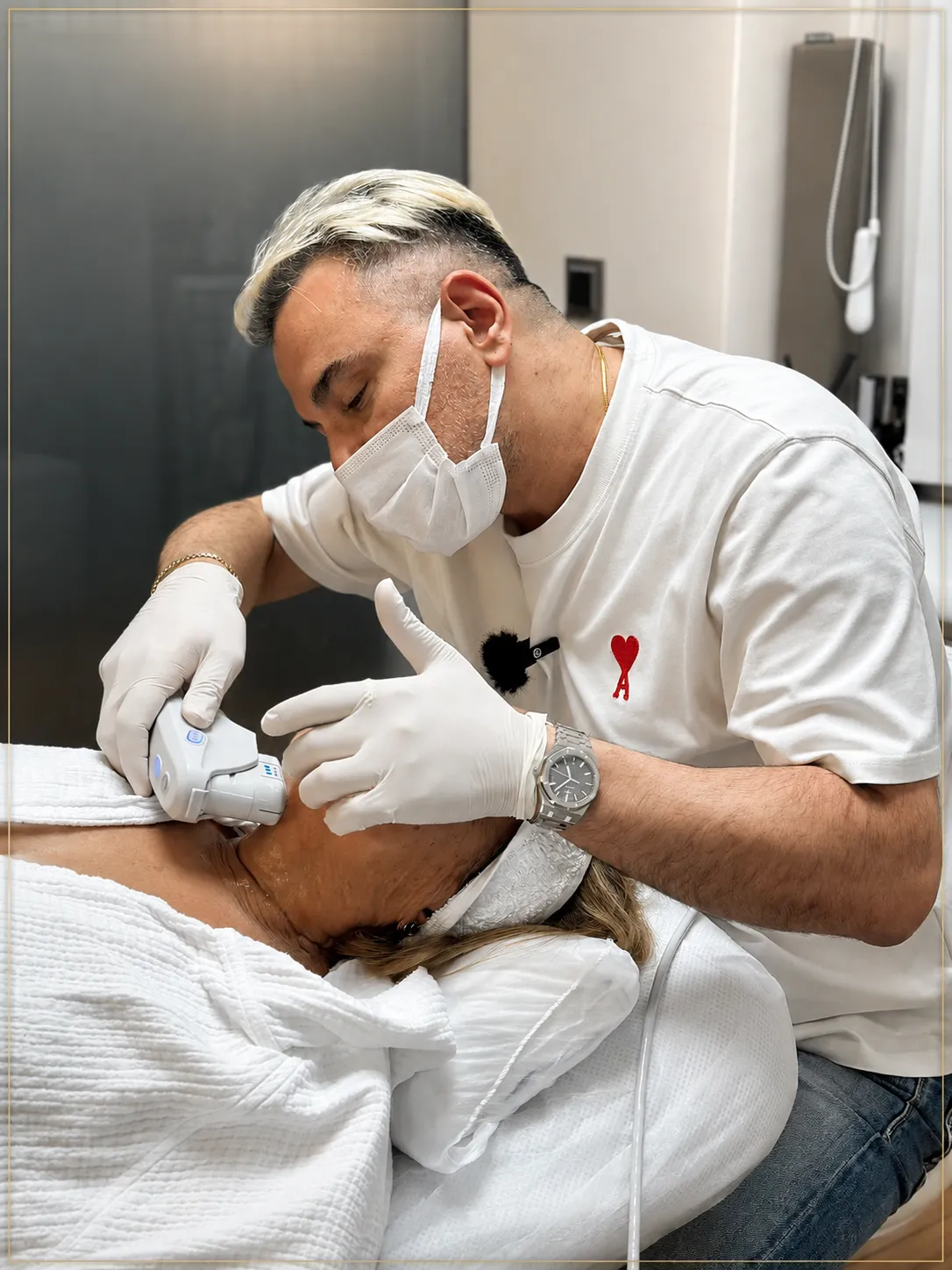
Short answer: Ultherapy commonly targets the deep dermis, subcutaneous connective tissue and the SMAS layer, depending on the area and treatment goal.
Why Treatment Depth Matters in Ultherapy
Skin tightening is not only about the visible skin surface. Facial aging involves several layers: skin quality, collagen strength, connective tissue support, fat distribution and deeper structural support. That is why a serious Ultherapy plan should not be treated like a simple surface procedure.
Ultherapy uses focused ultrasound energy to create controlled thermal stimulation at selected depths. These points trigger the body’s natural repair response and support collagen remodeling over time. For a complete overview of the technology, read What Is Ultherapy?.
The Main Layers Ultherapy May Target
This layer is important for skin firmness, texture and collagen quality. Treating this depth may support gradual tightening and skin quality improvement.
This layer sits below the dermis and contributes to facial support. It may be relevant when the goal is better definition around the lower face, jawline or neck.
The SMAS is a deeper support layer also addressed in surgical facelift planning. Ultherapy can target this layer non-surgically in suitable candidates. Learn more in What Is the SMAS Layer?
Does Ultherapy Treat the Skin Surface?
Ultherapy is not designed to peel, burn or remove the outer skin layer. Unlike some resurfacing lasers or chemical peels, the main target is below the surface. This is one reason many patients can return to normal daily life shortly after treatment.
Temporary redness, tenderness, sensitivity or mild swelling may occur, but the treatment is generally planned around deeper tissue stimulation rather than surface injury. For recovery details, see the Ultherapy Aftercare Guide.
Ultherapy Depths by Treatment Goal
Treatment planning may focus on deeper support layers to improve the appearance of mild laxity and loss of contour.
Different depths may be selected depending on skin thickness, laxity and the patient’s anatomy.
Ultherapy may support skin firmness, but it is not a fat-removal treatment. If fullness is mainly caused by fat, other options may be discussed.
Treatment may be planned to support a subtle lifting effect in suitable patients, depending on tissue quality and facial structure.
Not Sure Which Layer Needs Support?
You may be seeing skin laxity, volume loss, muscle-related heaviness or fat-related fullness. These are different problems. At Efem Clinic in Levent, Istanbul, Dr. Abdurrahman Efem evaluates facial anatomy before recommending Ultherapy, Endolift, Morpheus8, filler or a combination plan.
Send Photos for Initial GuidanceUltherapy vs HIFU: Are the Layers the Same?
Many patients search for Ultherapy vs HIFU because both use ultrasound-based energy. However, device quality, imaging capability, energy control, treatment precision and provider expertise can differ. Ultherapy is known for real-time ultrasound visualization, which helps the provider see tissue layers before delivering energy.
For a focused comparison, read Ultherapy vs HIFU. If you are comparing Ultherapy with other lifting options, you may also find Endolift vs Ultherapy helpful.

Doctor-Led Ultherapy Planning in Istanbul
At Efem Clinic, Ultherapy planning is not based only on the device. It is based on facial structure, skin thickness, laxity pattern, jawline support, neck anatomy and realistic expectations.
Dr. Abdurrahman Efem is a medical aesthetic physician and a Ministry-appointed trainer in medical aesthetics. He also trains physicians in advanced treatments including Ultherapy, Endolift, Morpheus8 and advanced filler applications.
More About the Doctor Education & ExpertiseWho Benefits Most From Layer-Based Ultherapy Planning?
Ultherapy may be considered for adults with mild to moderate skin laxity who want gradual, natural-looking improvement without surgery. It may be especially relevant for patients noticing softening around the jawline, early neck laxity, mild brow heaviness or loss of facial firmness.
However, if laxity is advanced, if there is significant excess skin, or if the main issue is volume loss or fat accumulation, Ultherapy alone may not be the most suitable option. Read Who Is a Good Candidate for Ultherapy? for more detail.
Related Ultherapy Guides
Ultherapy Treatment Page What Is Ultherapy? SMAS Layer Ultherapy Results Timeline Is Ultherapy Safe? Aftercare GuideFrequently Asked Questions
Which skin layer does Ultherapy target?
Ultherapy may target the deep dermis, subcutaneous connective tissue and the SMAS layer depending on the treatment area, skin thickness and clinical goal.
Does Ultherapy reach the SMAS layer?
Yes, Ultherapy can target the SMAS layer in suitable areas. The SMAS is a deeper support layer involved in facial structure and lifting.
Does Ultherapy damage the skin surface?
Ultherapy is designed to deliver focused ultrasound energy below the surface. Temporary redness or sensitivity may occur, but the outer skin layer is not intentionally removed or resurfaced.
Why is real-time imaging important in Ultherapy?
Real-time ultrasound imaging helps the provider visualize tissue layers before energy delivery. This supports more individualized and anatomically guided treatment planning.
Can Ultherapy treat the neck and jawline?
Yes, Ultherapy is commonly considered for the face, jawline, under-chin area and neck in suitable patients with mild to moderate laxity.
Is Ultherapy the same as HIFU?
Both are ultrasound-based concepts, but they are not always the same in imaging, device quality, energy control and treatment precision. A medical consultation is needed to compare options properly.
Does deeper treatment mean better results?
Not always. The right depth depends on anatomy, skin thickness and treatment goal. Too much energy in the wrong layer is not the goal. Correct planning matters more than simply treating deeper.
Where can I get Ultherapy in Istanbul?
Efem Clinic is located in Levent, Istanbul, close to Etiler, Bebek and Maslak. International patients can contact the clinic through WhatsApp for appointment planning and initial guidance.
Want to Know Whether Your Skin Needs Dermal, SMAS or Combination Support?
If you are considering Ultherapy for the face, neck, jawline or under-chin area, the most important step is proper layer-based assessment. Send your photos or book a consultation at Efem Clinic in Levent, Istanbul.
Contact on WhatsApp Contact ClinicAbout Dr. Abdurrahman Efem

Dr. Abdurrahman Efem
Dr. Abdurrahman Efem is a medical aesthetic physician specializing in facial rejuvenation, non-surgical aesthetic treatments, and regenerative medicine. His approach focuses on enhancing natural beauty through personalized treatment plans designed around each patient's unique features and goals. Dr. Efem works with both local and international patients, emphasizing balanced, natural-looking results and long-term aesthetic wellbeing. This content has been prepared or medically reviewed by Dr. Abdurrahman Efem to ensure accuracy and relevance.