Which Body Areas Can Be Treated With Onda Plus?
ONDA PLUS · TREATMENT AREAS · EFEM CLINIC
Which Body Areas Can Be Treated With Onda Plus?
Onda Plus is most often considered for the abdomen and waist, the flanks, the buttock area, the thighs, the area above the knee and the back. What these areas share is pinchable localised fat and cellulite appearance. But the same area can be driven by fat in one person and by loose skin or muscle in another, so reading the tissue matters more than naming the area.
KEY POINTS
Where Onda Plus Fits Best
- Common areas: abdomen and waist, flanks, buttock area, outer and front thighs, above the knee and the back.
- Best target: fat you can pinch between your fingers, often with cellulite, at a stable weight.
- Less suitable: areas where the main problem is loose, crepey skin, such as the upper arms or inner thighs in many people.
- Not a fix for: weight loss, hanging skin or a tummy pushed forward by separated muscles.
Why the Tissue Matters More Than the Area
This article is part of our guide to what Onda Plus is and how it works. Here we focus on one practical question: which areas make sense, and when.
"Abdomen" or "thighs" describes a location, not a cause. At examination we separate four situations, because each responds to a different approach:
- Localised fat: pinchable volume that stays even when weight is stable. This is what Onda Plus targets.
- Skin laxity: thinner, less elastic skin, sometimes with little fat beneath. Tightening treatments usually make more sense.
- Muscle and abdominal wall: a tummy that pushes forward after pregnancy is often muscle separation, which no device corrects.
- True excess skin: hanging skin after major weight loss can be beyond non-surgical treatment.
Separating these before choosing a device is the basis of The Efem Method™. Our guide to telling loose skin, fat and muscle apart explains the signs in more detail.
Onda Plus Area by Area
| Area | Typical concern | Where Onda Plus helps | What to check first |
|---|---|---|---|
| Abdomen and waist | Lower-tummy fat, waist volume | Pinchable localised fat | Muscle separation and excess skin |
| Flanks | Love handles at a stable weight | A more balanced side contour | Bone structure and body shape |
| Buttock area | Cellulite, fat below the buttock | Cellulite appearance | Cellulite has several causes; full clearance is unrealistic |
| Thighs | Outer- and front-thigh fat, cellulite | Fat and cellulite appearance | Inner-thigh laxity, which often needs tightening instead |
| Above the knee | Small fat pockets | Small, defined areas of fat | Thin, crepey skin |
| Back | Bra-line and lower-back rolls | Localised fat appearance | Posture and muscle tone |
The abdomen
The abdomen is the area people ask about most. Pinchable fat around the lower tummy and waist responds best. After pregnancy or major weight loss, loose skin and separated muscles often play a bigger role, and a fat-focused treatment alone may disappoint. We compare every option in our guide to non-surgical abdominal skin tightening.
Buttocks and thighs
The buttock area and back of the thighs are where cellulite is most often assessed. In a small study of 20 women treated in exactly these areas, cellulite scores improved eight weeks after a four-session course. The inner thigh and above-knee skin is thinner, and the issue there is frequently laxity rather than fat; our thigh and above-knee guide covers how we tell the difference.
Flanks and back
Love handles and back rolls can persist despite regular exercise. Onda Plus can help these contours look more balanced, but it refines shape within your frame; it does not change bone structure or body type.
When Another Treatment Makes More Sense
- Loose skin is the main issue: deeper tightening with Ultherapy Body is often the more logical starting point.
- Upper arms: the concern is usually laxity rather than fat, as we explain in our upper-arm skin laxity guide.
- Double chin and jawline: the face and neck are planned separately, with different technologies.
- General excess weight: Onda Plus does not produce weight loss; nutrition and lifestyle come first.
- Hanging skin or abdominal wall problems: these need a surgical opinion rather than a device.
To see how each technology matches different concerns, our body treatment technology comparison sets the options side by side.
What We Check Before Treating an Area
- Whether the fat is pinchable, and how thick the layer is
- Skin quality, elasticity and the degree of laxity
- How widespread the cellulite appearance is
- Whether your weight has been stable in recent months; results tend to be better closer to a healthy weight
- Medical factors that rule the device out, such as pregnancy or breastfeeding, a pacemaker or other implanted stimulator, or certain heart, kidney or liver conditions
- Whether your goal is realistic for the area
After this, Onda Plus may be recommended on its own, alongside a tightening treatment, or not at all. Neighbouring areas, such as the abdomen and flanks, can often be planned together; expert recommendations describe roughly 30–60 minutes for an area of about 500 cm².
Frequently Asked Questions
Which areas is Onda Plus most commonly used on?
It is most often considered for the abdomen and waist, the flanks, the buttock area and the thighs, because these are where pinchable localised fat and cellulite appear most often.
Does Onda Plus work on the stomach?
If there is pinchable localised fat on the abdomen, Onda Plus can be considered. If the appearance comes mainly from loose skin, muscle separation or excess skin, it is unlikely to be enough on its own.
Which areas can be treated for cellulite?
Cellulite is most commonly assessed on the buttock area and the back and sides of the thighs. Improvement is gradual, and complete clearance should not be expected.
Can Onda Plus be used on the arms?
The upper-arm concern is usually loose skin rather than fat, so the decision depends on examination. Where laxity dominates, a tightening treatment is usually the better choice.
Can more than one area be treated in the same plan?
Yes. Neighbouring areas such as the abdomen and flanks can often be included in one plan. The number of areas affects session length, so priorities are agreed at consultation.
Will Onda Plus help me lose weight?
No. Onda Plus is not a weight-loss treatment. It is used for stubborn localised fat and contour when weight is stable, and a change on the scale is not the expected outcome.
How many sessions are usually needed per area?
Expert recommendations describe four sessions about four weeks apart, but the plan depends on the area, fat thickness, cellulite appearance and how your tissue responds.
How do I know if Onda Plus suits my area?
An in-person examination is the most reliable way. For an initial view you can send photos of the area and a short description on WhatsApp; the final decision is made face to face.
Sources and Further Reading
- Hoffmann K, et al. Microwave-Energy-Based Device for the Treatment of Cellulite and Localized Adiposity: Recommendations of the "Onda Coolwaves" International Advisory Board. Bioengineering. 2024;11(12):1249. Expert review and recommendations. MDPI full text
- Di Pietro A, et al. Effectiveness of microwaves in the treatment of cellulite: a preliminary study. Journal of Plastic and Pathology Dermatology. 2019;15(3):171–179. Small study of 20 women, buttocks and posterior thighs. PDF hosted by the device distributor
This article is for general information. Suitability, treatment planning and the degree of change you can expect vary with anatomy, tissue, health status and individual response, and online information does not replace a personal medical assessment.
Let's Find the Right Plan for Your Area
You don't need to choose a device before your assessment. Send us photos of the area that concerns you, and we can look together at whether it is driven mainly by fat, loose skin, muscle or a combination, and whether Onda Plus fits that goal.
About Dr. Abdurrahman Efem
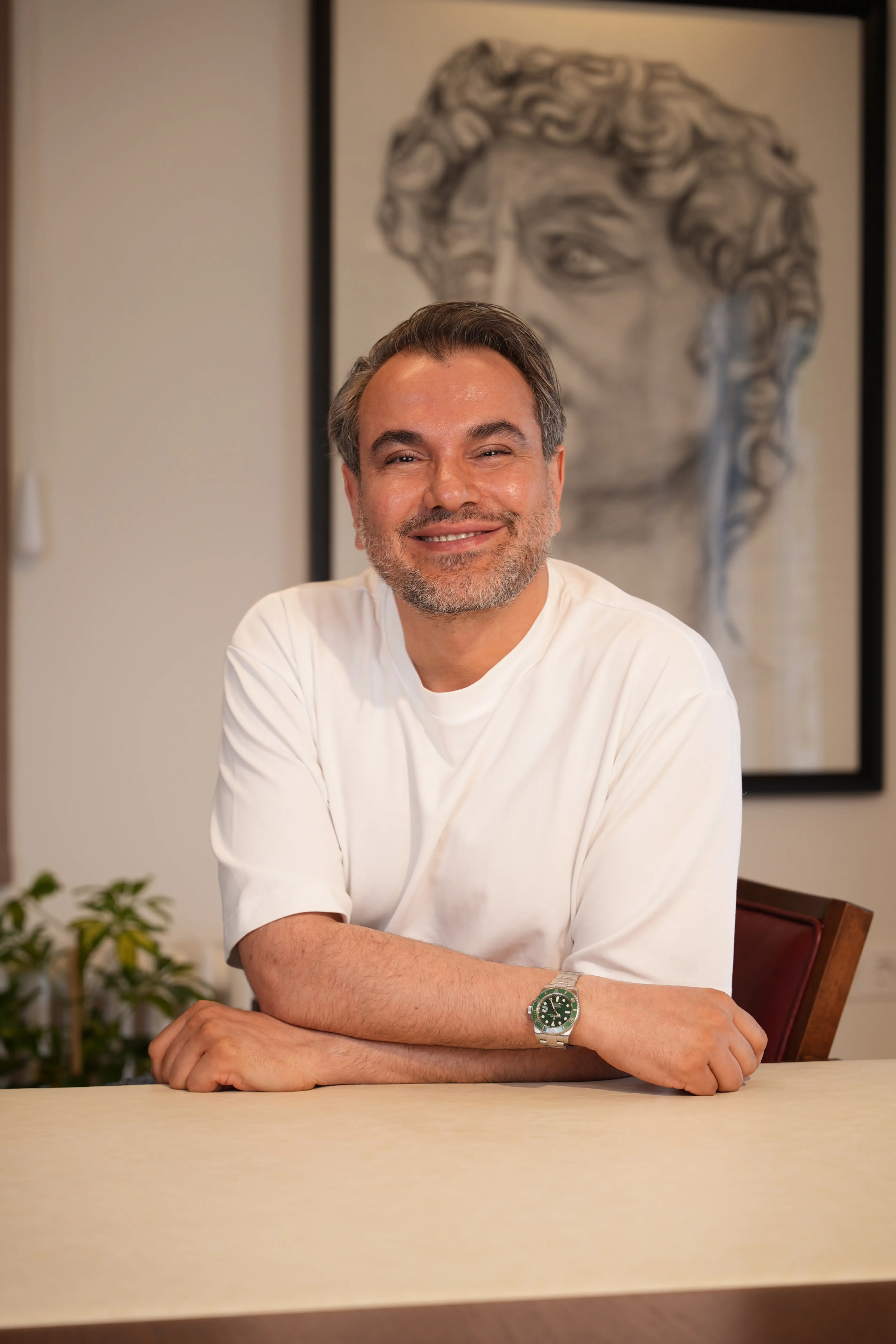
Dr. Abdurrahman Efem
Dr. Abdurrahman Efem is a medical aesthetic physician specializing in facial rejuvenation, non-surgical aesthetic treatments, and regenerative medicine. His approach focuses on enhancing natural beauty through personalized treatment plans designed around each patient's unique features and goals. Dr. Efem works with both local and international patients, emphasizing balanced, natural-looking results and long-term aesthetic wellbeing. This content has been prepared or medically reviewed by Dr. Abdurrahman Efem to ensure accuracy and relevance.