


Endolift Side Effects
ENDOLIFTX • SIDE EFFECTS • SAFETY & RECOVERY
Endolift Side Effects: What Is Expected and When Should You Contact Your Doctor?
Endolift is a minimally invasive laser-assisted treatment performed with a very fine optical fibre in selected subdermal tissues. Temporary swelling, tenderness, tightness or bruising may occur after treatment, but the type and degree of recovery can vary according to the treatment area, tissue characteristics and individual response.
Understanding the difference between an expected temporary response and a symptom that deserves medical review is an important part of treatment planning. Side effects should neither be presented as impossible nor assumed to occur in exactly the same way in every patient.
Endolift is not risk-free. Appropriate patient selection, anatomical planning, treatment technique and post-treatment follow-up all matter.
QUICK ANSWER
What Side Effects Can Occur After Endolift?
Temporary swelling, tenderness, tightness, sensitivity and bruising may occur after Endolift. Their intensity and duration are not identical for every patient.
Because Endolift involves a fine optical fibre placed within selected subdermal tissues and controlled laser energy, it should not be described as a treatment with no recovery or no risks.
Symptoms that are severe, worsening, unusual or concerning should be discussed with the treating doctor rather than being assumed to be part of normal recovery.
Common Temporary Responses After Endolift
The early appearance after treatment reflects both the procedure and the body’s initial tissue response. This is why the first hours or days should not be used to judge the final result.
Swelling
Temporary swelling can affect the treated area and may make the early contour look different from the eventual result.
Tenderness or Sensitivity
The treated tissue may temporarily feel tender, sensitive or uncomfortable during the early recovery period.
Tightness
Some patients may notice a temporary feeling of tightness. This sensation should not be interpreted as the final degree of tissue remodelling.
Bruising
Bruising can occur in some patients. The likelihood and visibility can vary according to the area treated and individual tendency to bruise.
Expected Recovery or a Reason to Contact Your Doctor?
A useful principle is to consider not only what the symptom is, but also its severity and whether it is improving or worsening. Individual instructions from the treating doctor take priority over general online guidance.
| Situation | General Context | What to Do |
|---|---|---|
| Mild temporary swelling | Can occur during early recovery. | Follow the aftercare instructions provided by your treating doctor. |
| Limited bruising or tenderness | May occur and can vary between patients. | Observe recovery and follow individual medical advice. |
| Symptoms becoming progressively worse | A worsening pattern should not automatically be assumed to be routine. | Contact the treating clinic for medical assessment. |
| Severe or unexpected symptoms | These require individual evaluation rather than online reassurance. | Seek prompt advice from the treating doctor or appropriate medical care. |
Why Do Endolift Side Effects Differ Between Patients?
There is no single recovery pattern that applies to everyone. The visible and physical response after treatment can be influenced by several factors.
Treatment Area
Different facial and body areas have different anatomy, tissue thickness and movement patterns.
Treatment Scope
The extent of the area being treated and the tissue objective can influence the early post-treatment response.
Individual Anatomy
Fat distribution, tissue laxity and skin and subcutaneous tissue characteristics differ between patients.
Individual Response
Swelling, bruising and sensitivity can vary even when patients undergo treatment in similar anatomical areas.
SAFETY PRINCIPLE
Does Minimally Invasive Mean Risk-Free?
No. “Minimally invasive” describes the nature of the procedure; it does not mean that side effects or complications are impossible.
Endolift uses a very fine optical fibre within selected subdermal tissues. This makes anatomical knowledge, appropriate treatment depth and area selection, conservative planning and patient suitability relevant to safety.
A responsible consultation should therefore discuss both what the treatment may help with and its limitations, recovery considerations and potential risks.
Why Does Patient Selection Matter for Endolift Safety?
Safety does not begin when the treatment starts. It begins with deciding whether Endolift is appropriate for the patient’s actual anatomical concern.
A person seeking treatment for localized fat, mild to moderate laxity or contour change may require a different plan from someone whose primary concern is significant excess skin, structural support loss or facial volume deficiency.
Medical history, individual suitability and realistic expectations should also form part of the assessment. Wanting a non-surgical treatment does not by itself establish that Endolift is the correct option.
Read the Endolift Candidate GuideSide Effects and Recovery Are Related — but Not the Same Thing
Temporary swelling, tenderness or bruising may influence how quickly a patient feels ready to return to normal social or professional activities. This does not mean that everyone has the same downtime.
The treatment area and scope, individual response and the nature of the patient’s daily activities can all affect the practical recovery experience.
For this reason, patients planning treatment around work, travel or an important event should discuss timing individually rather than relying on a universal recovery promise.
Read the Endolift Recovery GuideWhy Are Individual Aftercare Instructions Important?
Aftercare should reflect the treatment area, the extent of treatment and the patient’s individual circumstances. Generic internet advice cannot replace the instructions provided by the treating doctor.
Patients should know how to contact the clinic if they have concerns during recovery. This is particularly important if symptoms appear unusual, become more intense rather than improving or differ substantially from what was discussed before treatment.
When in doubt about a post-treatment symptom, direct medical assessment is more appropriate than trying to classify it from photographs or online descriptions alone.
THE EFEM METHOD™
Safety Starts with Choosing the Right Treatment for the Right Tissue
Within the Efem Method™, Endolift is not selected simply because a patient requests it. The visible concern, underlying tissue and realistic treatment limits are considered first.
1. Understand the Need
Clarify the patient’s concern and what kind of change is realistically being sought.
2. Choose the Right Layer
Distinguish localized fat, tissue laxity, volume loss, surface concerns and deeper structural factors.
3. Intervene Only as Much as Needed
The aim is an appropriately measured plan rather than assuming that more treatment will produce a better result.
4. Preserve Natural Appearance
Treatment planning aims to support natural proportions rather than create unnecessary tissue or volume change.
A safer treatment decision may sometimes mean choosing another technology, delaying treatment or deciding that no treatment is necessary.
INTERNATIONAL PATIENTS
Planning Endolift in Istanbul: Recovery and Travel
International patients considering Endolift at Efem Clinic can share photographs and information about their treatment goals before travelling. This can help begin the discussion about the area of concern and whether Endolift may be relevant.
Photographs cannot confirm medical suitability or predict the exact degree of swelling, bruising or recovery. Final treatment planning requires individual assessment.
If treatment is being coordinated with flights, work commitments or an important event, appointment and travel timing should be discussed individually. A universal “zero downtime” promise is not appropriate.
Contact the International Patient Line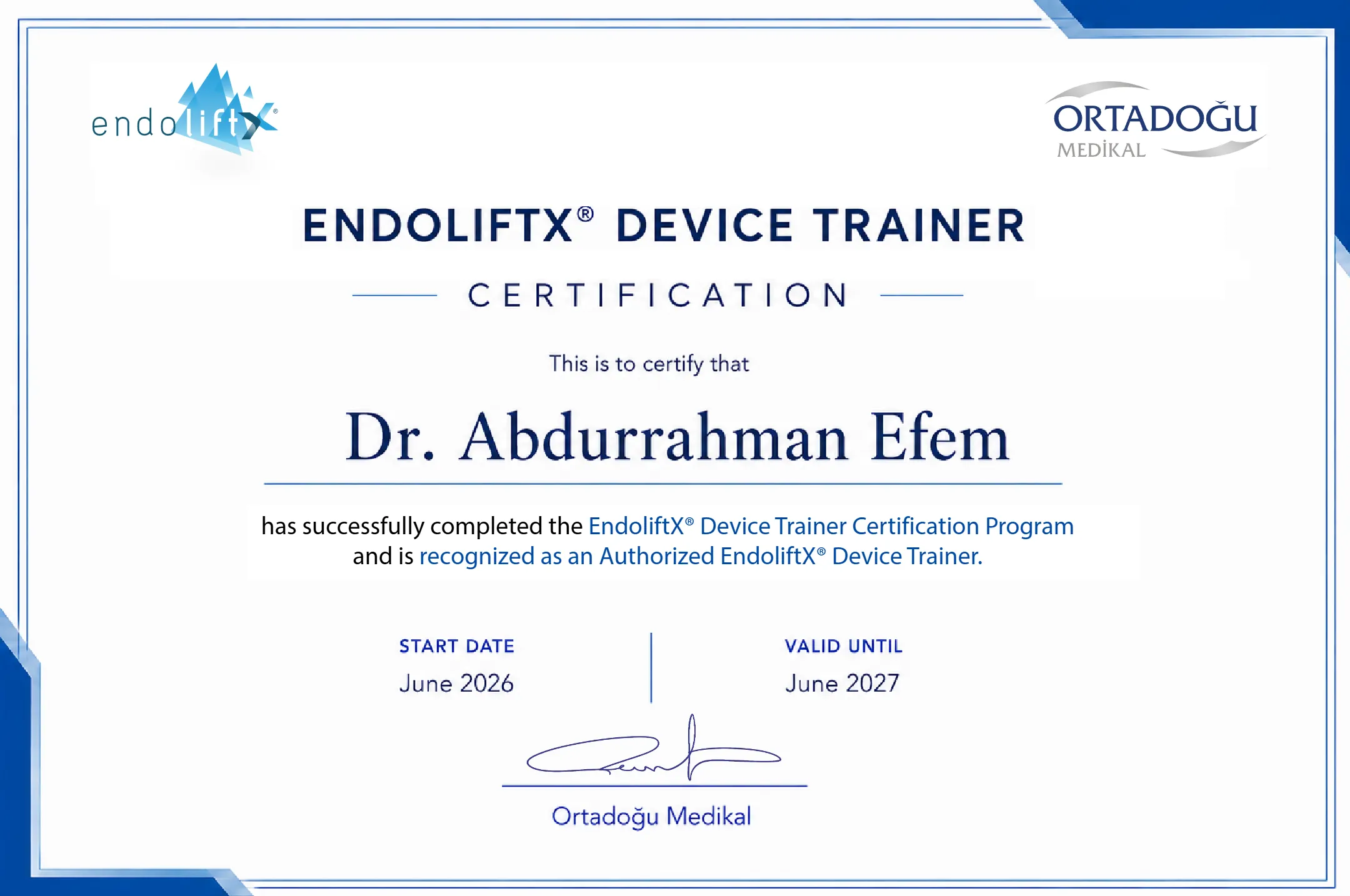
ENDOLIFTX TRAINER AUTHORITY
Dr. Abdurrahman Efem’s EndoliftX Trainer Certification
Dr. Abdurrahman Efem holds an EndoliftX trainer certificate. Endolift planning requires understanding not only the technology itself, but also patient selection, anatomy, treatment area and the tissue objective.
Trainer certification does not mean that side effects are impossible. Rather, treatment safety still depends on appropriate assessment, individual planning, technique and follow-up.

DR. ABDURRAHMAN EFEM
Doctor-Led Endolift Planning and Follow-Up
Endolift treatment planning at Efem Clinic considers the patient’s anatomy, tissue quality, treatment objective and whether the expected benefit justifies the proposed intervention.
The same principle applies after treatment. Recovery should be interpreted in the context of the individual procedure rather than through generic online timelines.
If a patient develops an unexpected or concerning symptom, direct communication with the treating medical team allows that symptom to be assessed in the appropriate clinical context.
RESULTS & PATIENT PRIVACY
Why Should Early Swelling Not Be Confused with the Final Result?
Early swelling, tightness and other temporary tissue responses can alter how the treated area looks. Collagen remodelling and the overall contour should therefore not be judged solely from photographs taken immediately after treatment.
Similarly, another patient’s recovery experience does not predict your own. Anatomy, treatment scope, tissue response, lighting, angle and photograph timing can all affect what is seen in before-and-after images.
Efem Clinic places importance on patient privacy and on establishing expectations from the individual patient’s anatomy rather than promising the same result or recovery experience seen in another person.
View the Before & After Gallery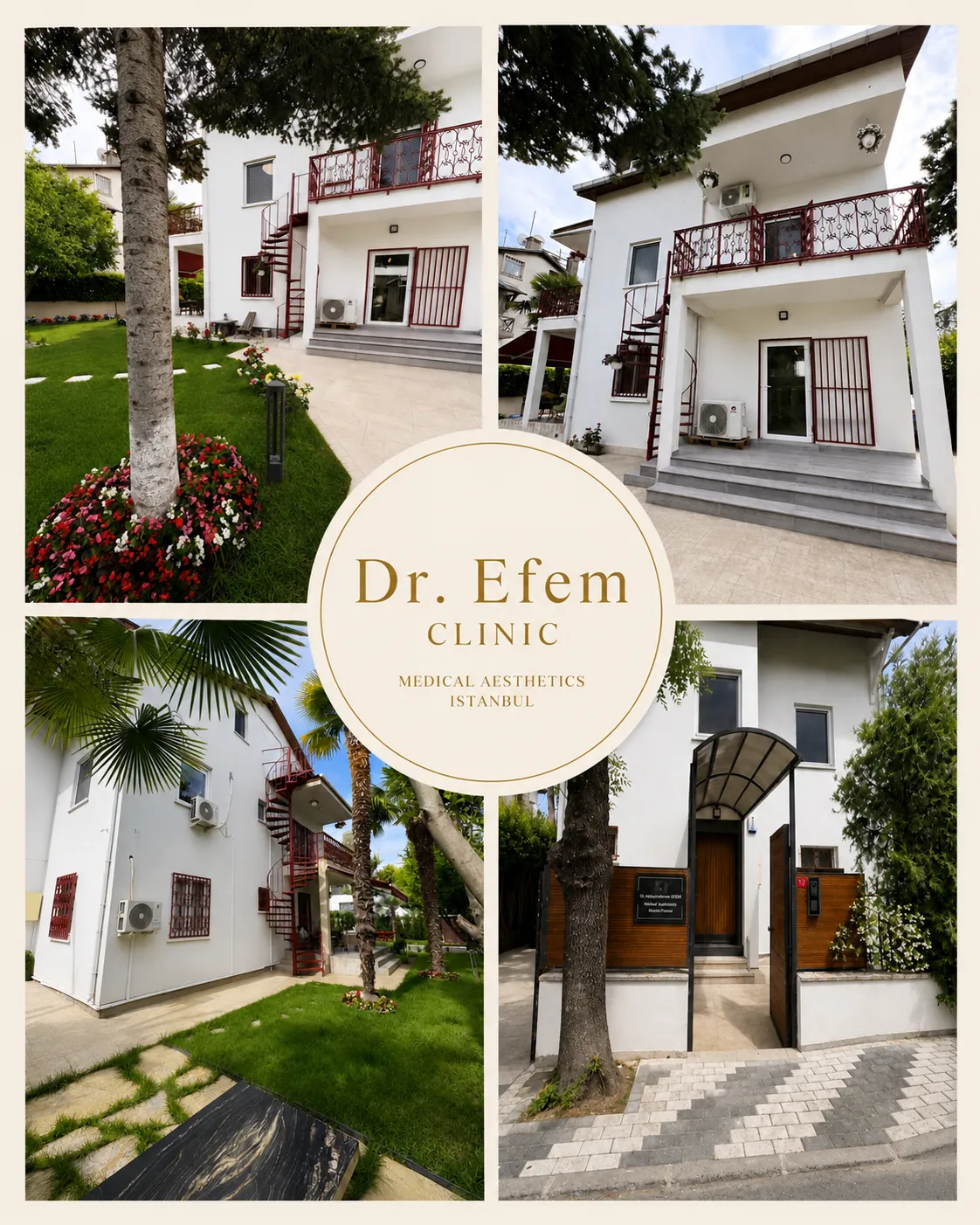
Endolift Assessment at Efem Clinic in Istanbul
Efem Clinic is a doctor-led medical aesthetic clinic in a private villa setting in Levent, Istanbul. The clinic offers a garden and parking area while placing emphasis on privacy, individual assessment and personalised treatment planning.
Endolift consultations include consideration of the patient’s actual tissue concern, expected benefit, limitations and recovery rather than presenting the procedure as universally suitable or risk-free.
Continue Your Endolift Research
Side effects are easier to understand when considered together with candidacy, recovery and expected results.
FREQUENTLY ASKED QUESTIONS
Endolift Side Effects FAQ
What are the common side effects of Endolift?
Temporary swelling, tenderness, tightness, sensitivity or bruising may occur. The degree and duration can differ according to the treatment area, treatment scope and individual response.
Is swelling normal after Endolift?
Temporary swelling can occur during early recovery. If swelling is severe, unusual, progressively worsening or concerning, the treating doctor should be contacted for individual assessment.
Can Endolift cause bruising?
Bruising may occur in some patients. Individual tendency to bruise, the treatment area and treatment scope can influence the visible response.
Is Endolift risk-free because it is minimally invasive?
No. Minimally invasive does not mean risk-free. Endolift requires appropriate patient selection, anatomical planning, technique and post-treatment follow-up.
When should I contact my doctor after Endolift?
Contact your treating doctor if a symptom is severe, unexpected, concerning or becomes progressively worse rather than following the recovery pattern discussed with you. Urgent symptoms should receive appropriate prompt medical assessment.
Does everyone have the same recovery after Endolift?
No. Recovery varies according to anatomy, treatment area, treatment scope and individual tissue response. Another patient’s experience should not be used as a guarantee of your own recovery.
Can I travel immediately after Endolift?
Travel planning should be discussed individually with the clinic. The treatment area, treatment scope, expected recovery and your travel schedule should be considered rather than assuming that the same timing is appropriate for every patient.
EFEM NOTE
A Good Safety Discussion Includes Both Benefits and Limitations
Within the Efem Method™, a treatment should not be considered appropriate simply because it is non-surgical or minimally invasive. Endolift planning includes whether the patient is suitable, which tissue should be treated, how much intervention is justified and what recovery and limitations should realistically be expected. Avoiding unnecessary treatment is part of the same decision process.
ENDOLIFT ASSESSMENT IN ISTANBUL
Discuss Endolift Benefits, Side Effects and Recovery Before Treatment
If you are considering Endolift, you can share your treatment goals with Efem Clinic before travelling to Istanbul. Suitability, expected benefits, limitations, possible temporary side effects and recovery considerations can then be discussed as part of an individual treatment assessment.
This page provides general information and does not replace individual medical assessment. Side effects, recovery and treatment suitability can vary between patients.
About Dr. Abdurrahman Efem
Dr. Abdurrahman Efem
Dr. Abdurrahman Efem is a medical aesthetic physician specializing in facial rejuvenation, non-surgical aesthetic treatments, and regenerative medicine. His approach focuses on enhancing natural beauty through personalized treatment plans designed around each patient's unique features and goals. Dr. Efem works with both local and international patients, emphasizing balanced, natural-looking results and long-term aesthetic wellbeing. This content has been prepared or medically reviewed by Dr. Abdurrahman Efem to ensure accuracy and relevance.