

Who Is A Good Candidate For Endolift?
Endolift Candidacy and Patient Selection Guide
Who Is a Good Candidate for Endolift? Suitability and Patient Selection
Endolift may be considered for suitable patients with mild to moderate skin laxity, early loss of jawline definition, beginning jowls or a small, localised pocket of fat beneath the chin.
Endolift is not suitable for everyone. A good candidate has a clearly identified anatomical concern, does not expect the result of surgery and is comfortable with a natural improvement that develops gradually.
Send Your Photos on WhatsApp Explore Endolift Treatment Request a Medical AssessmentFor an initial assessment, you may send clear photographs taken from the front, profile and 45-degree angles. Final suitability and treatment planning can only be confirmed after an individual medical consultation.
Non-advanced looseness affecting the face, jawline or neck.
Particularly a small and clearly defined pocket beneath the chin.
The patient does not expect the lifting power of a surgical facelift.
Suitability is based on anatomy and tissue quality rather than age alone.
Quick Answer: Who Is a Good Candidate for Endolift?
A good candidate for Endolift generally has mild to moderate lower-face or neck laxity, early jowls, reduced jawline definition or a small pocket of localised fat beneath the chin.
The skin and underlying tissues should have the potential to respond to controlled contraction and collagen remodelling. There should not be a large amount of excess skin, extensive fat accumulation or a need for surgical-level lifting.
Suitability cannot be determined from age or face shape alone. Skin quality, fat distribution, bone support, muscle structure, previous procedures and the patient’s expectations must be considered together.
What Is Endolift and What Is It Used For?
Endolift is a minimally invasive treatment in which a very fine optical fibre delivers controlled laser energy to selected subdermal tissue planes.
In suitable patients, the treatment is intended to support connective-tissue contraction, stimulate collagen remodelling and help contour limited areas of localised fat.
Endolift is not a surgical facelift, a high-volume fat-removal procedure or a substitute for facial filler. It is not performed in the same way across every facial area, and it does not correct every anatomical concern.
For a more detailed explanation, visit our guides to what Endolift is, how Endolift works and Endolift treatment.
The Main Characteristics of a Good Endolift Candidate
Mild or Moderate Skin Laxity
Patients with early or moderate looseness affecting the lower face, jawline or neck are generally more suitable than those with advanced sagging.
Early Jowls
Endolift may be considered when soft tissue is beginning to gather beside the jawline but has not yet developed into advanced lower-face sagging.
A Small, Localised Double Chin
A limited and clearly defined pocket of fat beneath the chin may be assessed for combined tissue tightening and contour refinement.
Patients Seeking a Non-Surgical Option
Endolift may suit patients who do not need a surgical facelift and are seeking a more limited, minimally invasive improvement.
Patients Comfortable With Gradual Results
A good candidate understands that collagen remodelling develops over the weeks and months following treatment.
Realistic Expectations
Suitable patients want a more defined and balanced contour rather than a completely different face or the result of surgery.
Which Concerns May Be Suitable for Endolift?
- A jawline that has become less defined
- Mild or moderate lower-face laxity
- Early jowl formation
- A small and localised double chin
- Fat beneath the chin accompanied by skin looseness
- Early neck laxity
- A need for controlled tightening in the lower cheeks
- Limited tissue looseness after weight loss
- Gradual softening of the facial contour
- Small areas of body laxity accompanied by localised fat
You can learn more about the areas that may be assessed in our Endolift treatment areas guide.
Is There an Ideal Age for Endolift?
There is no single ideal age for Endolift. Suitability is determined by anatomical need rather than the number on a patient’s passport.
Two people of the same age may have completely different levels of skin elasticity, fat distribution, skeletal support and tissue laxity.
A younger patient may have a genetically determined double chin, early jawline softening or tissue laxity following weight loss. An older patient may still have relatively good skin quality and only limited looseness.
The most useful question is not “Am I old enough?” but “What anatomical factor is creating my concern?”
Can Endolift Be Suitable in Your 30s?
Endolift should not be viewed as a routine preventative treatment for everyone in their 30s. It may, however, be considered when there is a genuine concern such as a genetic double chin, early jawline loss or laxity following weight change.
Avoiding unnecessary fat reduction is particularly important in younger and naturally slim faces. Excessive treatment may create a hollow or tired appearance later.
Treatment should therefore be planned only when a clear tissue-level concern has been identified.
Who May Benefit in Their 40s or 50s?
During the 40s and 50s, lower-face laxity, early jowls, reduced jawline definition and neck looseness may become more visible.
Endolift may be assessed when excess skin is not advanced, the tissue has reasonable response potential and the patient does not expect a surgical degree of lifting.
Ageing may also involve volume loss, reduced skeletal support or strong neck bands. These concerns cannot always be corrected by laser tightening alone.
Some patients may therefore benefit from a layered plan involving Endolift, filler, collagen-stimulating treatment, Ultherapy or another appropriate procedure.
Can Endolift Be Performed After the Age of 60?
Being over 60 does not automatically make someone unsuitable for Endolift. The condition of the skin and deeper facial tissues is more important than age alone.
A patient with limited laxity and realistic expectations may still be assessed. However, significant excess skin, pronounced muscle bands or substantial tissue descent may be better treated surgically.
A non-surgical treatment is not automatically the better treatment simply because a patient is older or wishes to avoid surgery.
Is Everyone With a Weak Jawline a Good Candidate?
No. A poorly defined jawline may have several different causes.
Endolift may be suitable when the main concern is mild laxity, early jowls or a small pocket of fat. However, a recessed chin, weak mandibular projection, volume deficiency or prominent masseter muscles may require a different approach.
When structural support is limited, chin or jawline filler may provide a more direct improvement than tissue tightening.
For area-specific information, read our guide to Endolift for the jawline.
Is Everyone With a Double Chin Suitable?
No. A double-chin appearance is not always caused by fat alone. Skin laxity, a recessed chin, neck-muscle anatomy, gland position and overall facial proportions may all contribute.
Endolift may be more appropriate when a small and localised pocket of fat is combined with mild or moderate skin laxity.
When fat volume is substantial, liposuction may provide more effective reduction. When the chin is recessed, structural support may be needed. Advanced excess skin may require surgical neck assessment.
For further detail, visit our guide to Endolift for a double chin.
Who Is a Good Candidate for Neck Endolift?
Patients with mild or moderate neck laxity may be considered when there is no advanced excess skin or prominent muscle banding.
Neck skin may be thinner than facial skin and requires area-specific energy planning and careful treatment boundaries.
A pronounced turkey-neck appearance, significant excess skin or strong platysmal bands may not respond adequately to Endolift alone.
More information is available in our Endolift for the neck guide.
Who Is Suitable for Endolift in the Cheek Area?
The cheeks contain important natural facial volume. Treatment in this area should therefore be planned very conservatively.
Patients with mild lower-cheek laxity or tissue gathering toward the jowl may be assessed. Naturally slim patients, or those with existing cheek hollowing, should not undergo unnecessary fat reduction.
In some people, the main concern is not laxity but midface volume loss. Filler or collagen-supporting treatments may then be more appropriate.
Reducing more facial fat does not always create a better or younger contour.
Who May Be Suitable for Body Endolift?
In selected patients, Endolift may also be considered for limited laxity and small localised fat deposits affecting areas such as the abdomen, upper arms or thighs.
The treatment area should be relatively limited, without substantial excess skin or a need for high-volume fat removal.
Extensive laxity after major weight loss or larger areas of fat accumulation may require surgical body contouring or a different treatment approach.
Who May Not Be Suitable for Endolift?
Endolift may be unsuitable, postponed or replaced with another treatment in situations such as:
- Advanced facial or neck sagging
- Significant excess skin requiring surgical removal
- Large-volume double-chin or body fat
- Marked facial volume loss or hollowing
- A jawline concern caused primarily by weak skeletal support
- Active skin infection or an open wound in the treatment area
- Uncontrolled systemic disease
- Bleeding or clotting disorders
- Health conditions that may impair healing
- Pregnancy or breastfeeding
- An unexplained lump or swelling in the treatment area
- Unrealistic or surgical-level expectations
- Inability to follow aftercare and review instructions
- Significant tissue damage or uncertainty following previous procedures
This list is provided for general information. A medical consultation is required to determine whether a particular condition is a contraindication.
Are Very Slim Faces Suitable for Endolift?
Very slim patients or those with reduced facial fat require particularly careful planning.
Unnecessary fat reduction may worsen cheek hollowing and create a tired or prematurely aged appearance. The goal should be controlled tightening within an appropriate tissue plane while preserving valuable facial volume.
When the main issue is volume loss rather than laxity, filler, biostimulatory treatment or skin-quality procedures may be more appropriate.
Endolift should never be planned with the assumption that less facial fat is always better.
Is Endolift Suitable for Overweight Patients?
Endolift is not a weight-loss treatment. It does not reduce overall body weight or replace a broader weight-management programme.
Patients with extensive fat accumulation may not achieve an adequate result from Endolift alone. The treatment is generally considered for smaller and more localised pockets of fat.
Patients planning significant weight loss may be advised to wait until their weight is stable, as later weight changes can alter skin laxity and contour.
Treatment planning is usually more predictable once body weight has stabilised.
Who May Be Suitable After Pregnancy?
Pregnancy and weight change may leave limited laxity affecting the abdomen or other body areas.
Patients may be assessed once breastfeeding has ended, body weight has stabilised and no further pregnancy is planned in the near future.
Muscle separation, hernia, extensive excess skin or large-volume fat cannot be assessed from the skin surface alone and may require surgical or specialist review.
Post-pregnancy planning should consider the abdominal wall and general health, not only the appearance of the skin.
Can Men Be Good Candidates for Endolift?
Yes. Endolift is not a treatment intended only for women.
Men may be assessed for reduced jawline definition, a double chin, neck laxity or suitable areas of localised body fat.
Male facial anatomy may involve a broader jaw, thicker skin, stronger connective tissue and different aesthetic priorities.
The goal is not to feminise the face, but to create a clearer contour that remains consistent with the patient’s natural structure.
Can Patients With Previous Filler Have Endolift?
Previous filler treatment does not automatically prevent Endolift. However, the location, product type, amount and date of treatment should be known.
Filler in the cheeks, jawline, chin or nasolabial area may affect treatment planning and the choice of tissue plane.
When old filler is unidentified or irregularly placed, ultrasound assessment or filler management may be required before treatment.
Patients should provide complete information about previous facial procedures during consultation.
Can Patients With Previous Thread Lifting Have Endolift?
A history of thread lifting is not an automatic contraindication, but the type, position and date of the threads should be considered.
Fibrosis and uncertainty regarding thread placement may make treatment planning more complex.
Patients should bring any available records or product information from previous thread procedures.
How Is Endolift Suitability Assessed?
| Assessment Area | What the Doctor Evaluates | Why It Matters |
|---|---|---|
| Skin laxity | The degree, distribution and amount of excess skin | Helps determine whether Endolift is likely to be sufficient |
| Fat distribution | The amount, depth and localisation of fat | Defines whether fat contouring is appropriate and safe |
| Facial volume | Cheek hollowing, midface volume and natural fat compartments | Shows which areas must be preserved |
| Bone support | Chin, mandibular and cheekbone projection | May reveal a need for filler or surgical support |
| Skin quality | Thickness, elasticity, sun damage and healing capacity | Influences collagen response and energy planning |
| Medical history | Medical conditions, medication, bleeding risk and previous procedures | Affects safety and whether treatment should proceed |
| Expectations | The degree and timing of change expected by the patient | Confirms whether expectations match the realistic scope of Endolift |
Can Suitability Be Determined From Photographs?
Clear photographs taken from the front, profile and 45-degree angles can support an initial assessment.
They may show jawline definition, visible laxity, facial proportions and the appearance of a double chin.
However, photographs cannot reliably show skin thickness, tissue mobility, the depth of fat, muscle anatomy or all relevant anatomical boundaries.
A photo assessment should therefore be treated as preliminary guidance rather than final medical approval.
What Results Should a Suitable Patient Expect?
In a suitable patient, the goal is not to change the face completely but to improve balance within the existing anatomy.
Potential improvements may include clearer jawline definition, limited refinement beneath the chin, lower-face tightening and a gradual improvement in tissue firmness.
The degree of change varies according to skin quality, age, treatment area, fat distribution, treatment planning and individual collagen response.
You can learn more about gradual tissue change in our Endolift collagen stimulation guide.
Who May Be Disappointed With Endolift?
Endolift may not meet the expectations of patients who want:
- The lifting strength of a surgical facelift
- Complete removal of substantial excess skin
- Large-volume double-chin fat removal in one procedure
- Every facial line or wrinkle to disappear
- Greater chin or cheekbone projection
- Lost facial volume to be restored by laser treatment
- The complete result to be visible immediately
- The natural ageing process to stop permanently
The value of Endolift depends on honest discussion of both what it may achieve and what lies beyond its realistic limits.
Endolift or Ultherapy: Which Candidate Is More Suitable?
Ultherapy delivers focused ultrasound energy from the skin surface, while Endolift uses a fine optical fibre within selected subdermal tissue planes.
Ultherapy may be considered when the patient prefers a completely non-invasive approach and does not require localised fat contouring.
Endolift may be more relevant when mild laxity is combined with a small pocket of localised fat and the patient is suitable for a minimally invasive procedure.
The best treatment depends on the tissue layer creating the concern, not simply which technology is considered stronger.
Endolift or Morpheus8: Which Candidate Is More Suitable?
Morpheus8 uses radiofrequency microneedling and may be selected when skin texture, enlarged pores, acne scarring, fine lines or general skin-quality improvement are the main concerns.
Endolift works differently and may be more relevant when the main concern involves the jawline, jowls, double chin or deeper lower-face contour.
Some patients may benefit from both treatments because they address different tissue depths and objectives.
Endolift or a Facelift: Who Needs Surgery?
Endolift and facelift surgery are not equivalent treatments.
Endolift may be assessed when laxity is mild or moderate, excess skin is limited and the patient wants a restrained, natural improvement.
Surgery may be more appropriate when there is advanced sagging, significant excess skin or substantial descent of deeper facial tissues.
Choosing a less invasive treatment does not make an advanced surgical concern disappear.
Can Endolift Be Combined With Other Treatments?
Yes. Facial ageing and contour changes often involve more than one tissue layer.
| Main Concern | Possible Approach | Planning Logic |
|---|---|---|
| Lower-face laxity and a small double chin | Endolift | Tightening and limited contouring may be addressed together |
| Weak chin or jawline support | Endolift and filler | One treatment supports tissue tightening while the other restores structure |
| Pores, scars and textural concerns | Endolift and Morpheus8 | Different tissue depths can be targeted separately |
| Volume loss and laxity | Endolift and volume support | Natural facial volume is preserved while laxity is treated conservatively |
| Advanced excess skin | Surgical assessment | The realistic limits of minimally invasive treatment may have been exceeded |
What Does the Treatment Process Involve?
Consultation
Skin laxity, fat distribution, skin quality, bone support, medical history and expectations are assessed.
Treatment Mapping
Target areas, protected zones and the relevant tissue planes are identified.
Controlled Treatment
The fine optical fibre is guided through the selected tissue planes according to the treatment plan.
Follow-Up
Healing, swelling, tenderness, contour and gradual collagen response are reviewed.
Is Endolift Painful?
Endolift is minimally invasive, and local anaesthesia may be used according to the treatment area and individual plan.
Patients may feel pressure, pulling, warmth or temporary sensitivity during treatment. Pain tolerance varies between individuals.
Tenderness, swelling, tightness or bruising may occur during the early recovery period.
The aim is not to promise a completely sensation-free procedure, but to make the experience manageable through appropriate anaesthesia and careful technique.
Who Is Better Prepared for the Recovery Period?
Patients who understand that swelling or bruising may occur and who can follow aftercare instructions are generally better prepared for treatment.
- Patients who can allow time for early swelling to settle
- Those able to avoid intense exercise, saunas and excessive heat temporarily
- Patients who will not massage or apply unnecessary pressure to the area
- Those willing to follow written medication and care instructions
- Patients who can attend follow-up appointments
- Those who understand that the result develops gradually
When treatment is planned before an important event or flight, sufficient recovery time should be allowed.
When Do Endolift Results Appear?
| Period | Possible Changes | How to Interpret Them |
|---|---|---|
| First few days | Swelling, tenderness, tightness and early tissue contraction | Too early to judge the final result |
| First few weeks | A clearer contour as swelling settles | Still part of the early healing phase |
| Following months | Gradual tightening associated with collagen remodelling | The main result-assessment period |
| Longer term | A more settled and natural-looking result | Affected by biological response and continuing ageing |
Can One Treatment Be Enough for a Good Candidate?
Endolift is commonly planned as one treatment followed by gradual assessment of the result.
One session may provide a meaningful improvement for a suitable patient with mild or moderate laxity and a limited contour concern.
Larger treatment areas, greater laxity or a limited biological response may lead to consideration of an additional procedure.
A repeat treatment should not be scheduled automatically before the first result has had time to develop.
How Is Endolift Cost Determined?
The cost of Endolift may depend on the treatment area, number of areas, complexity of the procedure and the extent of optical-fibre planning required.
A limited jawline procedure is not the same as a combined lower-face, double-chin and neck treatment.
Physician expertise, clinical standards, sterilisation, follow-up and complication management are also part of the overall treatment service.
An accurate quotation can be provided after confirming that the patient is suitable and determining which areas genuinely require treatment.
The Efem Method: Identify the Cause Before Choosing the Treatment
Within the Efem Method, Endolift is not recommended automatically to everyone with a weak jawline or double chin.
The underlying cause is assessed first. Skin laxity, fat distribution, skeletal support, muscle structure, volume loss and skin quality are considered separately.
When the concern lies within a tissue layer that Endolift can realistically address, a balanced plan is created using the least intervention required.
The goal is not to perform more procedures. It is to choose the correct treatment, in the correct area, for the correct patient.
Can International Patients Be Good Candidates?
Suitable international patients may have Endolift planned as part of a visit to Istanbul.
However, treatment suitability, flight timing and follow-up requirements should be considered together.
A preliminary photo consultation may assist with travel planning, but final approval is only given after an in-person medical assessment in Istanbul.
- Front, profile and angled photographs for preliminary review
- Medical history and medication information shared in advance
- In-person examination before treatment
- Transparent discussion of the possibility of being unsuitable
- Return travel planned around possible swelling and bruising
- Written aftercare instructions in English
- Accessible follow-up support after returning home
The ability to perform Endolift during one trip does not mean that every international patient is an appropriate candidate.

Individual Endolift Planning With Dr Abdurrahman Efem
Dr Abdurrahman Efem is a medical aesthetic physician and a Ministry-appointed medical aesthetics trainer.
He provides physician education in Endolift, Ultherapy, Morpheus8, advanced filler techniques and facial contouring, and has participated in international training and certification programmes.
During an Endolift consultation, the assessment includes skin thickness, facial volume, fat position, chin support, previous treatments and the degree of change expected by the patient.
When Endolift is not appropriate, an unnecessary procedure is not recommended. If another treatment or surgical opinion is more suitable, the alternatives are discussed openly.
About Dr Efem Ask on WhatsAppA Private Villa Clinic in Levent, Istanbul
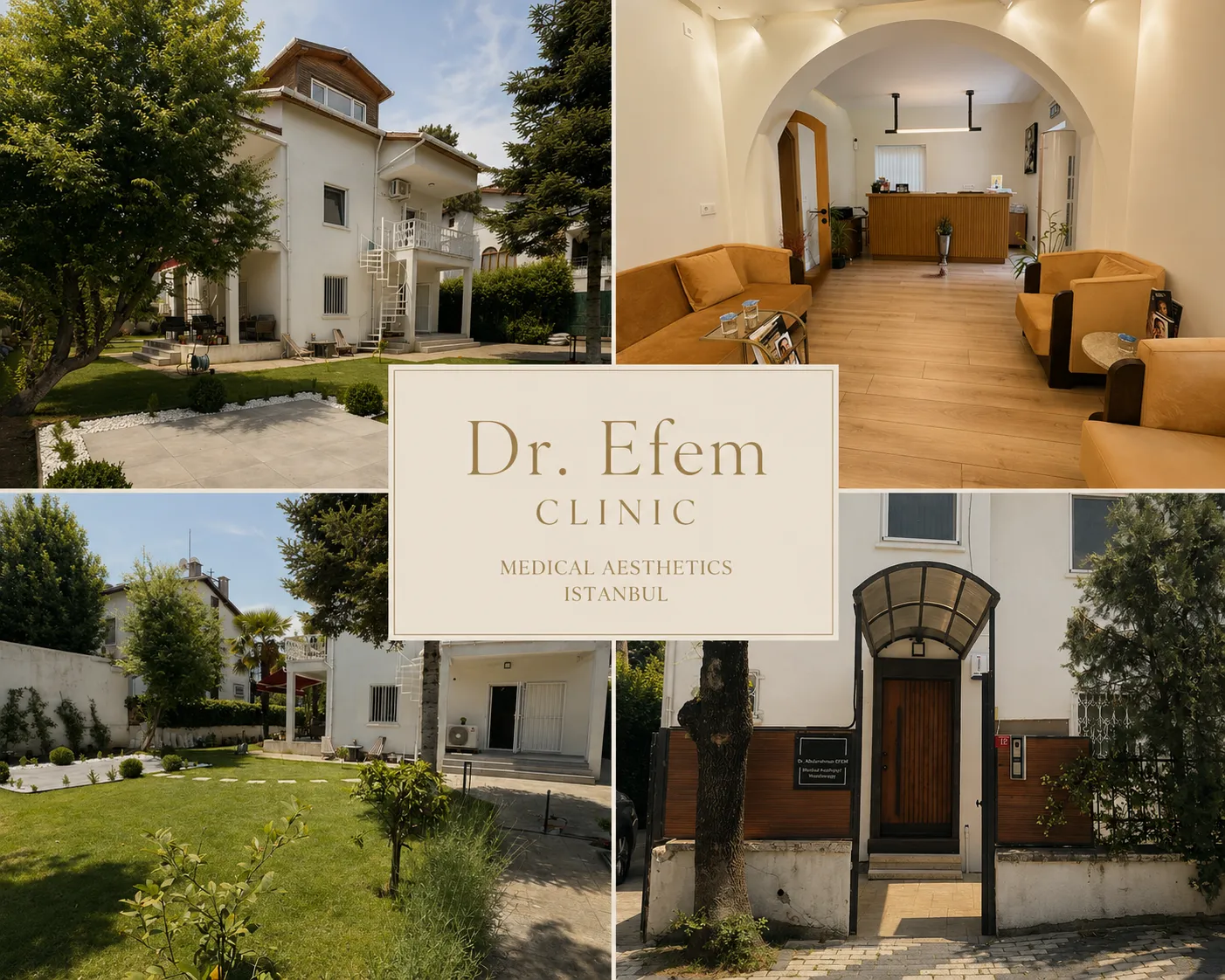
Efem Clinic provides physician-led medical aesthetic care in a private villa clinic with a garden and parking in Levent, Istanbul.
Consultations are conducted without rushing and with attention to privacy. The purpose of the assessment is not simply to confirm that a procedure can be performed, but to determine whether it is genuinely appropriate.
International patients can receive support in English throughout the consultation, treatment-planning and follow-up process.
Treatment quality depends not only on technology, but also on patient selection, medical experience, careful planning, privacy and accessible follow-up.
Can Before-and-After Photos Confirm Suitability?
Before-and-after photographs can help patients understand the scale of improvement that may be possible in a suitable case.
However, another patient’s result does not guarantee the same outcome for you.
Lighting, head position, facial expression, camera distance, swelling and the timing of the final photograph may all affect appearance.
Photographs are most useful when the angles, lighting and follow-up timing are consistent and clearly documented.
Efem Note
Being concerned about a double chin or weak jawline does not automatically make someone a good Endolift candidate.
A similar appearance may arise from completely different anatomical causes in different patients.
The best result comes not from performing the same treatment on everyone, but from selecting the smallest balanced intervention that addresses the correct tissue layer.
Related Endolift Guides
Frequently Asked Questions
Who is a good candidate for Endolift?
A good candidate generally has mild to moderate skin laxity, early jowls, reduced jawline definition or a small localised double chin.
What is the best age for Endolift?
There is no fixed best age. Suitability depends on tissue laxity, fat distribution, skin quality, anatomy and expectations.
Can I have Endolift in my 30s?
It may be considered when there is a genuine anatomical concern such as a genetic double chin, early jawline loss or laxity following weight change.
Is Endolift suitable after the age of 60?
Age alone is not a barrier. However, advanced sagging and significant excess skin may be better treated surgically.
Is everyone with a double chin suitable for Endolift?
No. The appearance may be caused by fat, laxity, a recessed chin, muscle anatomy or other structural factors.
Is everyone with a weak jawline a good candidate?
No. If the main issue is limited skeletal support or volume deficiency, chin or jawline filler may be more appropriate.
Is Endolift suitable for advanced facial sagging?
Endolift may not be sufficient when there is advanced sagging or substantial excess skin. A surgical assessment may be more appropriate.
Can slim-faced patients have Endolift?
Some slim-faced patients may be suitable for controlled tightening, but natural facial fat should be preserved carefully.
Is Endolift suitable for overweight patients?
Endolift is not a weight-loss procedure and may not be sufficient for large-volume fat. It is generally assessed for smaller localised deposits.
Can men have Endolift?
Yes. Men may be assessed for jawline definition, a double chin, neck laxity or suitable body areas.
Can I have Endolift after facial filler?
Possibly. The location, type, amount and date of the filler must be considered during treatment planning.
Can I have Endolift after a thread lift?
The type, placement and age of the threads should be assessed because fibrosis and thread position may affect planning.
Can pregnant patients have Endolift?
Elective medical aesthetic procedures are generally postponed during pregnancy. Breastfeeding patients also require individual medical assessment.
Can people with diabetes have Endolift?
Diabetes control, medication and healing capacity must be assessed. Treatment may be postponed when diabetes is uncontrolled.
Can patients taking blood thinners have Endolift?
Medication must be disclosed because of bleeding and bruising risk. Prescribed medication should never be stopped without medical advice.
Is Endolift suitable for everyone who wants to avoid surgery?
No. Avoiding surgery does not make a surgical-level concern suitable for a minimally invasive procedure.
Can one Endolift treatment be enough?
One treatment may be enough for a suitable patient with mild or moderate laxity and a limited contour concern.
Can suitability be assessed from photos?
Photographs can support a preliminary review, but final suitability requires an in-person assessment of the skin and underlying tissues.
Is Endolift or Ultherapy more suitable for me?
Ultherapy delivers energy from the skin surface, while Endolift uses a subdermal optical fibre. The choice depends on the tissue layer that needs treatment.
Is Endolift or Morpheus8 more suitable for me?
Morpheus8 may be more relevant for texture, pores and scars, while Endolift may be considered for deeper lower-face contour and localised fat.
Does Endolift produce the same result as a facelift?
No. Endolift does not provide the same lifting strength or excess-skin removal as facelift surgery.
What is assessed during an Endolift consultation?
The doctor assesses skin laxity, fat distribution, facial volume, bone support, medical history, previous treatments and expectations.
Find Out Whether You Are a Good Candidate for Endolift
Send clear front, profile and 45-degree photographs for a preliminary review, or arrange an in-person consultation with Dr Abdurrahman Efem in Levent, Istanbul.
Request a Free Preliminary Assessment Contact Efem Clinic Meet Dr EfemThis content is provided for general information and does not replace an individual medical consultation. Endolift suitability, treatment areas, recovery, risks and results vary between patients.
About Dr. Abdurrahman Efem

Dr. Abdurrahman Efem
Dr. Abdurrahman Efem is a medical aesthetic physician specializing in facial rejuvenation, non-surgical aesthetic treatments, and regenerative medicine. His approach focuses on enhancing natural beauty through personalized treatment plans designed around each patient's unique features and goals. Dr. Efem works with both local and international patients, emphasizing balanced, natural-looking results and long-term aesthetic wellbeing. This content has been prepared or medically reviewed by Dr. Abdurrahman Efem to ensure accuracy and relevance.