

Endolift Results
ENDOLIFTX • RESULTS • REALISTIC EXPECTATIONS
Endolift Results: What Can You Realistically Expect?
Endolift results are not defined by one standard before-and-after change. In suitable patients, treatment may support a more defined jawline, improved lower-face or neck contour, controlled tightening and refinement of selected localised fat — but the type and degree of change depend on the anatomy being treated.
Skin and tissue quality, degree of laxity, localised fat, facial structure, treatment area and individual biological response all influence the result. Endolift also has clear limits: it does not reproduce facelift-level lifting, remove significant excess skin or guarantee the same outcome for every patient.
A good Endolift result is not the largest possible change. It is a proportionate improvement that addresses the right tissue while preserving natural facial character.
QUICK ANSWER
What Results Can Endolift Produce?
In appropriately selected patients, Endolift may support better jawline definition, controlled tightening of mild to moderate lower-face or neck laxity, improvement in early jowls and refinement of selected localised fullness such as a small submental fat pocket.
Where fat reduction is not desirable, treatment planning may instead focus on tissue firmness and collagen remodelling while preserving facial volume.
Endolift does not remove every wrinkle, correct advanced sagging, remove large volumes of fat or produce the same degree of lifting as facelift surgery.
Which Changes May Be Seen After Endolift?
The visible result depends on the problem that was treated. Endolift should therefore not be described as producing one universal effect.
Jawline Definition
When early laxity or selected localised fullness contributes to a blurred mandibular border, appropriate treatment may create a clearer transition along the jawline.
Lower-Face Contour
Selected patients with mild or moderate tissue laxity may see a more controlled and balanced lower-face outline.
Submental Contour
Where a limited pocket of localised fat contributes to fullness beneath the chin, selected fat may form part of the treatment plan.
Neck Firmness
Early neck laxity may appear more controlled as treated tissues settle and remodelling develops.
Tissue Quality
Controlled thermal effects may support collagen remodelling and gradual improvement in tissue firmness in suitable patients.
Natural Refinement
The objective is generally to refine existing contours rather than create an artificial or fundamentally different facial shape.
The Expected Result Depends on What Is Causing the Concern
A less defined jawline, facial heaviness or neck contour change can look similar externally while arising from different tissue problems. The realistic Endolift result therefore depends on identifying the correct anatomical target.
| Dominant Concern | Possible Endolift Goal | Important Limitation |
|---|---|---|
| Mild tissue laxity | Support firmness and improve contour | Advanced sagging may require a different approach |
| Selected localised fat | Refine a limited area of fullness | Endolift is not a large-volume fat-removal treatment |
| Laxity + localised fullness | Plan contour and tissue firmness together | Not every area of facial fat should be reduced |
| Volume loss | Preserve volume and reassess the true problem | Further fat reduction may worsen hollowing |
| Significant excess skin | Determine whether Endolift can offer meaningful benefit | Surgical assessment may be more appropriate |
Why Is the Final Endolift Result Gradual?
During Endolift, a very fine optical laser fibre is guided through selected subdermal tissues according to the treatment plan. Controlled laser energy may influence connective tissue, collagen and selected localised fat differently depending on the target.
An early feeling or appearance of firmness may occur, but this should not be confused with the complete result. Temporary swelling and tissue response can also change the appearance during early recovery.
The more meaningful contour should be assessed as recovery progresses and tissue remodelling develops. This is why Endolift is better understood as a gradual contouring process than as an instant transformation.
See the Detailed Endolift Results TimelineEndolift Results Timeline at a Glance
Timing varies between patients, but it is useful to distinguish early recovery from the developing result.
FIRST DAYS
Swelling, tenderness, tightness or bruising may affect the appearance. It is too early to judge the final result.
FIRST WEEKS
As swelling settles, the treated contour may become easier to assess.
FOLLOWING MONTHS
Tissue firmness and contour may continue to evolve as collagen remodelling progresses.
The detailed timing belongs on the dedicated results-timeline guide; this page focuses on what type and degree of result may realistically be possible.
Why Do Endolift Results Vary Between Patients?
Two patients can receive treatment in the same general area and still experience different degrees of visible change. Relevant factors can include:
Thickness, elasticity and baseline tissue condition influence how the area responds.
Mild contour change and advanced tissue descent do not have the same treatment potential.
The amount, location and role of localised fat can change the treatment objective.
Skeletal support, chin projection and natural facial proportions affect the visible contour.
Previous fillers, threads or surgery may influence assessment and treatment planning.
Healing and collagen remodelling do not develop identically in every patient.
NATURAL FACIAL CONTOUR
Does a Better Endolift Result Mean a Thinner Face?
No. Facial fat is not automatically a problem. Some volume contributes to facial support, soft transitions and natural proportions.
When selected localised fat is genuinely contributing to lower-face heaviness or submental fullness, controlled contouring may be useful. In a naturally thin face or a face with existing volume loss, however, unnecessary fat reduction may create a more hollow or tired appearance.
Preserving the right volume can therefore be part of achieving a successful Endolift result.
What Can Endolift Not Realistically Achieve?
Clear limits are as important as potential benefits when discussing results. Endolift should not be expected to:
- Produce the same degree of lifting as facelift surgery
- Remove significant excess skin
- Correct every cause of a poorly defined jawline
- Replace large-volume surgical fat removal
- Restore structural facial volume that has already been lost
- Remove every wrinkle or surface-texture concern
- Guarantee a specific degree of change in every patient
If the main problem lies outside the tissues Endolift can meaningfully address, choosing Endolift simply because the patient prefers a non-surgical treatment may lead to an unsatisfactory result.
Can Endolift Results Be Less Noticeable Than Expected?
Yes. Endolift does not produce the same degree of improvement in every patient. A limited result does not automatically mean that more treatment should be performed.
When the visible change appears modest, the first step is to consider whether recovery and tissue remodelling have progressed sufficiently. The remaining concern should then be reassessed anatomically.
A limited result may occur when the original problem involves significant excess skin, advanced tissue descent, larger-volume fat, weak structural support, substantial volume loss or another concern that lies outside Endolift’s main treatment role.
The next step may be further observation, another technology, a different treatment strategy, surgical assessment or no additional treatment at all.
THE EFEM METHOD™
Planning the Result Starts Before the Treatment
Within the Efem Method™, the expected result is considered by first identifying the patient’s actual concern and the anatomical tissue responsible for it. The treatment is then selected according to that target rather than starting with a device and trying to make every concern fit it.
1. Understand the Need
Define what the patient actually wants to change and what would represent a meaningful result.
2. Choose the Right Layer
Determine whether the concern comes mainly from localised fat, laxity, structural support, volume loss or skin quality.
3. Intervene Only as Much as Needed
Treatment intensity is not used as a substitute for appropriate patient selection.
4. Preserve Natural Appearance
The objective is a balanced improvement that respects the patient’s existing facial identity.
If Endolift is unlikely to provide a meaningful result for the patient’s actual concern, not performing Endolift can be the more appropriate decision.
When Might Another Treatment Produce a More Relevant Result?
A treatment result should be judged against the tissue problem it is intended to address. Endolift, Ultherapy Prime and Morpheus8 do not have identical treatment targets.
| Treatment | Typical Planning Focus | When It May Enter the Discussion |
|---|---|---|
| EndoliftX | Selected subdermal tissue, contour, localised fat and firmness support | When selected fat and/or tissue laxity contribute to contour change |
| Ultherapy Prime | Deeper ultrasound-based support and lifting-focused planning | When deeper structural laxity is more relevant than localised fat |
| Morpheus8 | RF microneedling, skin quality, texture and firmness | When skin-quality or textural concerns are an important part of the treatment goal |
BEFORE & AFTER
Can Before-and-After Photos Predict Your Endolift Result?
No photograph of another patient can predict an individual result. Before-and-after images can provide useful context, but anatomy, tissue quality, fat distribution and treatment objectives vary.
Photography itself also matters. Camera angle, distance, lighting, head and neck position, facial expression and follow-up timing can all influence how dramatic a change appears.
A meaningful comparison should therefore use similar conditions wherever possible and should never be treated as a guarantee of what another patient will achieve.
View the Before & After GalleryAre Endolift Results Permanent?
Endolift should not be described as permanently stopping ageing. The tissues continue to change over time, and the appearance can be influenced by age, genetics, skin quality, sun exposure, smoking, lifestyle and weight change.
This is different from saying that the result is only a short-lived cosmetic effect. Treatment-related tissue changes may remain visible while natural ageing continues in the background.
How long an individual result remains noticeable cannot be guaranteed in advance.
INTERNATIONAL PATIENTS
Can Your Expected Endolift Result Be Assessed Before Travelling to Istanbul?
International patients may send clear front, profile and angled photographs to begin a preliminary discussion about their concern before travelling to Istanbul.
Photographs can help identify whether visible laxity, localised fullness or another contour issue may be present, but they cannot establish an exact result or confirm candidacy on their own.
Final treatment planning requires individual medical assessment. Appointment timing and practical travel considerations can then be discussed according to the confirmed treatment plan.
Send Photos on WhatsApp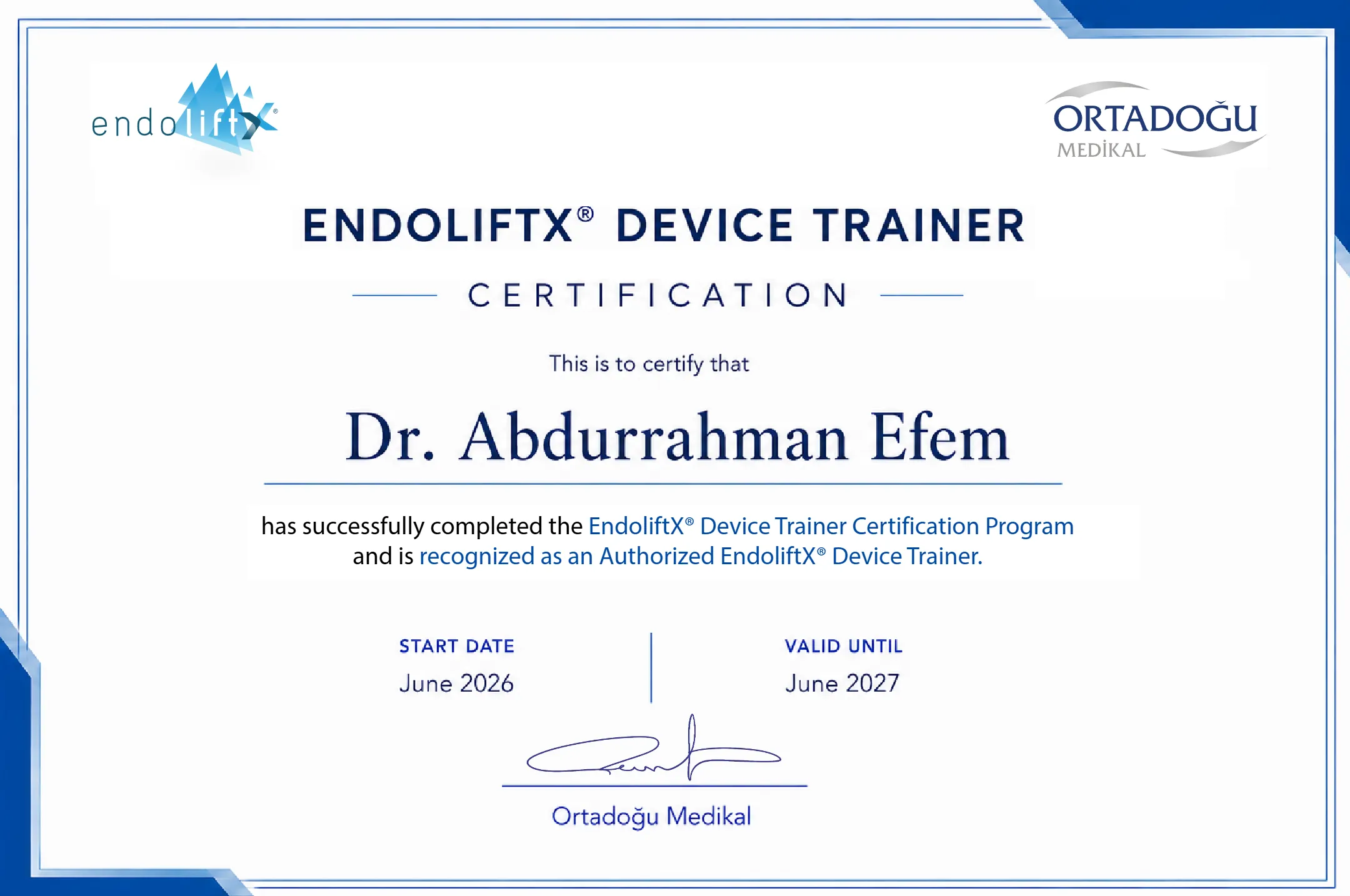
ENDOLIFTX TRAINER AUTHORITY
Dr. Abdurrahman Efem’s EndoliftX Trainer Certification
Dr. Abdurrahman Efem holds an EndoliftX trainer certificate. Achieving an appropriate result depends not only on using the technology, but also on selecting the correct patient, identifying the relevant tissue and recognising when Endolift is unlikely to provide sufficient benefit.
Particularly in facial treatment, planning should balance contour improvement with preservation of natural volume and facial identity.
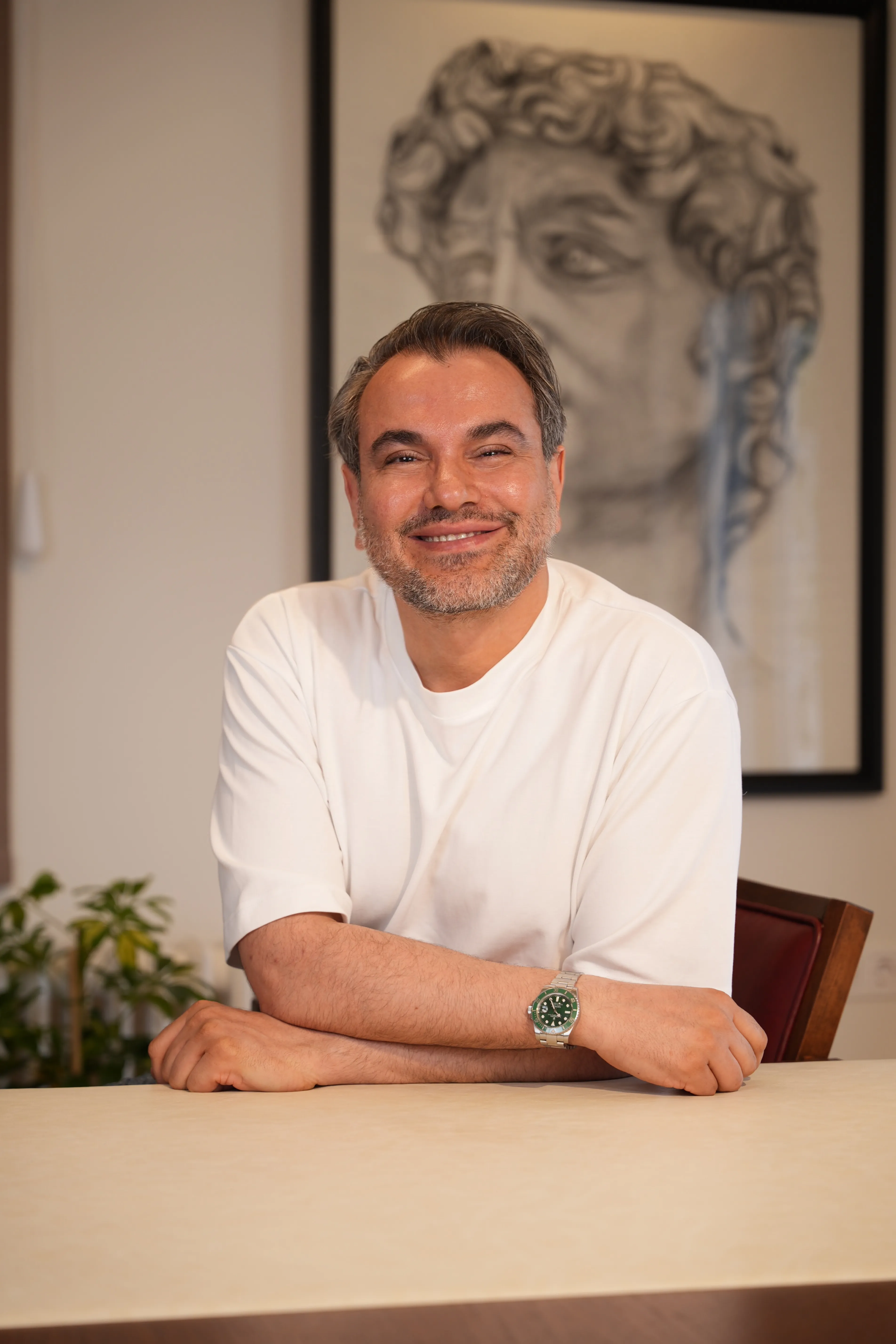
DR. ABDURRAHMAN EFEM
Realistic Results Begin With Patient Selection
A technically possible treatment is not automatically an appropriate treatment. Assessment should consider the patient’s anatomy, tissue quality, degree of laxity, localised fat, previous procedures and expectations before estimating what Endolift may realistically change.
When another treatment addresses the dominant problem more directly, or when the expected benefit would be too limited, that should form part of the consultation.
The aim is not to maximise treatment, but to choose the smallest appropriate intervention that has a reasonable anatomical basis.
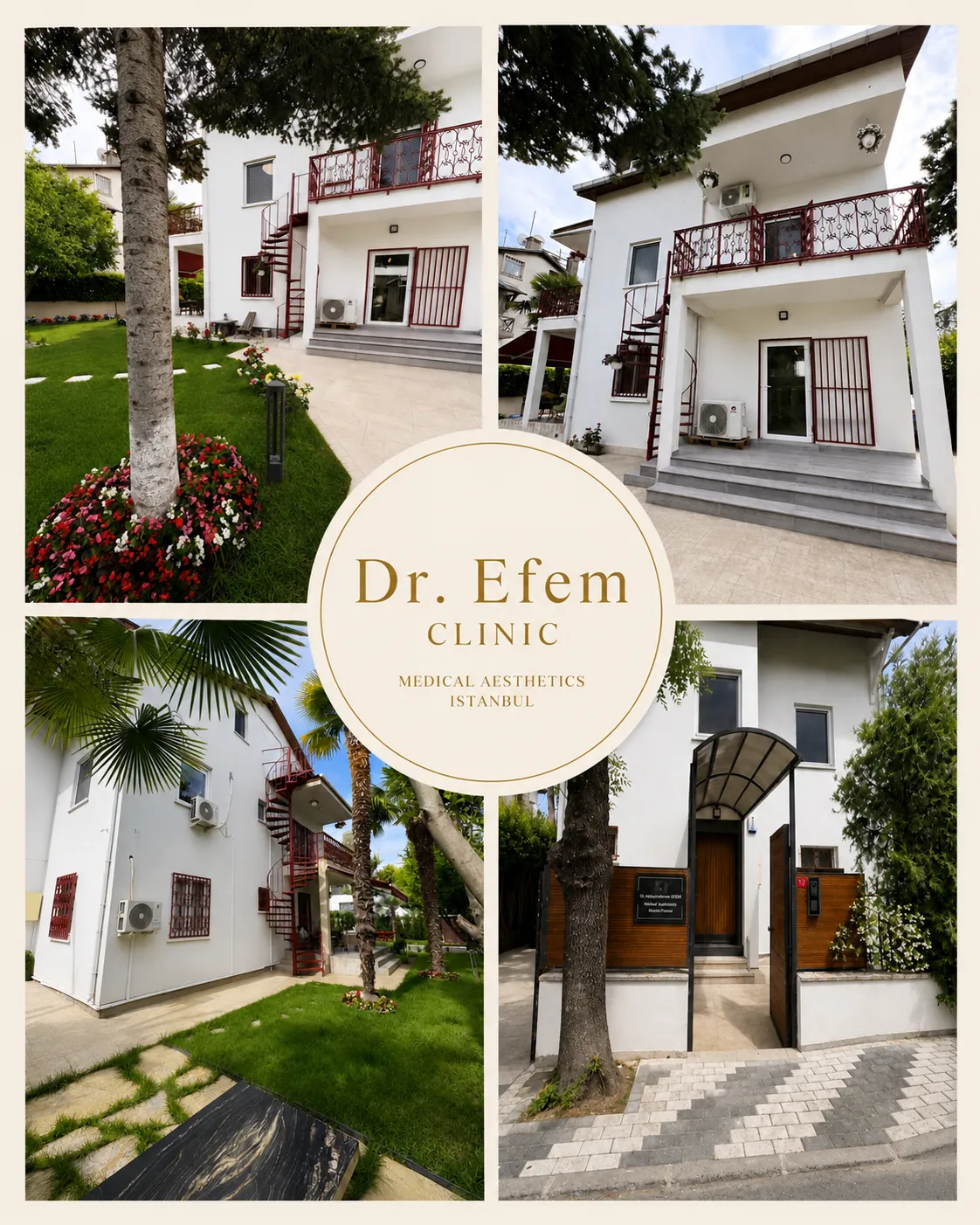
Endolift Assessment at Efem Clinic in Levent, Istanbul
Efem Clinic is a doctor-led medical aesthetic clinic in a private villa setting in Levent, Istanbul, with a garden and parking area. Consultations focus on individual anatomy, realistic expectations, privacy and personalised treatment planning.
For Endolift, the objective is not to promise a standard result. The purpose of assessment is to determine what is causing the concern, whether Endolift matches that tissue problem and what degree of change may reasonably be discussed for the individual patient.
Continue Your Endolift Research
Use the dedicated guides below to explore candidacy, collagen response, result timing and treatment comparisons in more detail.
FREQUENTLY ASKED QUESTIONS
Questions About Endolift Results
What results can Endolift produce?
In suitable patients, Endolift may support jawline definition, controlled lower-face or neck tightening, improvement in early jowls and refinement of selected localised fullness. The exact result depends on the tissue being treated.
Are Endolift results immediate?
Some early firmness may be noticed, but swelling and early tissue response can affect the appearance. The final result should not be judged immediately after treatment.
Why do Endolift results vary?
Baseline anatomy, skin and tissue quality, degree of laxity, fat distribution, treatment area, previous procedures and individual biological response can all influence the visible result.
Can Endolift results be subtle?
Yes. Endolift is generally planned for measured contour improvement rather than dramatic transformation. The degree of visible change depends on the starting anatomy and treatment indication.
Does Endolift produce facelift-level results?
No. Endolift does not remove significant excess skin or provide the same degree of lifting as facelift surgery. Advanced sagging may require surgical assessment.
Does Endolift always make the face thinner?
No. Fat reduction is not required in every treatment. In patients with a thin face or existing volume loss, preserving facial volume may be an important part of appropriate planning.
Can Endolift remove wrinkles?
Endolift should not be expected to remove every wrinkle. Some lines may appear softer as tissue firmness changes, while expression lines, volume loss and surface-texture concerns may require different treatment strategies.
What if my Endolift result seems limited?
Early swelling and tissue response should first be allowed to settle. If a concern remains, the anatomy can then be reassessed to determine whether observation, another treatment, surgical assessment or no further treatment is appropriate.
Can before-and-after photos predict my Endolift result?
No. They can illustrate possible types of change, but another patient’s result cannot predict yours. Anatomy, tissue quality, treatment plan and photographic conditions differ between patients.
EFEM NOTE
A Successful Result Is Not Necessarily a Dramatic Result
Endolift results should be assessed according to the original anatomical problem and the treatment goal. A balanced improvement in jawline, lower-face or neck contour that preserves natural facial volume may be more appropriate than pursuing the largest possible visible change. Patient selection, realistic expectations and knowing when not to treat are therefore central to result quality.
ENDOLIFT RESULTS ASSESSMENT
Understand What Endolift May Realistically Change for You
You can send clear photographs and describe the area that concerns you to begin a preliminary discussion with Efem Clinic. Your anatomy, tissue laxity, localised fat, existing facial volume and treatment goals are considered before Endolift suitability and realistic expectations are discussed.
Endolift results vary according to anatomy, tissue quality, treatment area, degree of laxity, localised fat, treatment scope and individual biological response. This information does not replace an individual medical consultation.
About Dr. Abdurrahman Efem
Dr. Abdurrahman Efem
Dr. Abdurrahman Efem is a medical aesthetic physician specializing in facial rejuvenation, non-surgical aesthetic treatments, and regenerative medicine. His approach focuses on enhancing natural beauty through personalized treatment plans designed around each patient's unique features and goals. Dr. Efem works with both local and international patients, emphasizing balanced, natural-looking results and long-term aesthetic wellbeing. This content has been prepared or medically reviewed by Dr. Abdurrahman Efem to ensure accuracy and relevance.